
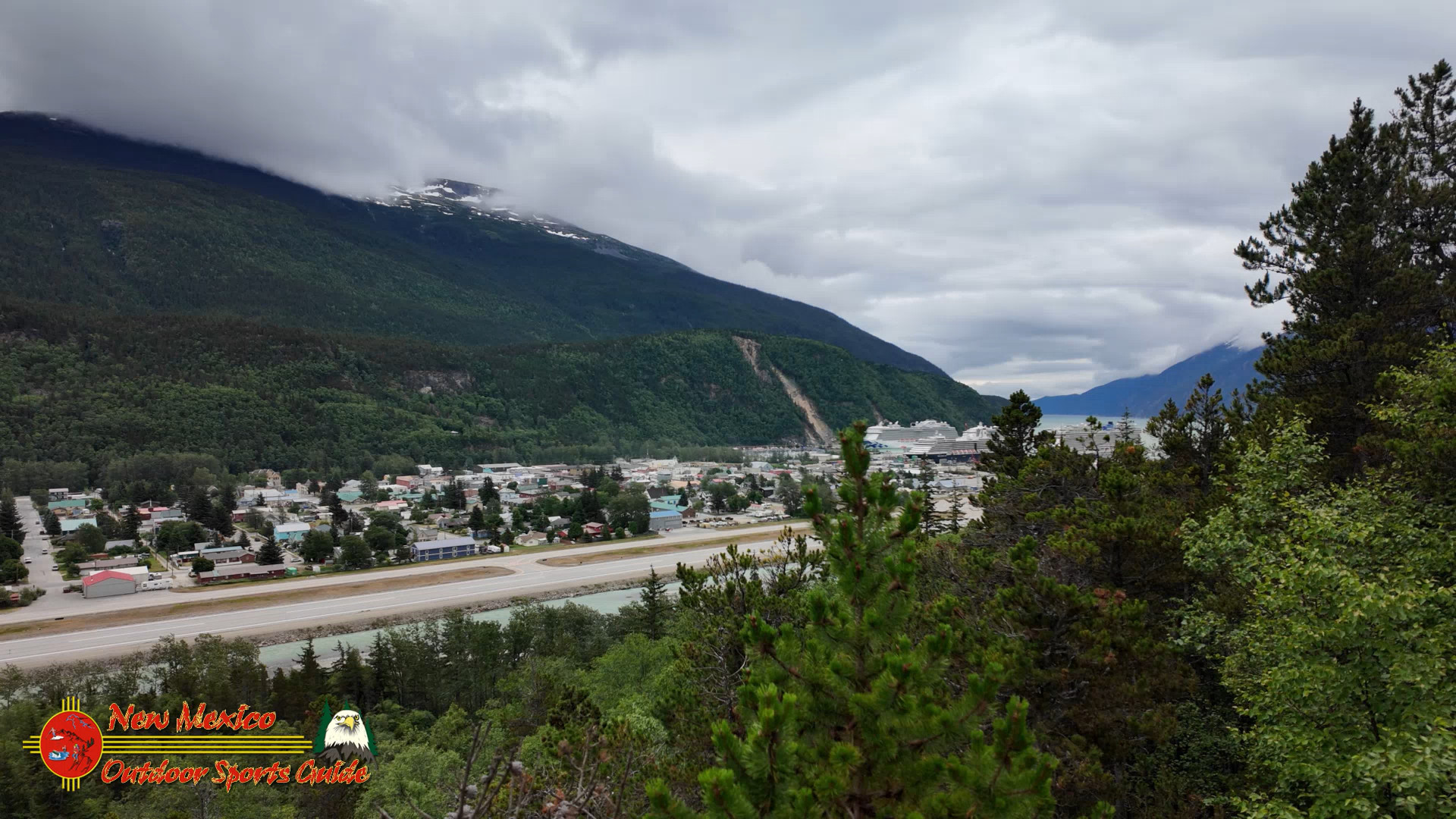
After a morning of exploring Skagway on the Original Street Car Tour, Paulette and I found ourselves back at the pier where our cruise ship, the Norwegian Encore, was docked. We were ready for our next adventure—the White Pass Scenic Railway. I remember feeling a wave of relief wash over us when we discovered that the train would board right there on the pier. No need to trek through town or worry about finding our way; we could simply step off the streetcar and onto the train platform.
As we waited for the train's arrival, we learned that there would be a slight delay. There was a bit of tension among some of the other passengers, concerned about the timing and whether the train would make it back before the ship’s scheduled departure. But the tour staff assured us that everything was under control, and the train would return in plenty of time. That reassurance allowed us to relax and take in the unique atmosphere of the Skagway pier, a bustling mix of cruise passengers, tour guides, and locals going about their day.
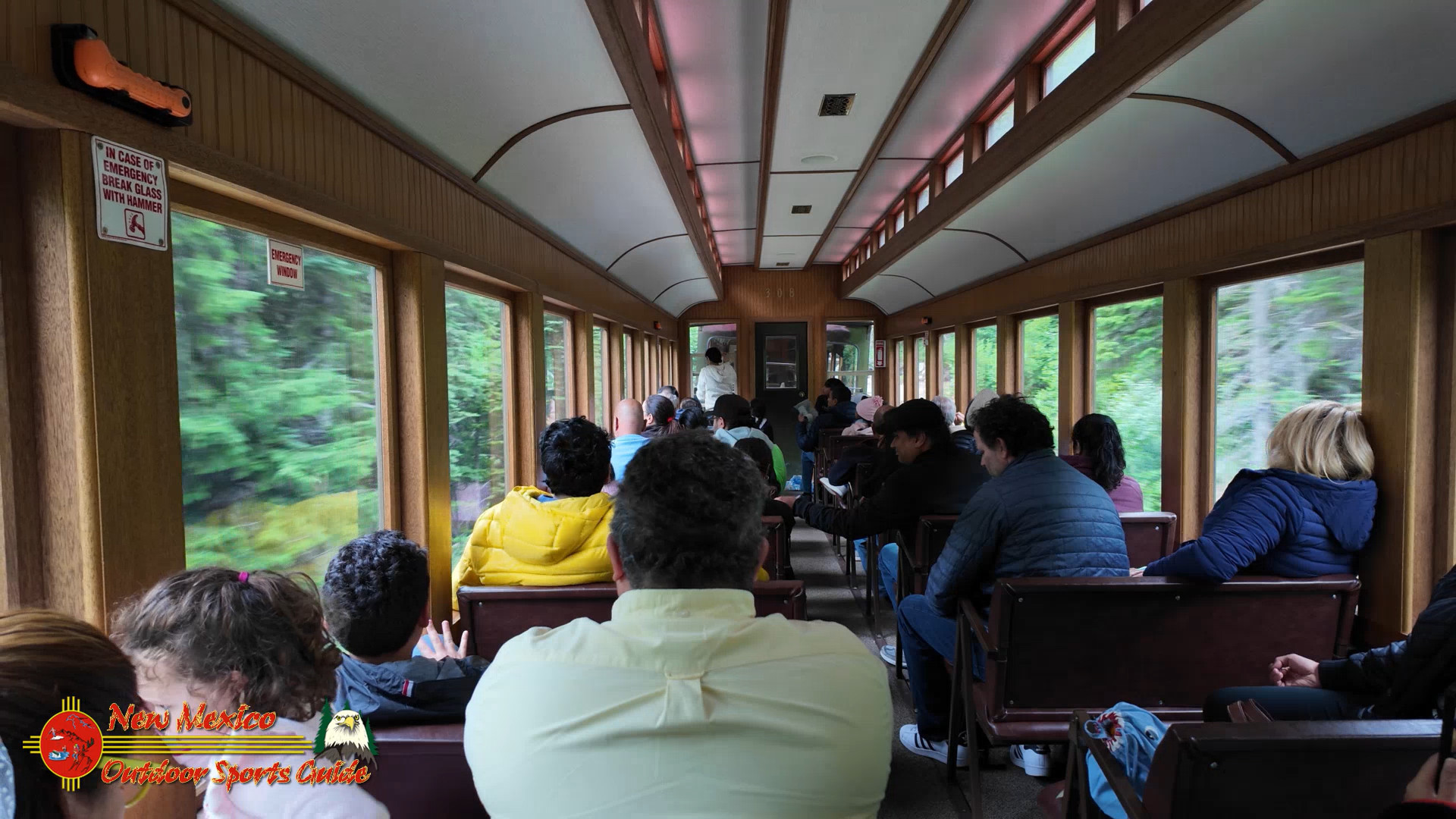
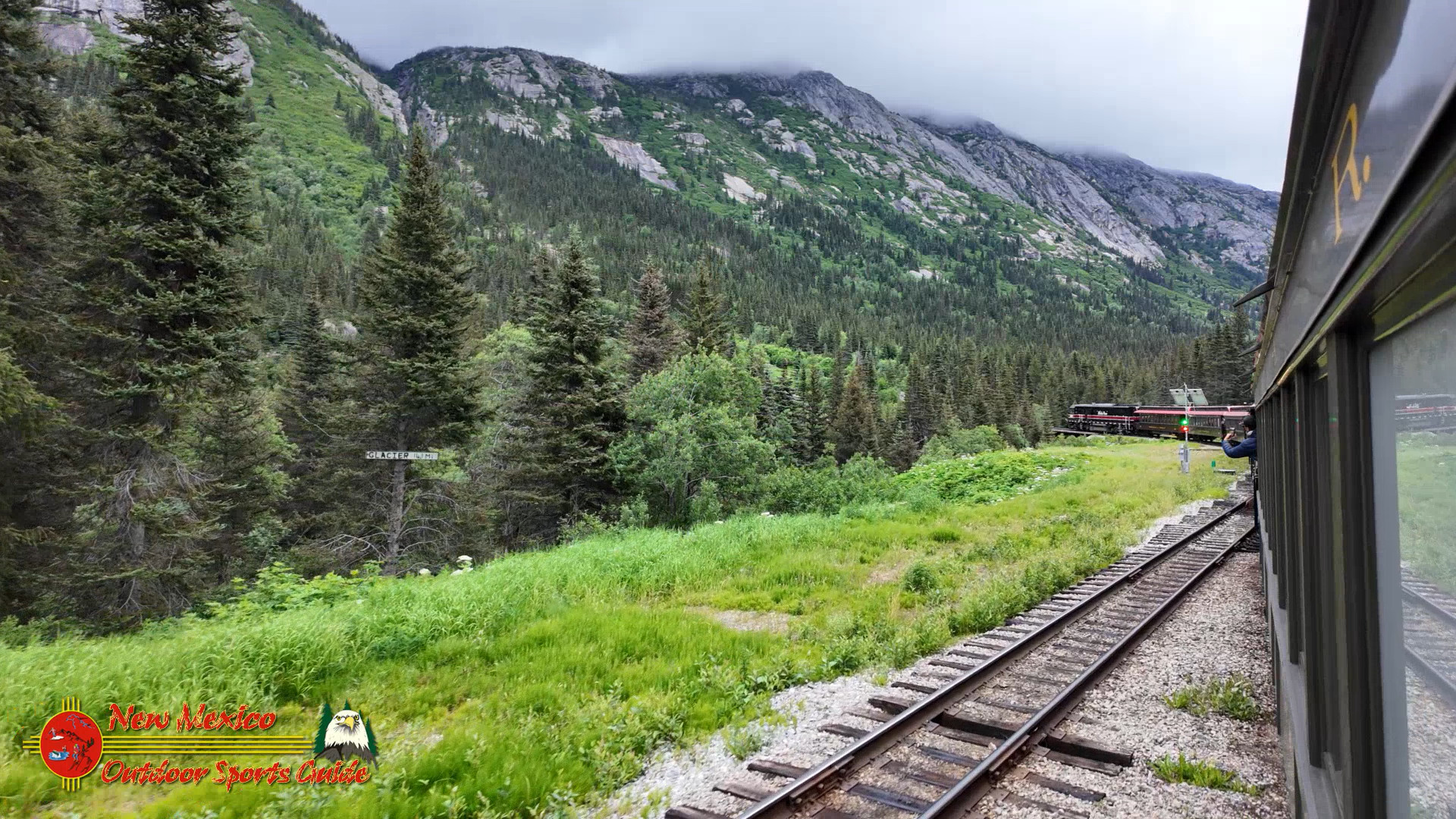
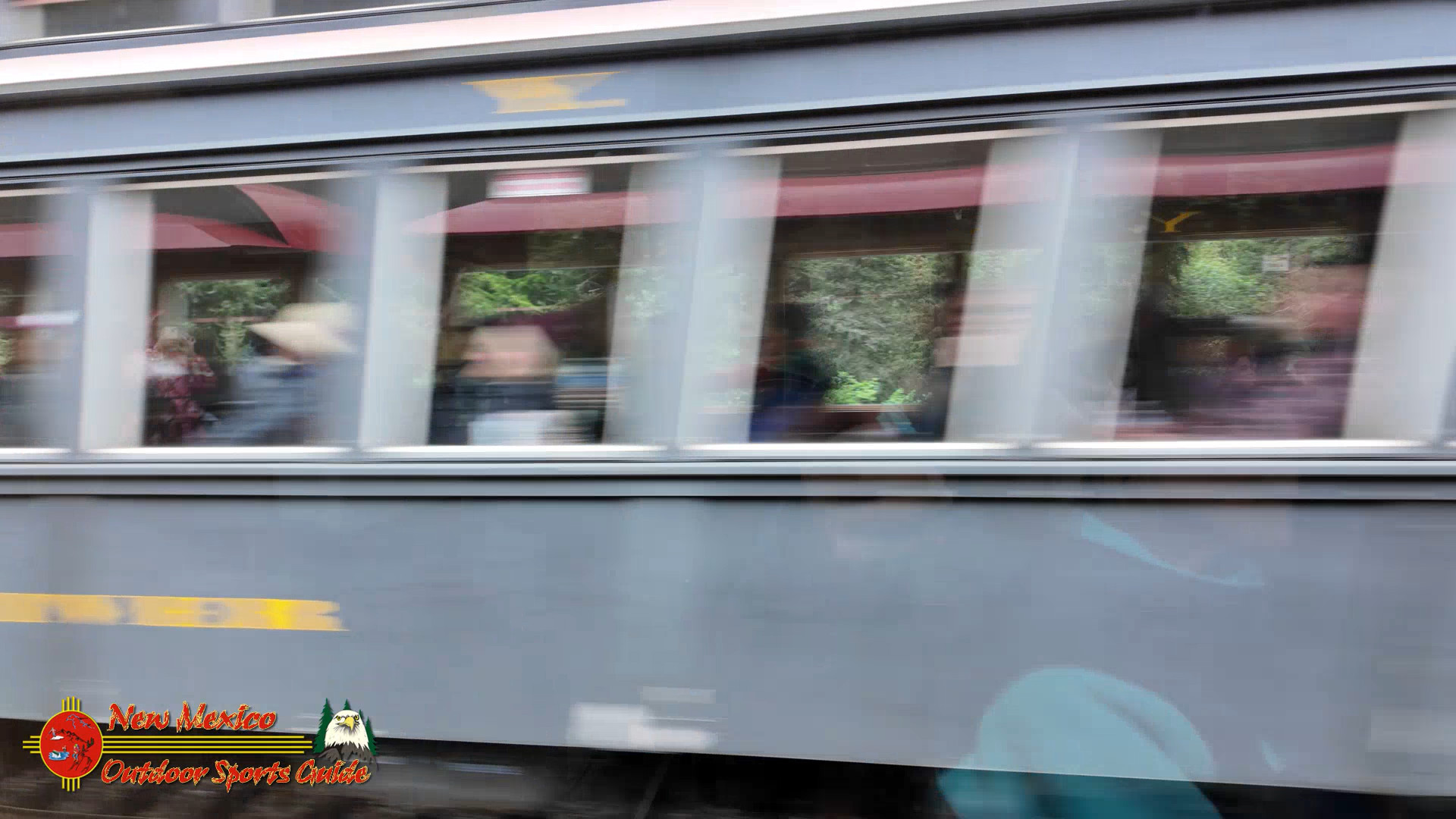
Finally, the train pulled in, its classic green and yellow cars a charming sight against the backdrop of the overcast sky. We made our way to the back of one of the cars, securing seats close to a door that led to the platform between cars. This spot was perfect for me; it gave me easy access to capture videos of the passing scenery—a priority for any train ride enthusiast like myself.
Settling into our seats, we listened as the train whistle blew, signaling the start of our journey. The weather was overcast, but visibility was surprisingly good. I had worried that the mist might obscure the views, but instead, it seemed to add an almost mystical quality to the landscape. The gentle sway of the train as it began to climb the steep grade toward White Pass was both calming and exciting.
Our tour guide began the narration, filling us in on the rich history of the railway. I learned that the White Pass and Yukon Route Railroad was built during the Klondike Gold Rush in 1898, a feat of engineering that overcame the challenging terrain and weather conditions of the area. As the train chugged along, the guide pointed out landmarks, shared stories of the daring adventurers who had once traversed this very route, and highlighted the ingenuity of the workers who built the railway. The guide's enthusiasm was infectious, making each fact and anecdote feel fresh and engaging.
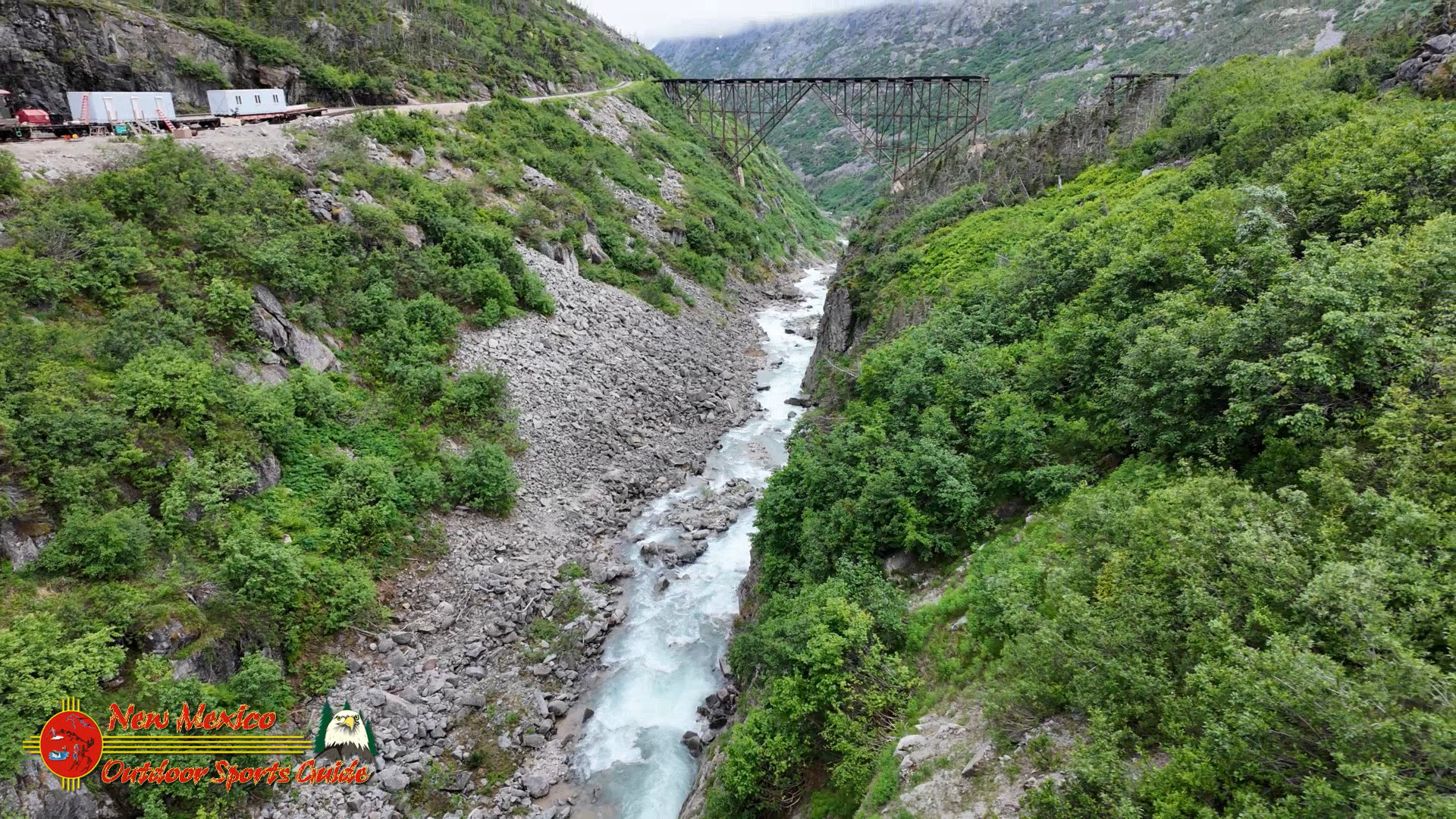
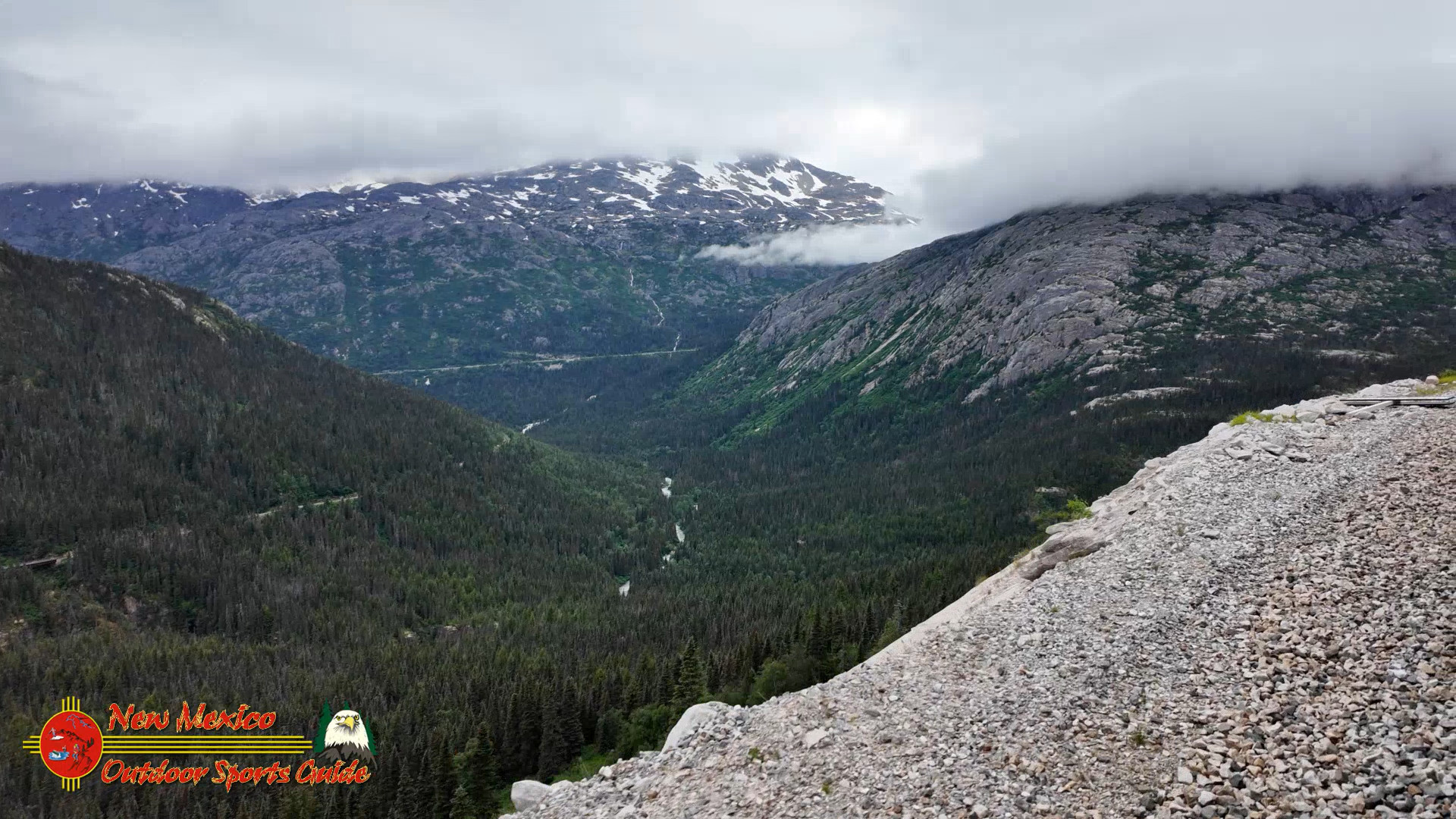
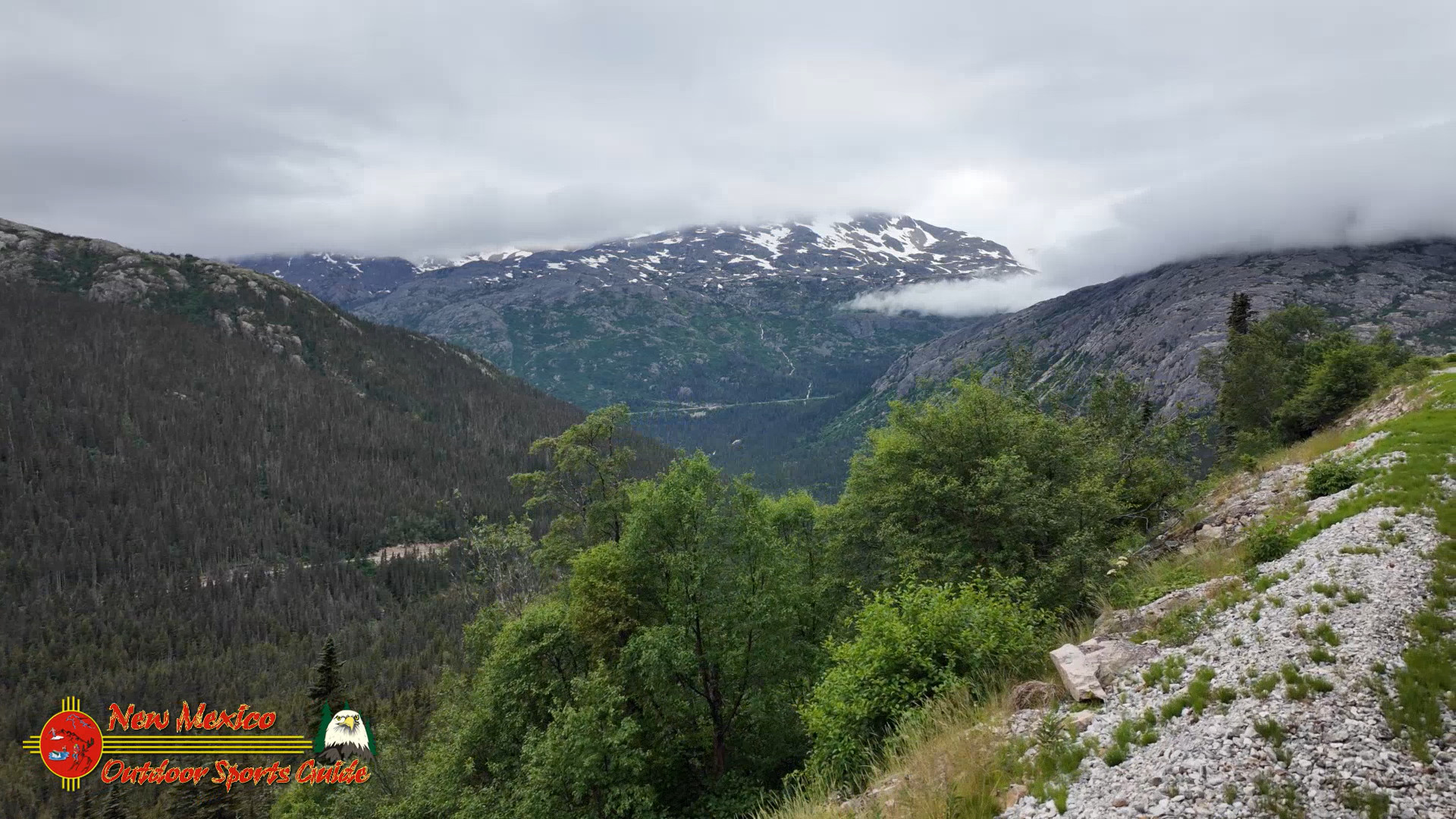
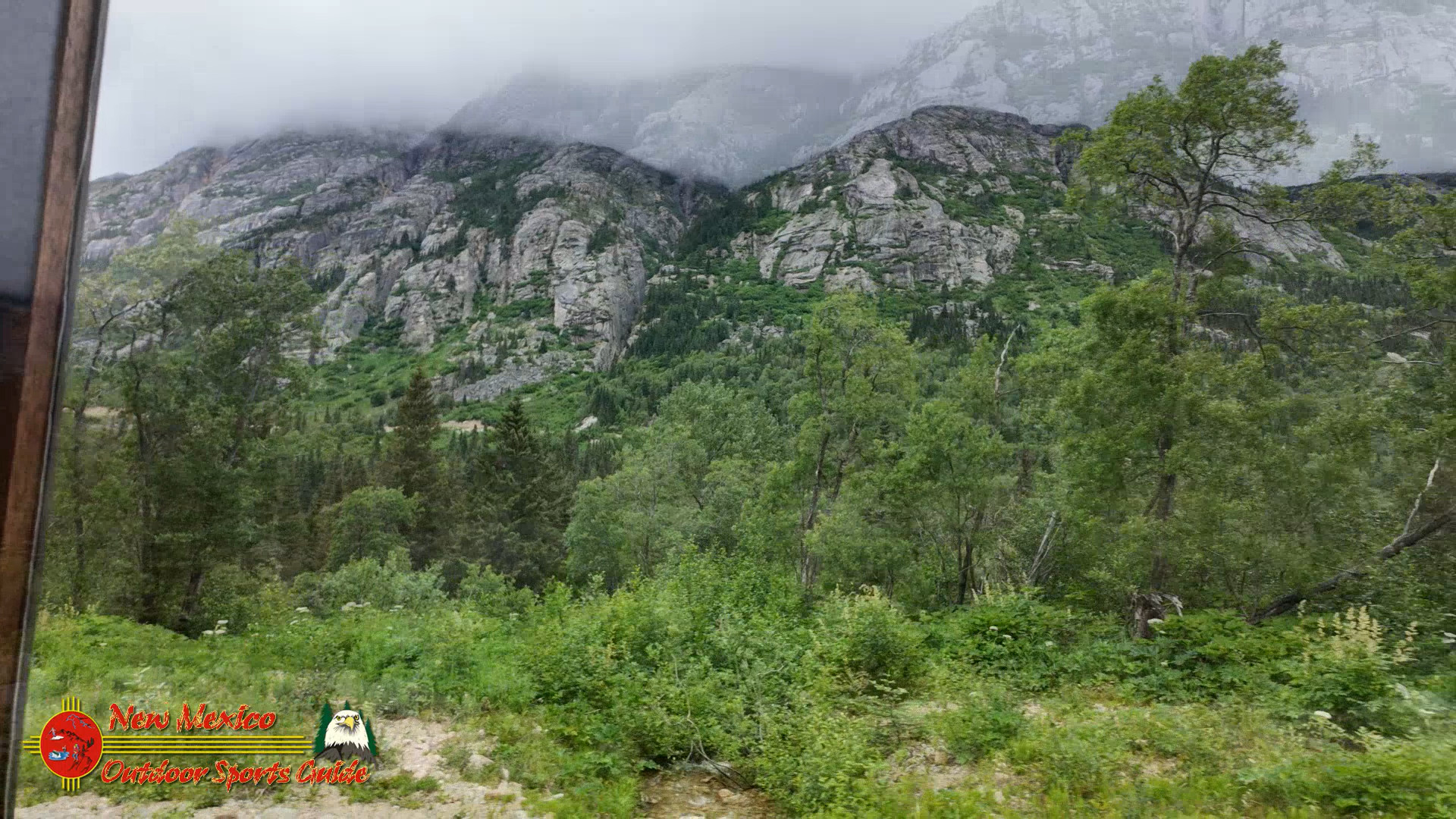
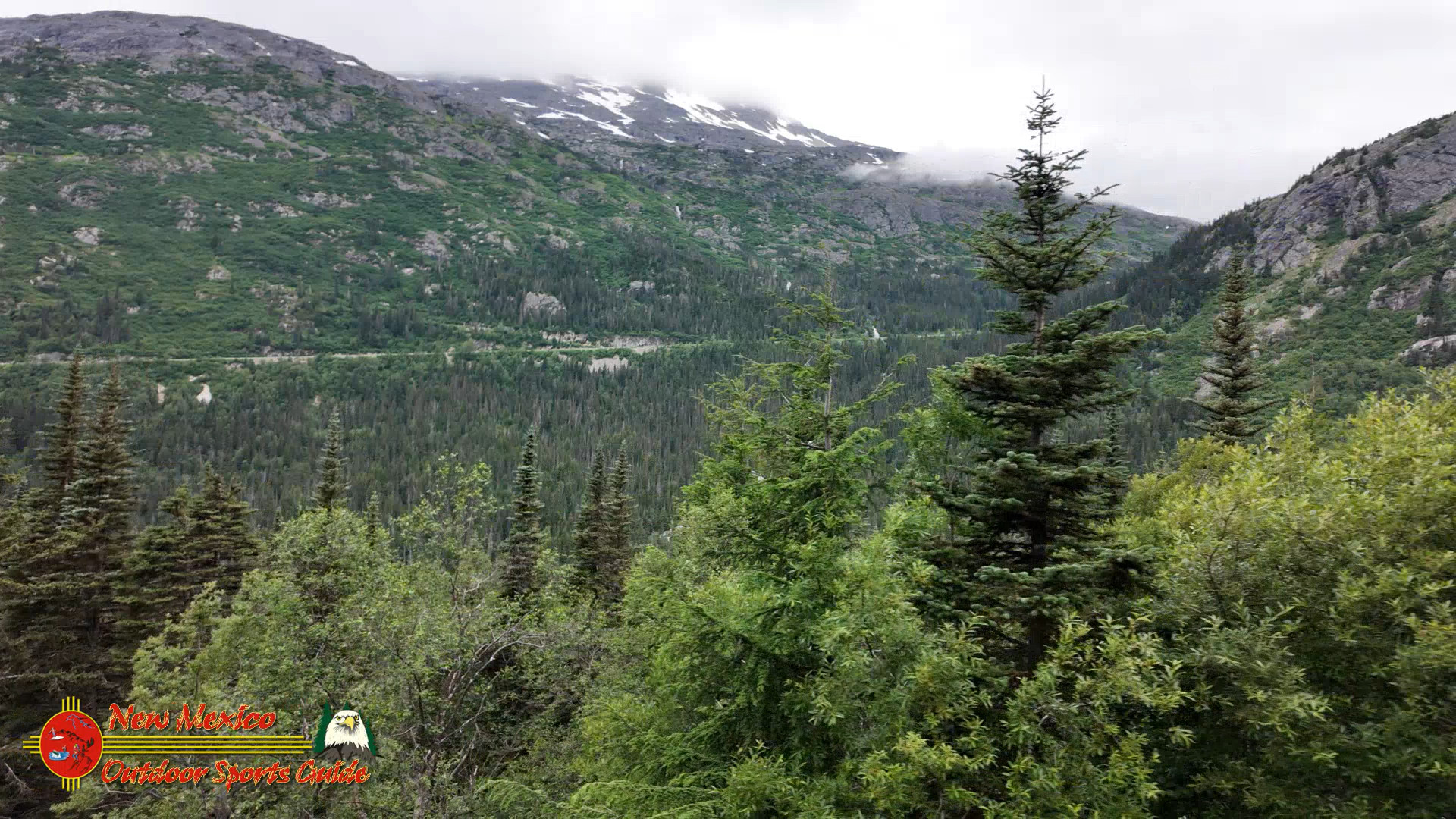
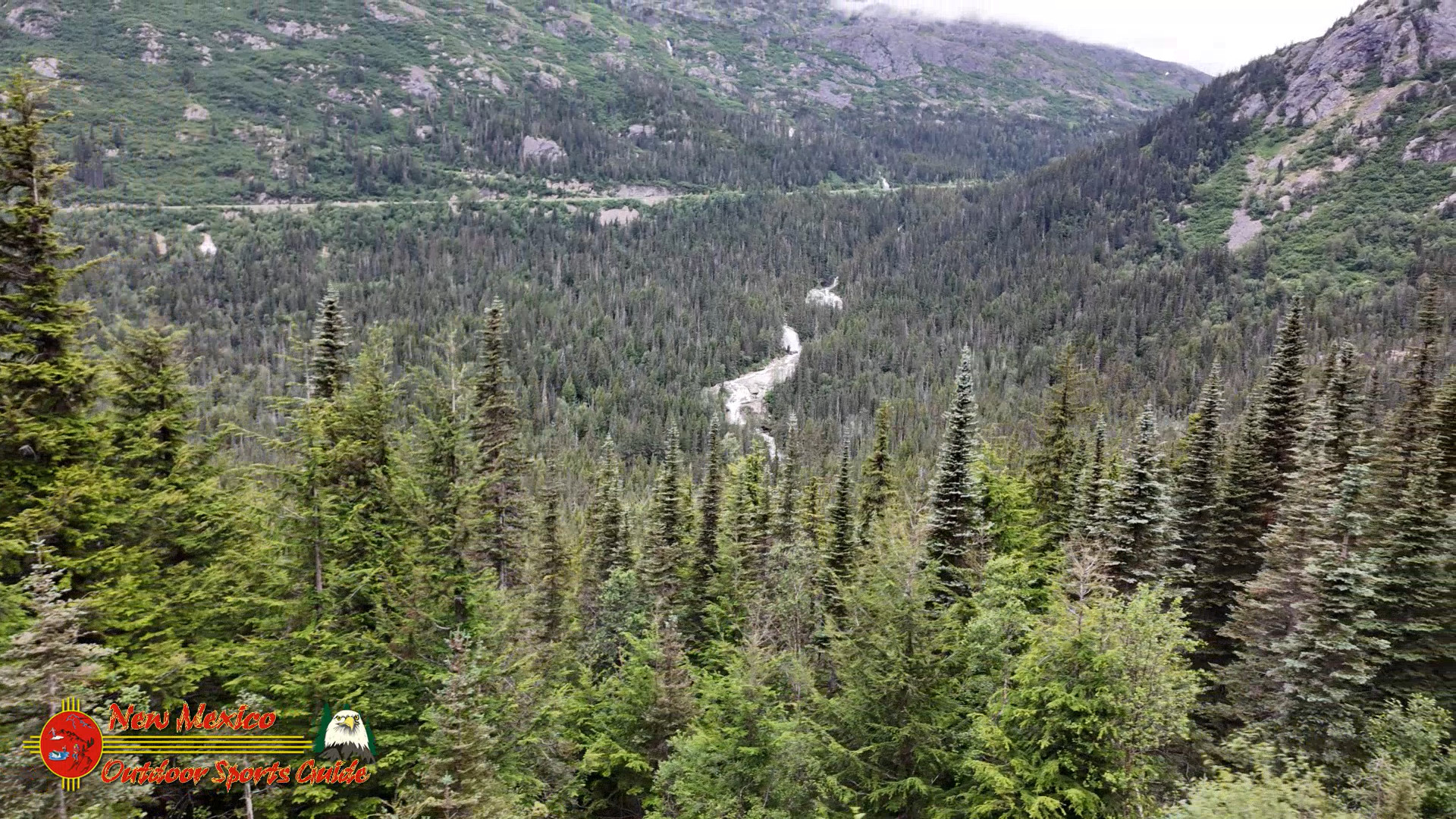
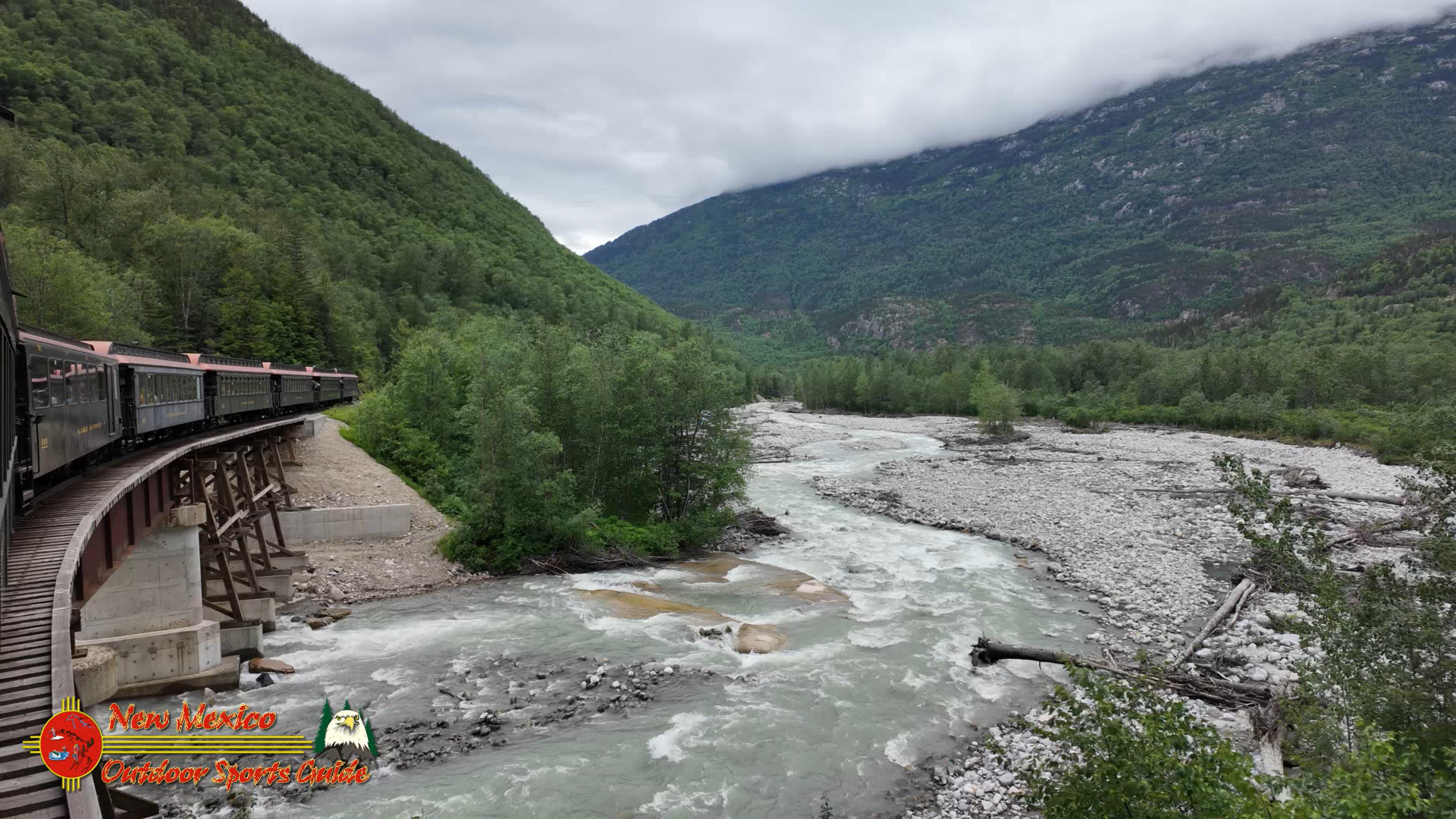
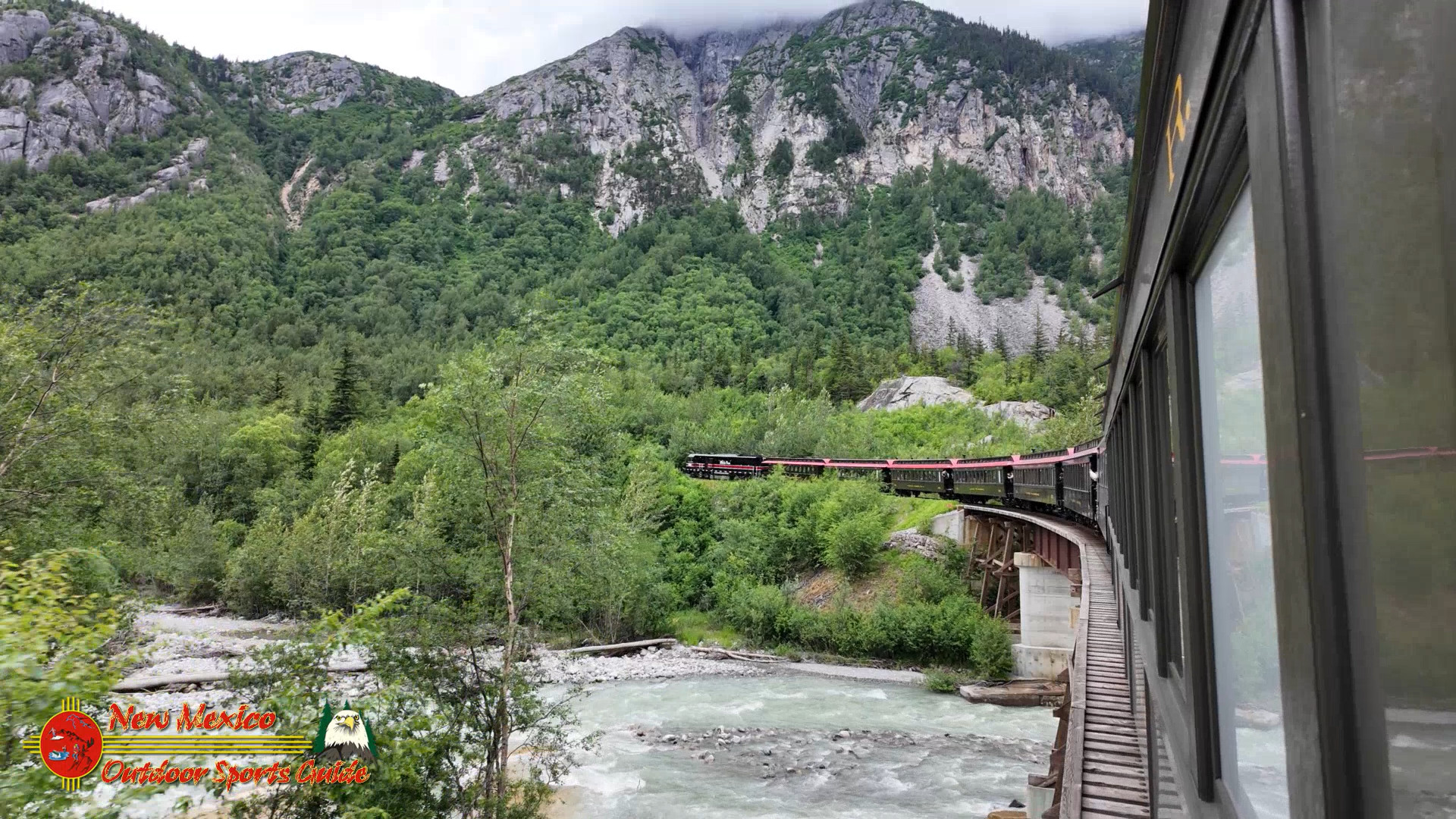
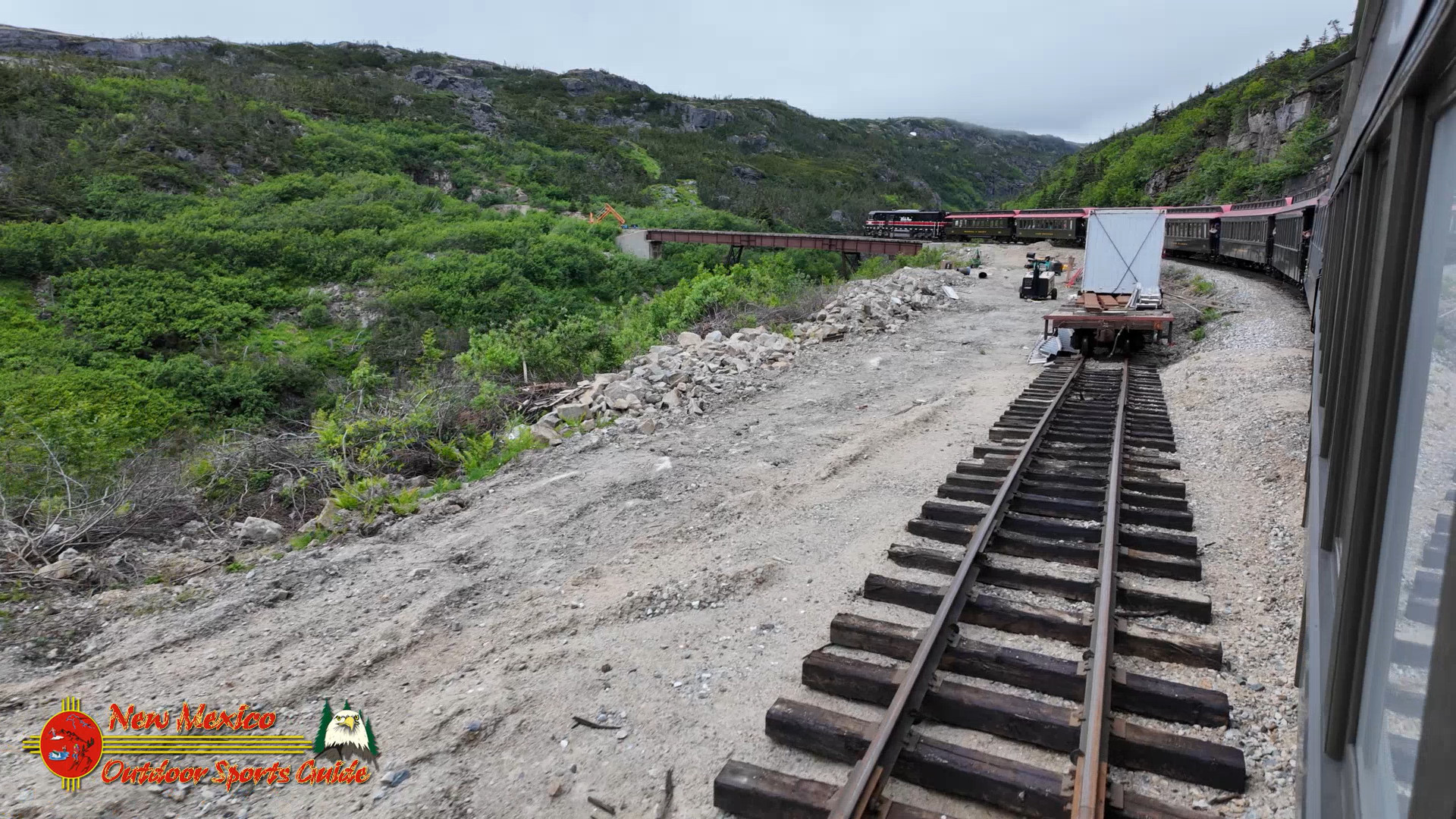
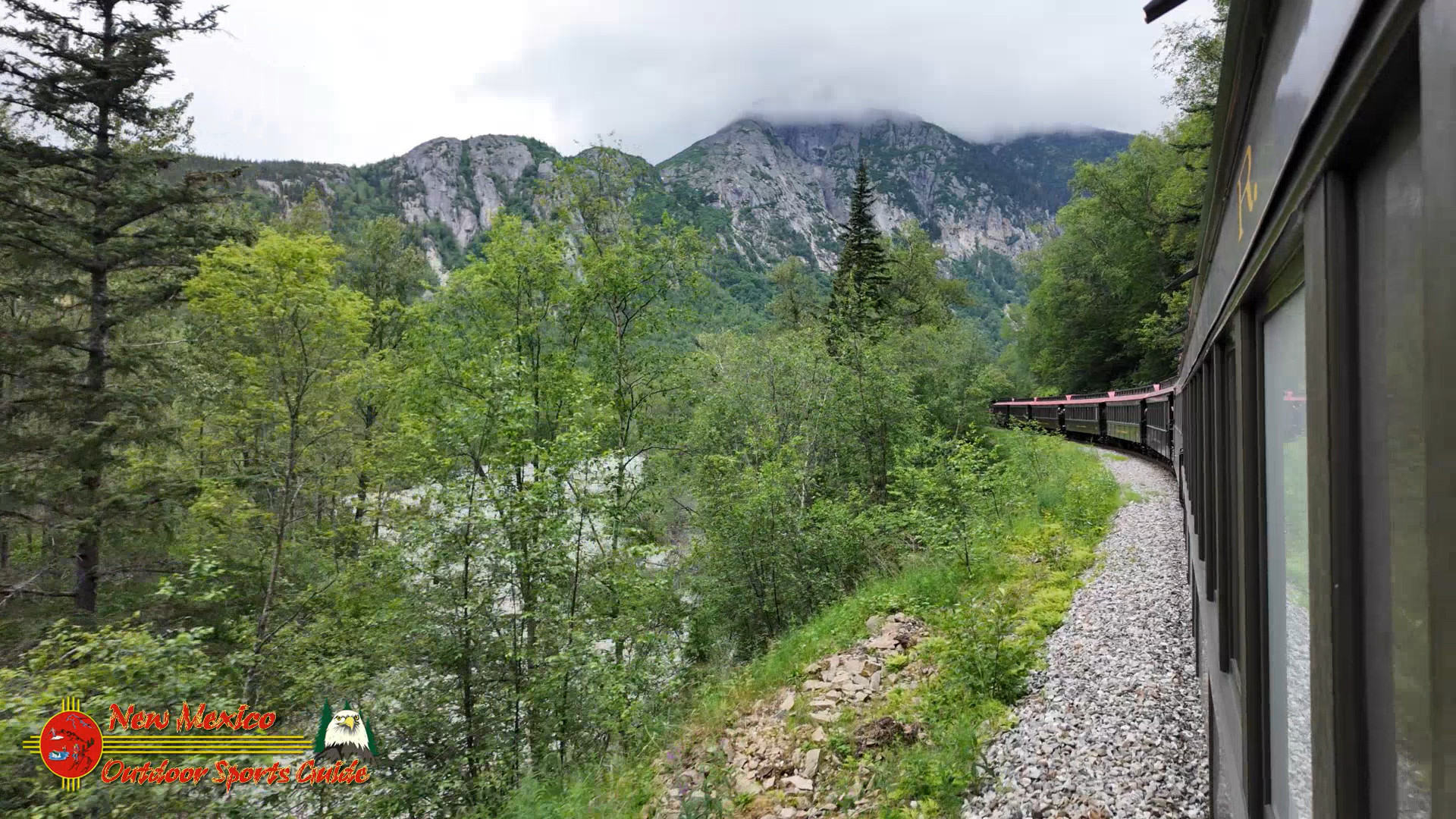
As we made our way higher into the mountains, the scenery shifted dramatically. The dense spruce and hemlock forests gave way to steep, rocky cliffs, with waterfalls cascading down their sides. Below us, the Skagway River snaked its way through the valley, its waters a milky, glacier-fed turquoise. I moved out to the platform between the cars to get a better view and was immediately struck by the crisp mountain air. The train hugged the mountainside so closely that at times it felt like we could reach out and touch the rock face.
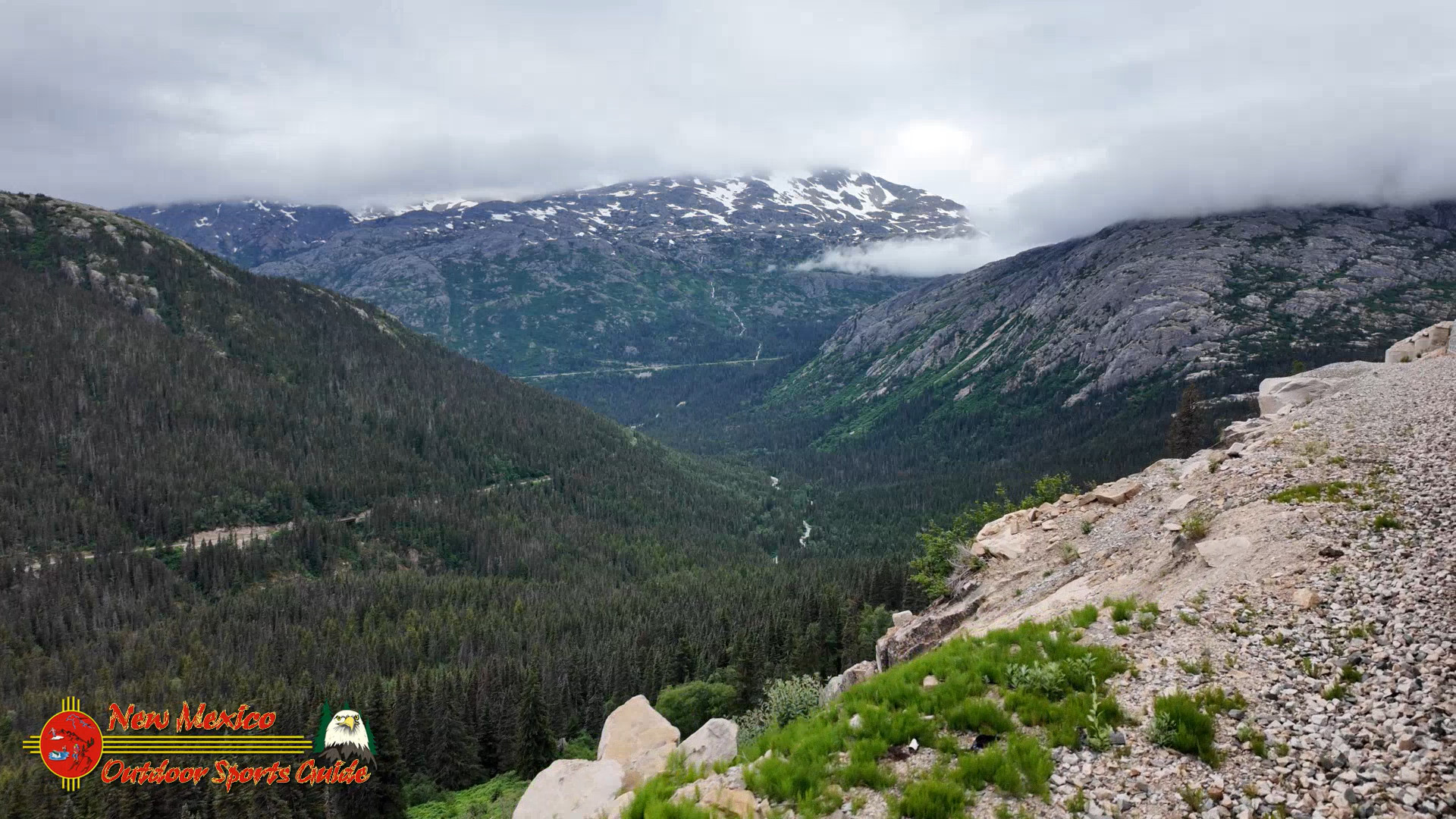
Paulette joined me on the platform, and we marveled at the sweeping vistas. The towering peaks, some still capped with snow, seemed to disappear into the low-hanging clouds. I couldn't help but think about the prospectors who had made their way through this rugged terrain over a century ago, driven by the dream of striking it rich in the goldfields of the Yukon. It was humbling to imagine what they must have endured in such an unforgiving environment.
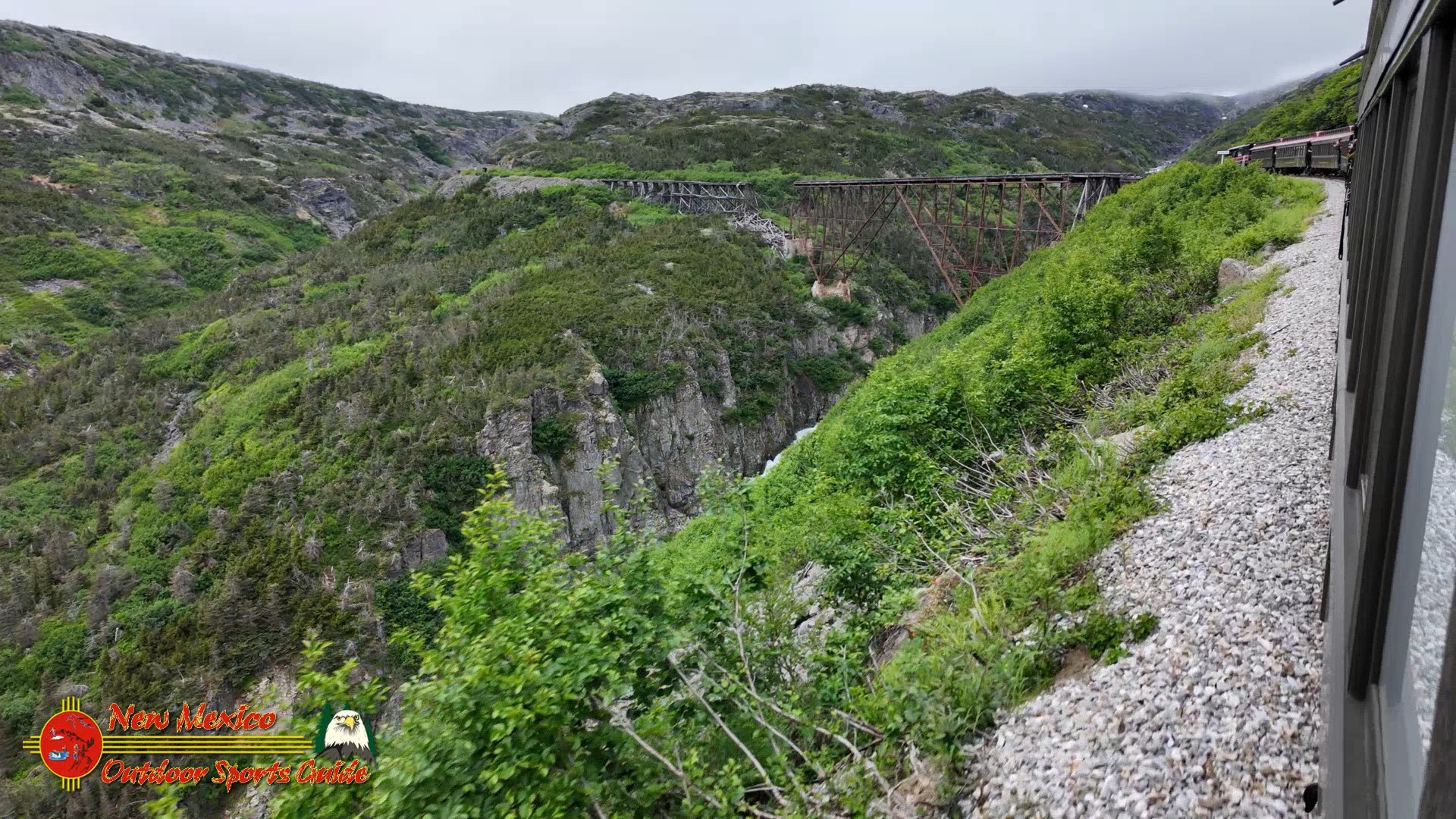
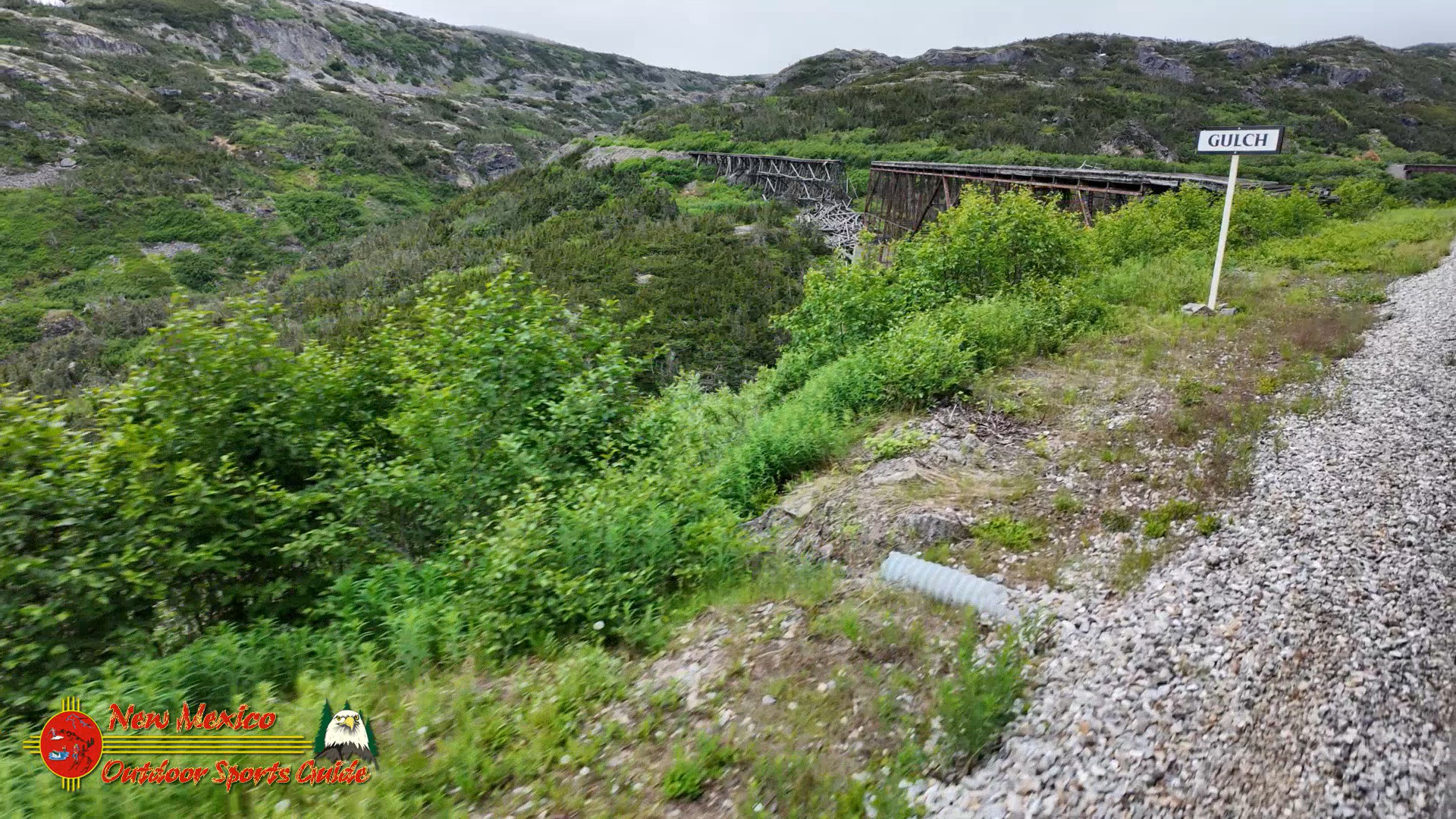
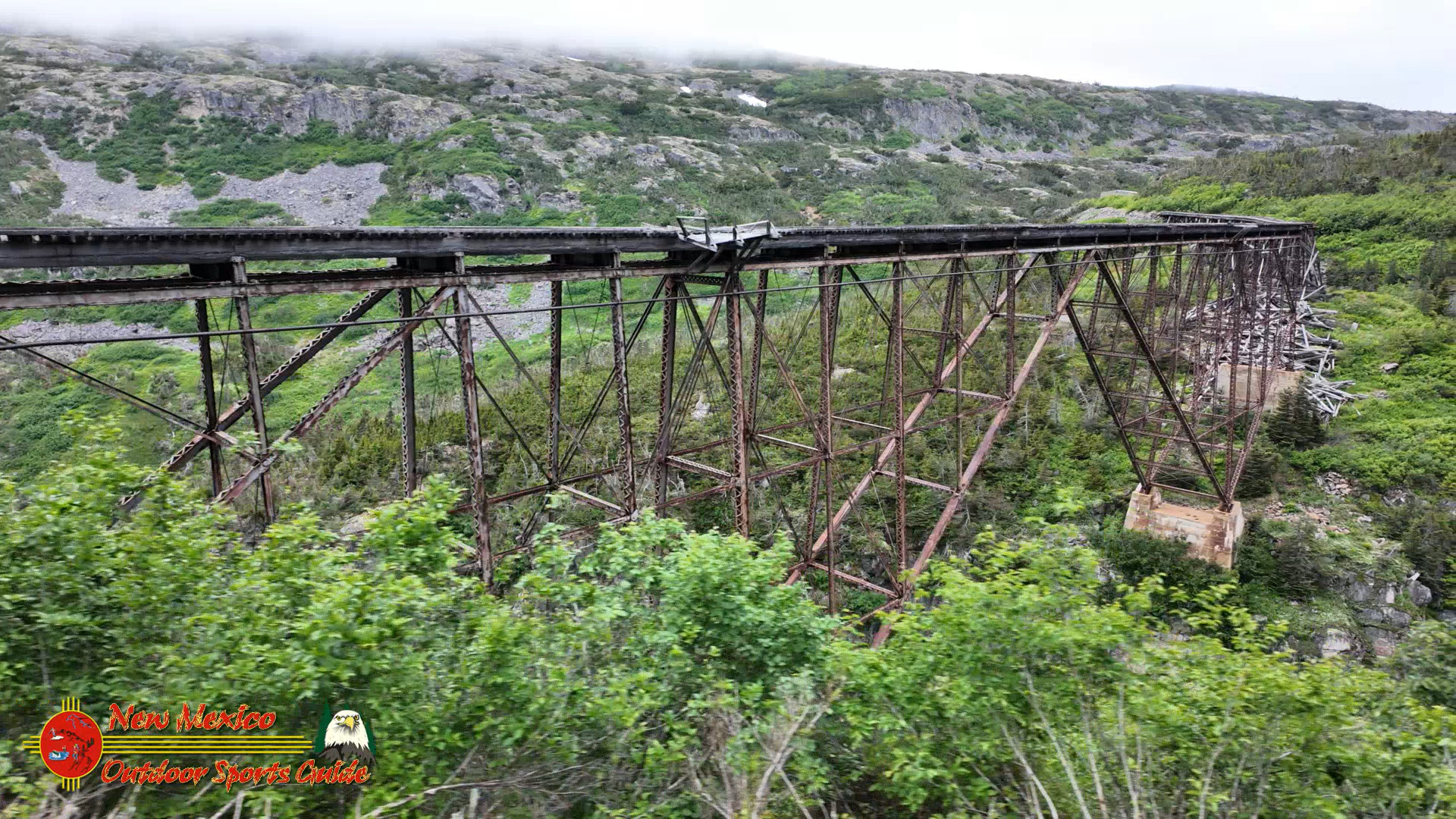
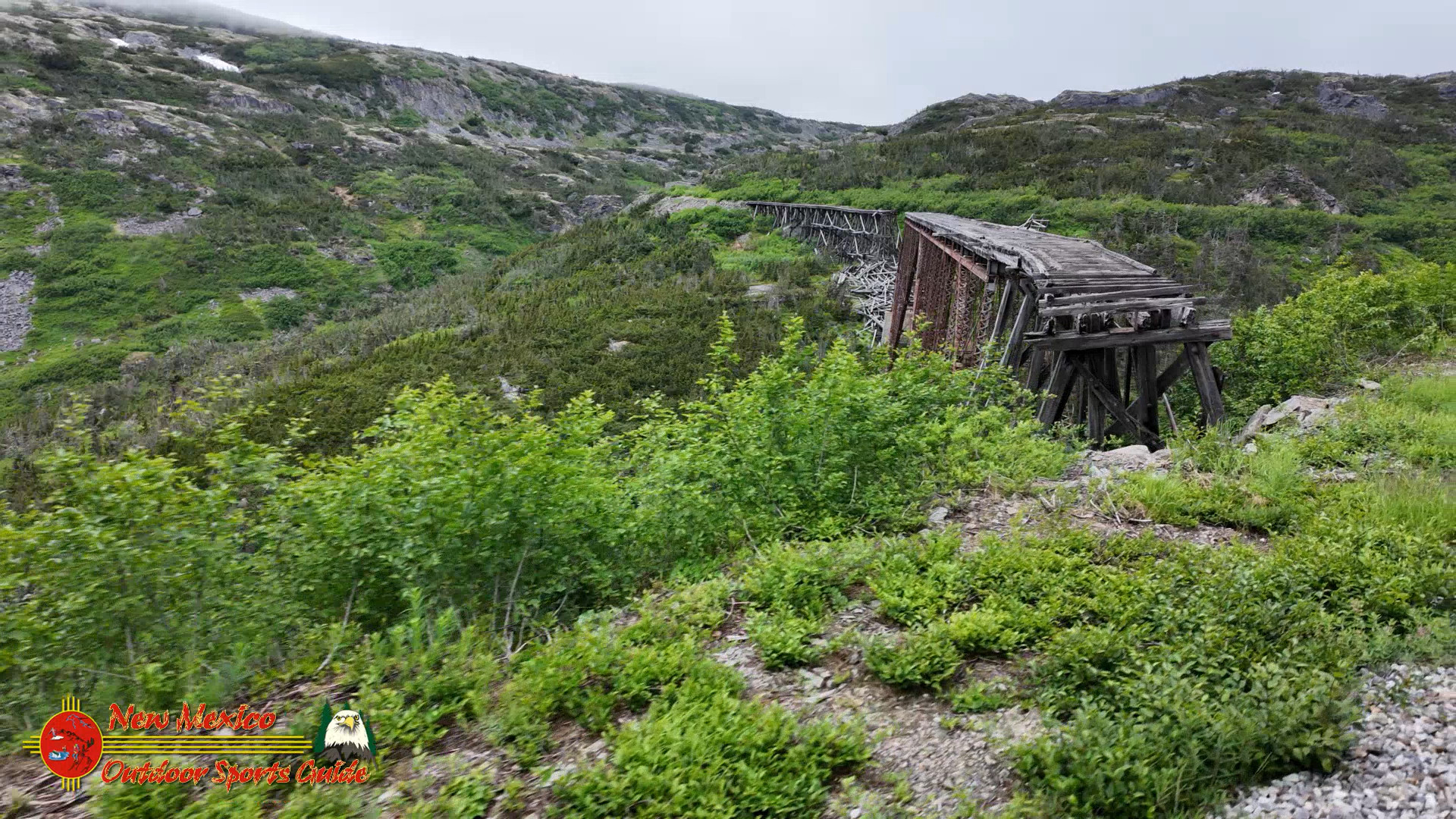
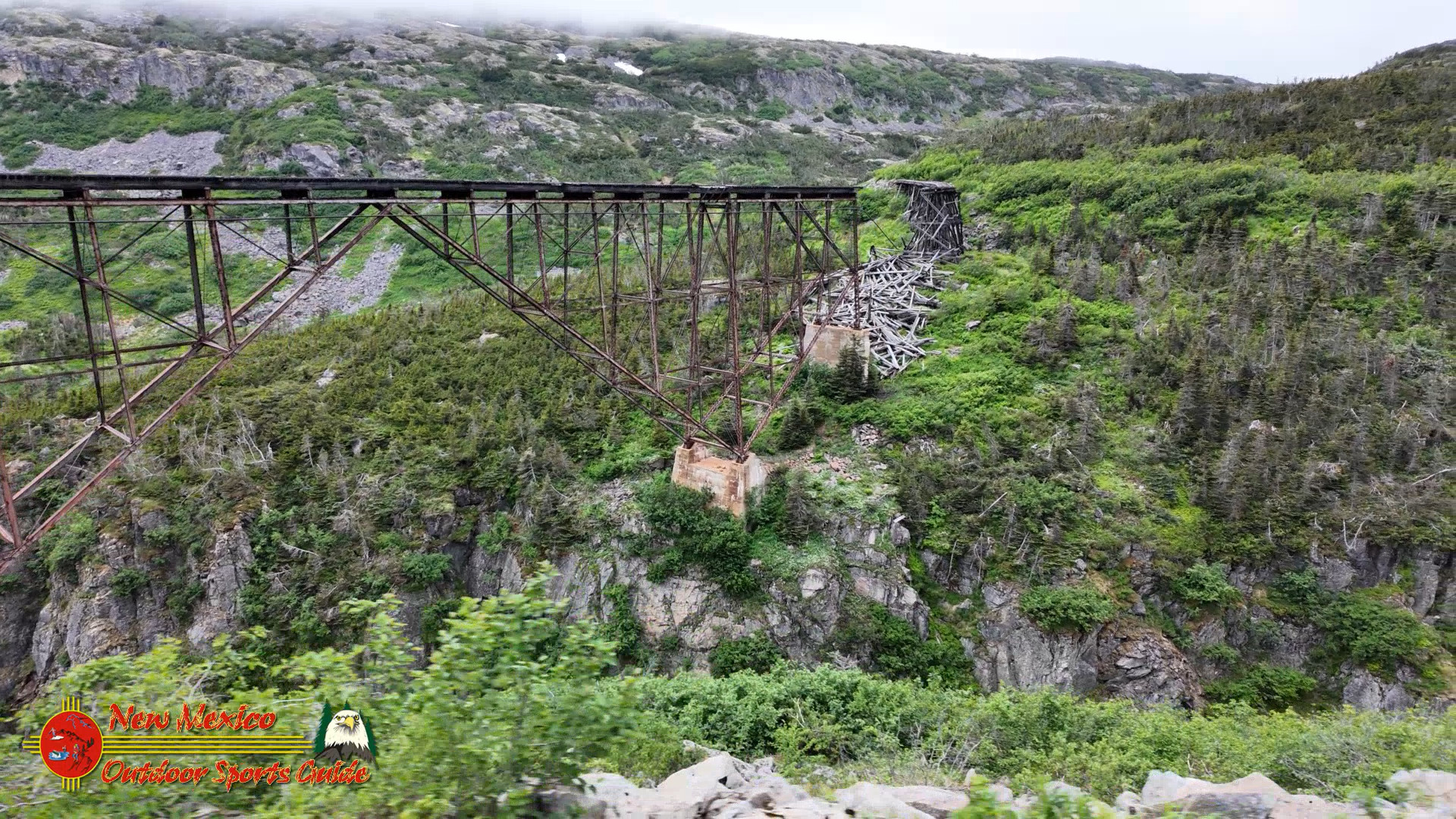
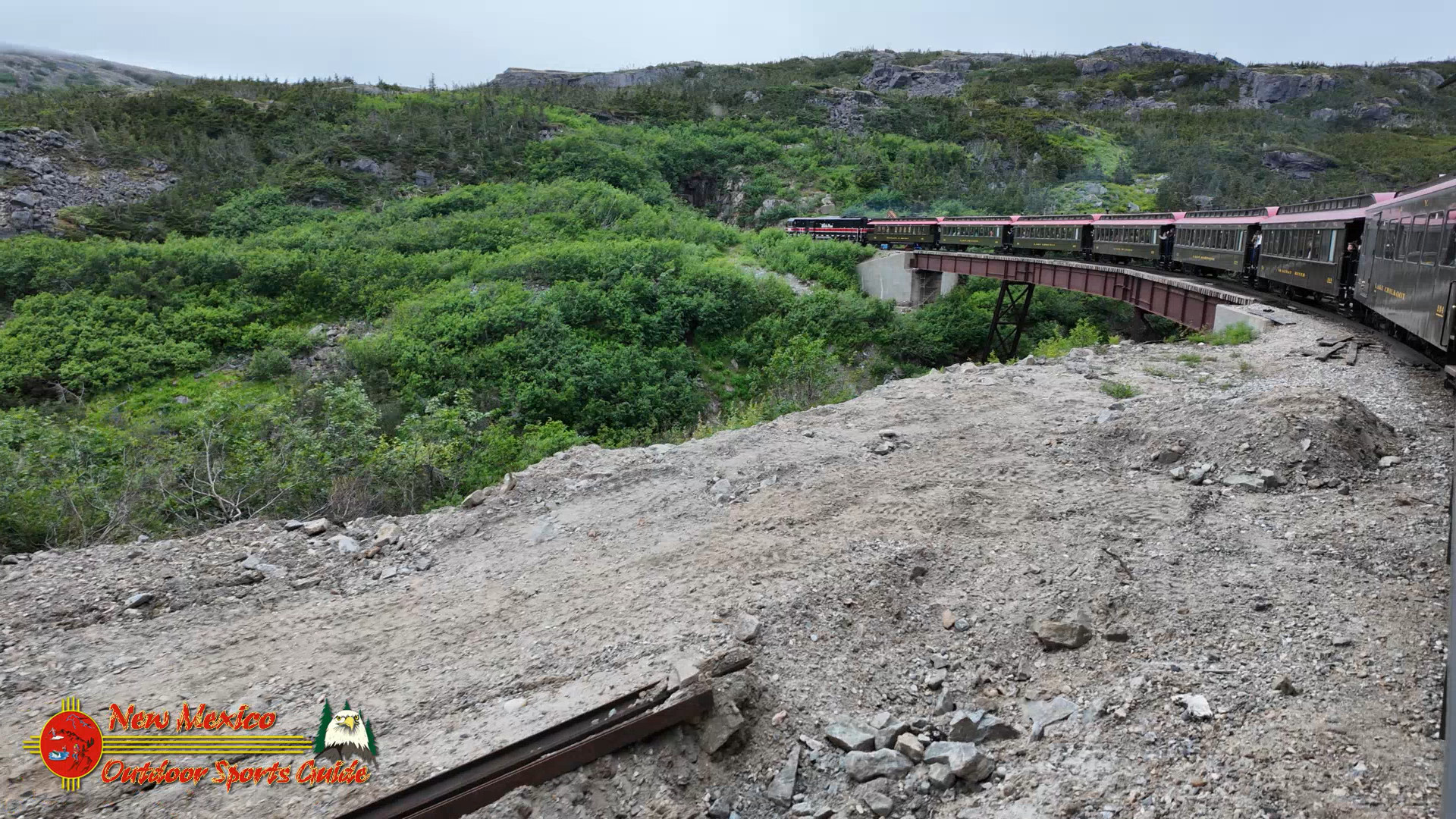
At one point, the train crossed a trestle bridge, the rails suspended high above a deep gorge. I could feel the thrill of adventure in the pit of my stomach as I leaned over the rail, capturing the moment on video. Paulette, ever my voice of reason, held onto me tightly, reminding me not to lean too far. We both laughed, sharing that moment of exhilaration and awe at the breathtaking views around us.
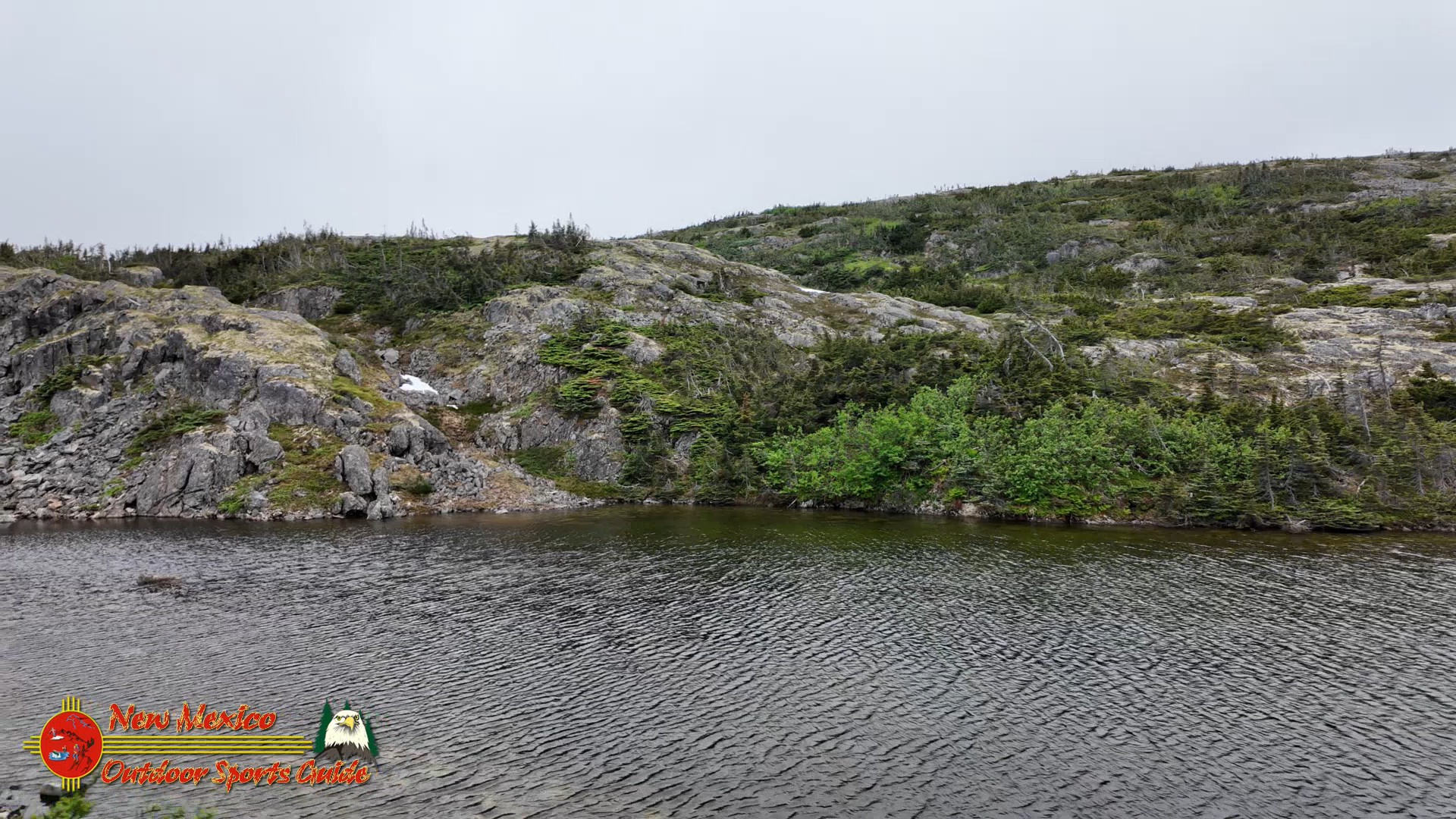
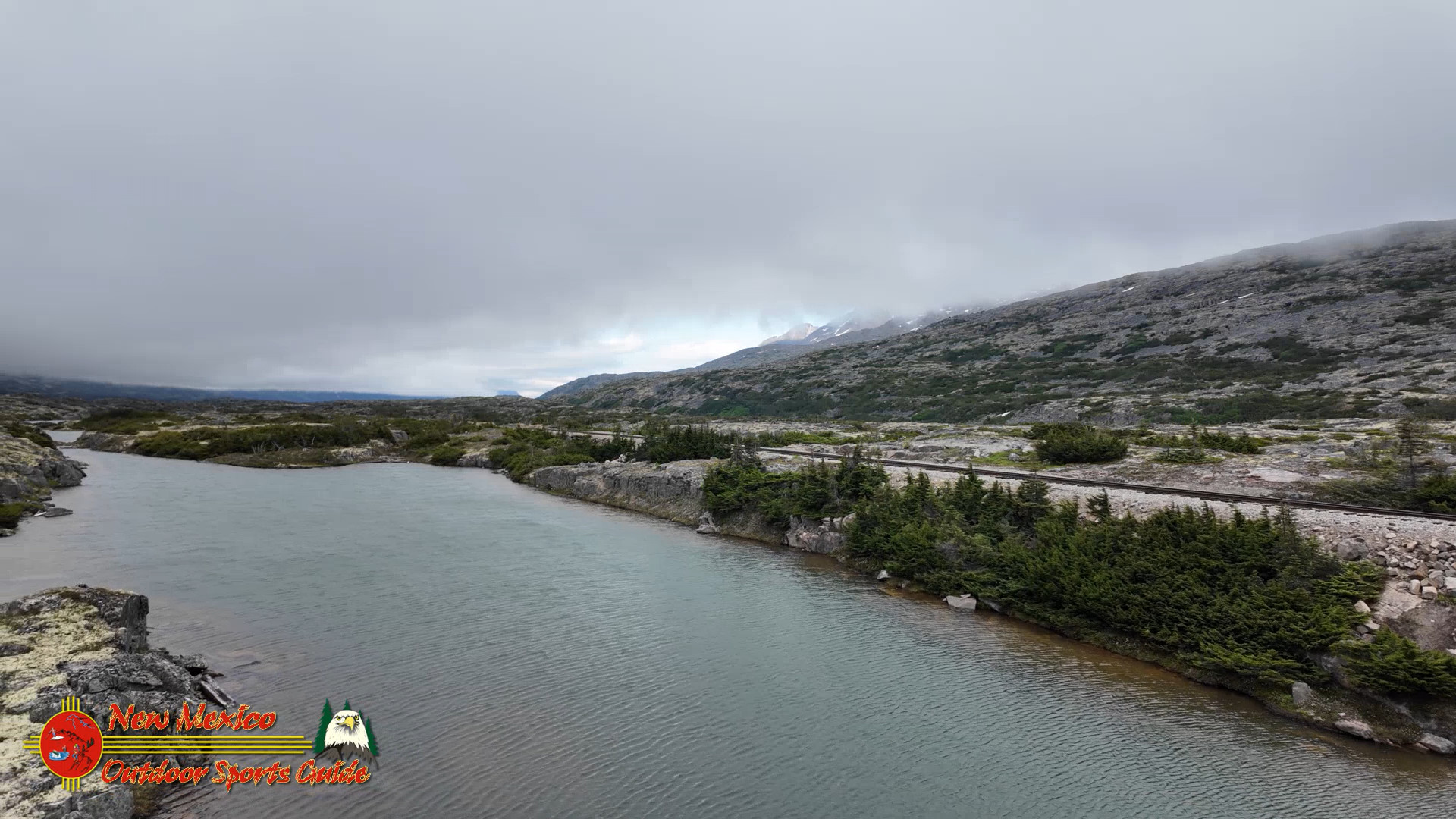
The train continued to wind its way up the pass, and soon we were approaching the summit. The landscape grew even more stark and dramatic, with patches of snow dotting the ground and jagged rocks jutting out of the earth. The mist seemed to thin, and for a brief moment, we were treated to a glimpse of the sun breaking through the clouds, casting a golden light over the mountains. It was a fleeting moment of magic, a gift from nature that seemed to make the entire journey even more special.
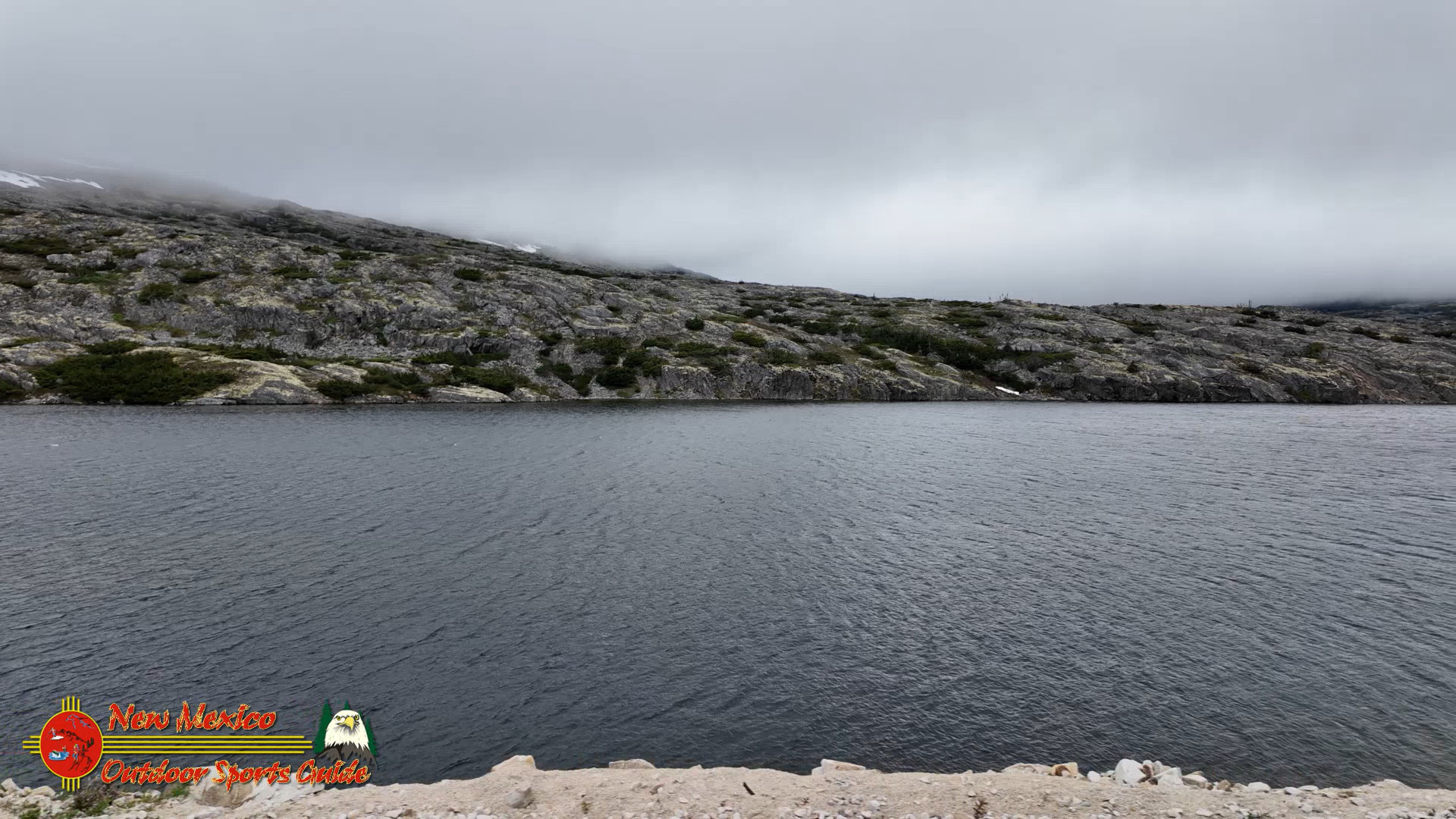
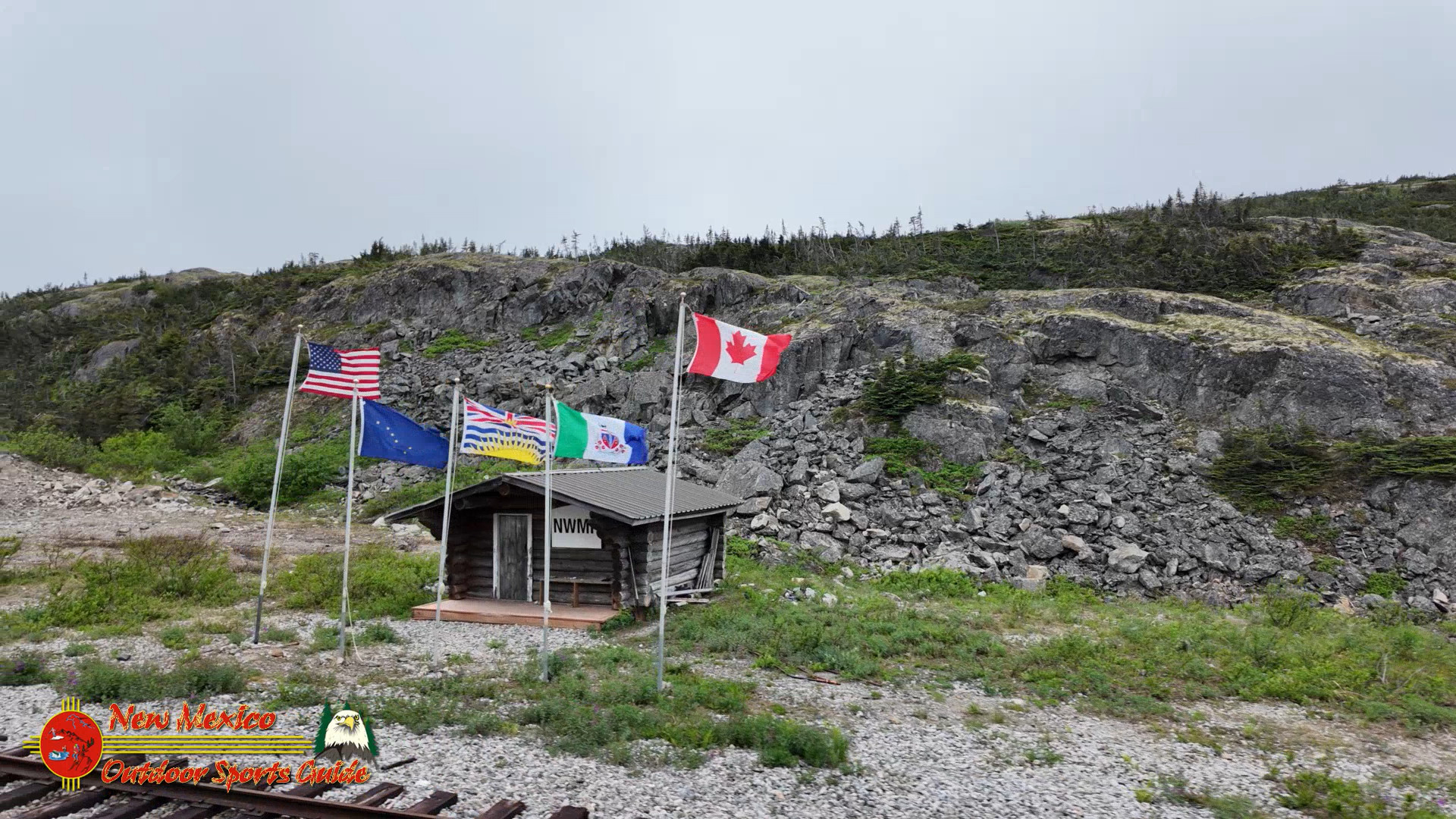
Eventually, the train reached the White Pass Summit, nearly 3,000 feet above sea level. We paused for a while, taking in the panoramic views of the rugged terrain. Paulette and I shared a quiet moment, just the two of us, reflecting on how fortunate we were to be on this adventure together. There was something incredibly peaceful about being up there, high above the world, surrounded by nothing but nature’s grandeur.
As the train began its descent back down the mountains, we settled back into our seats, warmed by the heater inside the car. The guide continued sharing stories, and we learned about the struggles and triumphs of the early railroad workers. It was easy to lose ourselves in the past, imagining what it must have been like to witness this landscape for the first time.
Before we knew it, we were back at the Skagway pier, with an hour to spare before the Norwegian Encore set sail for our next adventure: Glacier Bay. We disembarked, feeling exhilarated and grateful for the experience. The White Pass Scenic Railway had not only lived up to its reputation but had also provided us with a new perspective on the history and beauty of Alaska.
As we stood on the pier, looking up at the towering Norwegian Encore, we both felt a deep sense of satisfaction. The day had been filled with unexpected delights, from the smooth boarding process to the stunning scenery, the engaging narration, and the sense of connection we felt to the past. It was a perfect day, capped by the knowledge that more adventures awaited us as we continued our journey through the wonders of Alaska.
The White Pass Trail: Gateway to the Klondike Gold Rush
The Klondike Gold Rush, one of the most significant events in North American history, drew thousands of prospectors to the Yukon in the late 19th century. While many routes promised a way to the fabled gold fields, none were as treacherous and storied as the White Pass Trail. Dubbed the "Dead Horse Trail," it became a crucial passage for fortune seekers, playing a pivotal role in the shaping of the Yukon and Alaska. This post explores the rich history of the White Pass Trail, from its early days as a native trading route to its transformation into a lifeline during the Yukon Gold Rush.
The Discovery of Gold in the Klondike
In August 1896, news broke out of a significant gold discovery in Bonanza Creek, a tributary of the Klondike River in the Yukon Territory. George Carmack, along with his two Tagish companions, Skookum Jim and Dawson Charlie, made the find that would trigger a mass migration to the remote north. By the summer of 1897, newspapers across North America were filled with sensational stories of men striking it rich in the Klondike, sparking a stampede of over 100,000 fortune hunters who rushed toward the gold fields.
However, reaching the Klondike was not an easy feat. The Yukon was isolated, its harsh terrain and freezing temperatures proving to be formidable obstacles. Prospective miners faced a choice: take the all-water route via the Bering Sea and the Yukon River or traverse overland via the White Pass or the Chilkoot Trail. Both trails began in the coastal town of Skagway, Alaska, and led into Canada's Yukon Territory.
The Choice of Route: White Pass vs. Chilkoot
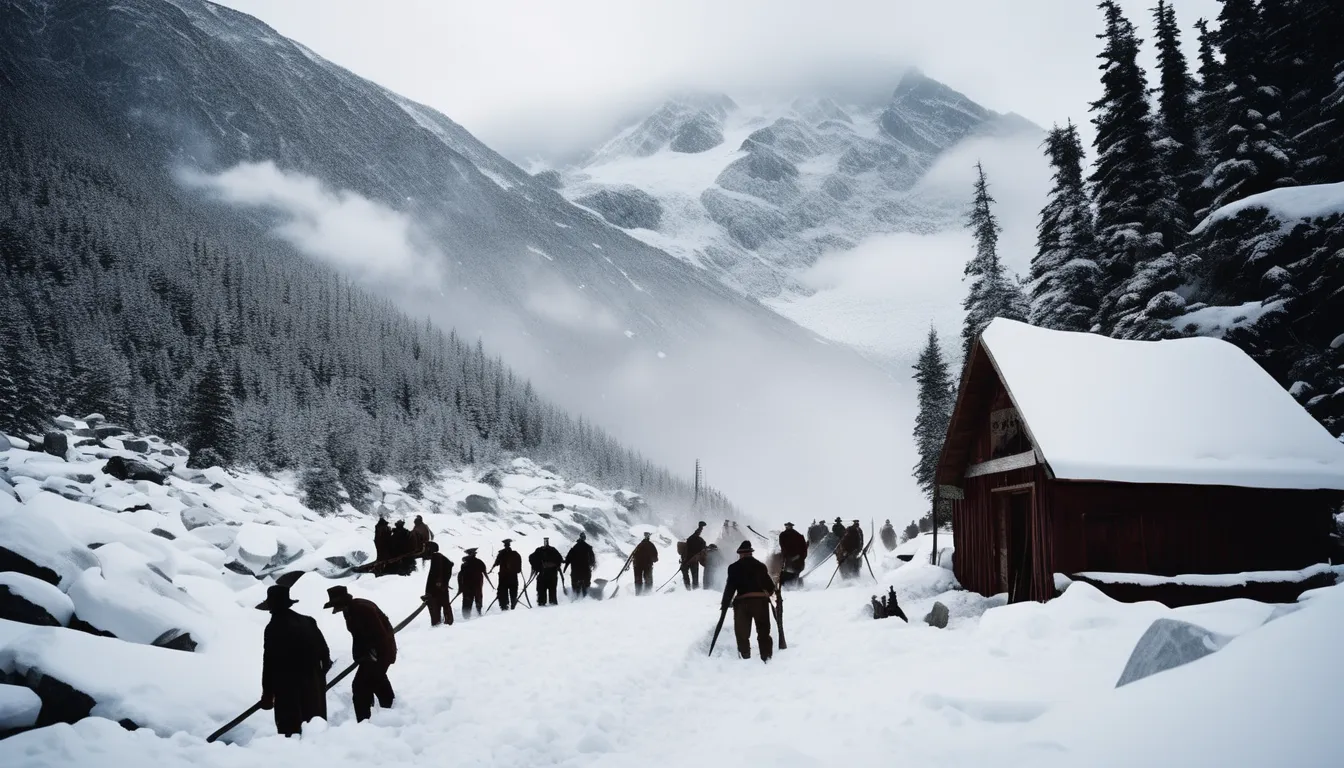
Chilkoot Pass 1894
For the many gold seekers who arrived in Skagway, the choice between the Chilkoot Trail and the White Pass Trail was crucial. The Chilkoot Trail, though shorter and more direct, was steep and dangerous, with a grueling ascent that required carrying provisions over multiple trips. The iconic "Golden Stairs" of the Chilkoot became a symbol of the arduous climb, where stampeders faced a 45-degree slope covered in deep snow.
In contrast, the White Pass Trail, also known as the "White Pass and Yukon Route," was promoted as a more accessible and easier alternative. Discovered in 1887 by Captain William Moore, a Canadian entrepreneur and surveyor, White Pass was a low-altitude pass through the Coast Mountains, leading from Skagway to Lake Bennett. While it appeared to offer a less strenuous climb, the route came with its own set of challenges.
The Birth of the White Pass Trail
Initially, Captain Moore envisioned White Pass as a potential gateway for trade and transportation between the coast and the Yukon. He began construction of a primitive trail, believing it would soon attract traffic. However, the discovery of gold in the Klondike in 1896 would change everything. When the gold rush began in earnest, White Pass became one of the primary routes to the Yukon, and Moore’s trail was quickly overwhelmed by the sheer volume of people, pack animals, and goods.
The White Pass Trail was immediately beset by difficulties. The narrow, twisting path followed the Skagway River, cutting through dense forests, across boggy wetlands, and over sharp ridges. Mudslides, snow, and avalanches were common. In its early days, the trail was nothing more than a rough path hacked through the wilderness, unsuitable for the heavy traffic of the gold rush. The treacherous conditions and the lack of proper infrastructure earned it the grim nickname “Dead Horse Trail,” owing to the large number of pack animals that perished along the way.
The Dead Horse Trail: A Haunting Legacy
The White Pass Trail quickly gained notoriety for its harsh conditions and the high mortality rate of the pack animals. Horses and mules, burdened with too much weight and weakened by inadequate care and harsh conditions, often collapsed and died along the trail. Contemporary accounts describe the tragic scenes of dead and dying horses scattered along the trail, a testament to the desperation and inexperience of many of the gold seekers.
Jack London, who traveled to the Klondike in 1897, wrote vividly about the horrors of the White Pass Trail, describing the merciless exploitation of animals and the frantic pace of the stampede. In his short story "The White Silence," London captures the grueling struggle, the isolation, and the hardship faced by those who dared to take the White Pass route. The passage became infamous for its brutal conditions and haunting legacy, but despite the danger, it continued to attract thousands of stampeders.
The Construction of the White Pass & Yukon Route Railroad
The dire need for a safer and more efficient way to reach the Klondike led to the construction of the White Pass & Yukon Route (WP&YR) railroad. Realizing the potential of a railway to replace the hazardous trail, British financiers and American engineers came together in 1898 to undertake the daunting task of building a railroad through some of the most rugged terrain in North America.
Construction began in May 1898, under the leadership of contractor Michael J. Heney. The project faced immense challenges, from sheer rock faces to deep gorges and steep mountain passes. Thousands of workers, including a significant number of immigrants from around the world, toiled in extreme conditions to lay the tracks. Blasting through granite with dynamite and black powder, the construction crew faced avalanches, extreme cold, and precarious heights.
Despite these obstacles, the railroad was completed in record time. The first section, from Skagway to White Pass Summit, was completed by February 1899. By July 29, 1900, the entire 110-mile route from Skagway to Whitehorse was finished. The completion of the WP&YR revolutionized transportation in the region, providing a safer, quicker, and more reliable means of reaching the Yukon.
Impact of the White Pass & Yukon Route
The White Pass & Yukon Route railroad played a crucial role in the final years of the Klondike Gold Rush and continued to serve the region long after the initial rush ended. The railroad brought supplies and passengers to the Yukon and transported gold and other resources out. It spurred economic development in Skagway, Whitehorse, and other towns along the route, helping to establish a more permanent settlement pattern in the region.
The WP&YR became known as the “Scenic Railway of the World” due to its breathtaking vistas of mountains, glaciers, and waterfalls. The engineering marvel of the route, including its towering steel bridges and steep mountain grades, attracted tourists even after the gold rush had faded. The railway continued to operate for freight and passenger service until the mid-20th century.
The Decline and Revival of the White Pass & Yukon Route
With the decline of mining activity in the Yukon and the advent of more modern transportation methods, the WP&YR saw a gradual reduction in traffic. By 1982, the railroad ceased regular operations due to economic challenges. However, it was not the end of the line for this historic route.
In the late 1980s, recognizing the growing interest in heritage tourism, the White Pass & Yukon Route was revived as a scenic excursion train. Today, the railway is one of Alaska's most popular tourist attractions, carrying passengers on a nostalgic journey through history and offering stunning views of the rugged landscape that challenged so many prospectors over a century ago.
Legacy of the White Pass Trail
The White Pass Trail remains a powerful symbol of the Klondike Gold Rush and the indomitable spirit of the men and women who braved its hazards in search of fortune. It stands as a reminder of the human capacity for endurance, innovation, and perseverance in the face of seemingly insurmountable challenges.
Today, visitors to the area can still see remnants of the old trail and experience its history through guided tours, interpretive displays, and the scenic train ride on the WP&YR. The story of the White Pass Trail is not just one of hardship and tragedy but also of hope, determination, and the relentless quest for a better life.
Conclusion: The Trail’s Enduring Impact
The White Pass Trail and the later railroad that followed it are a testament to the complex history of the Yukon Gold Rush. From its early days as a rough path through the wilderness to its transformation into a vital transportation route, White Pass was more than just a trail — it was a lifeline that carried the hopes and dreams of thousands.
The challenges faced and overcome on the White Pass Trail reflect the broader narrative of the American frontier spirit: a mix of ambition, adventure, hardship, and opportunity. As a physical link to the past, the trail invites us to remember the countless stories of those who dared to dream of a new future in the distant Yukon, reminding us that even the harshest paths can lead to unexpected discoveries.

0 Comments