
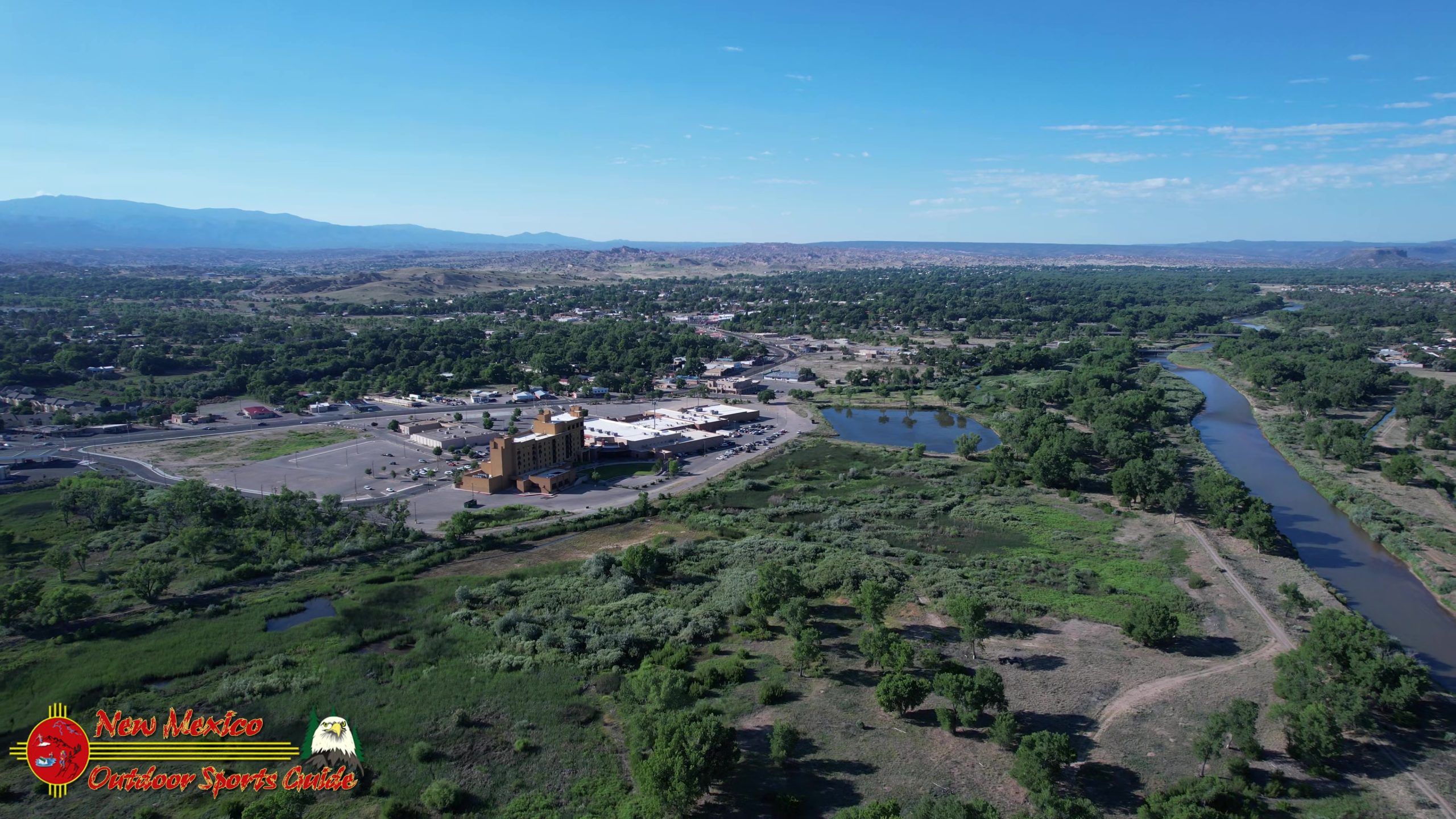
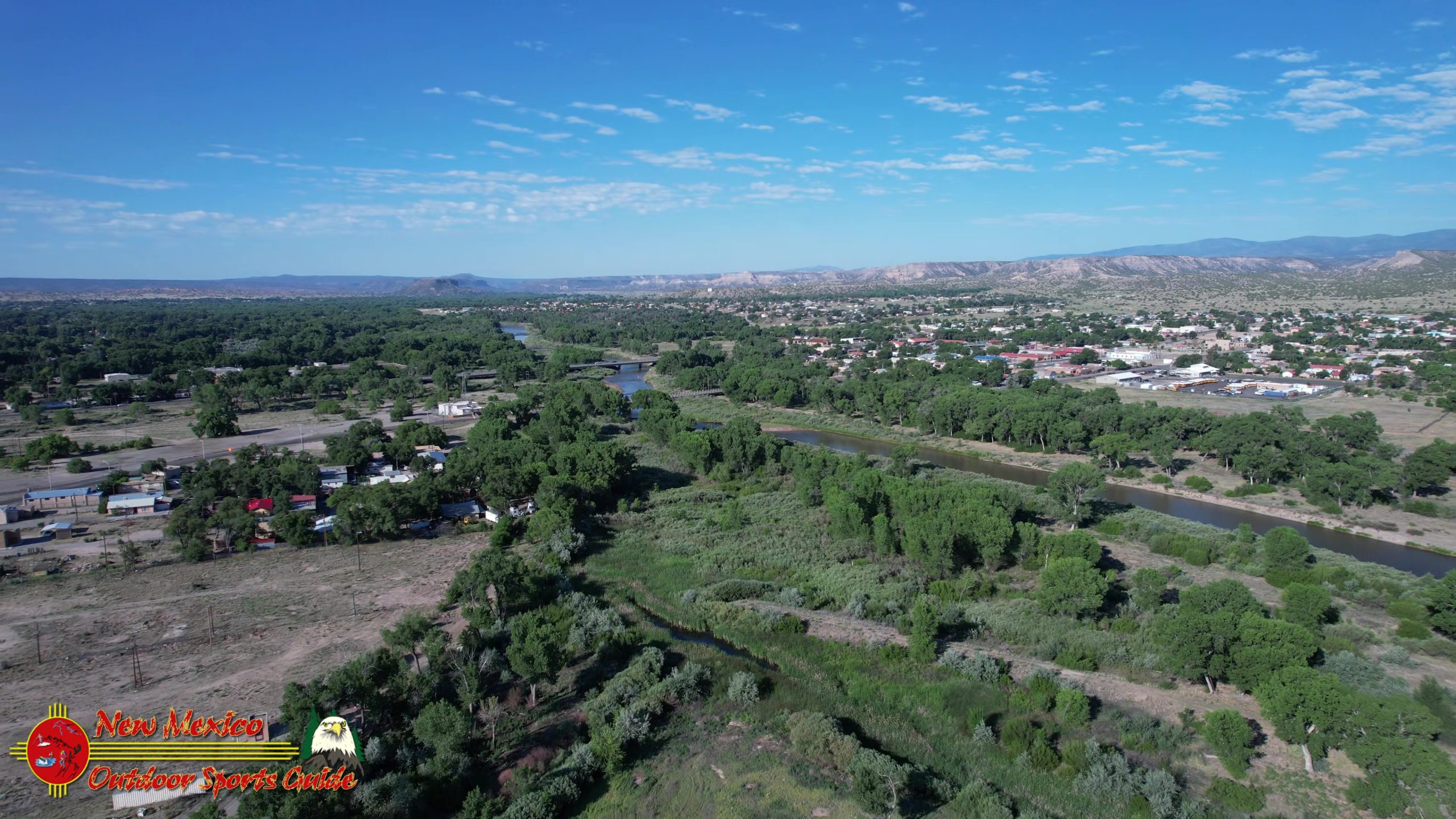
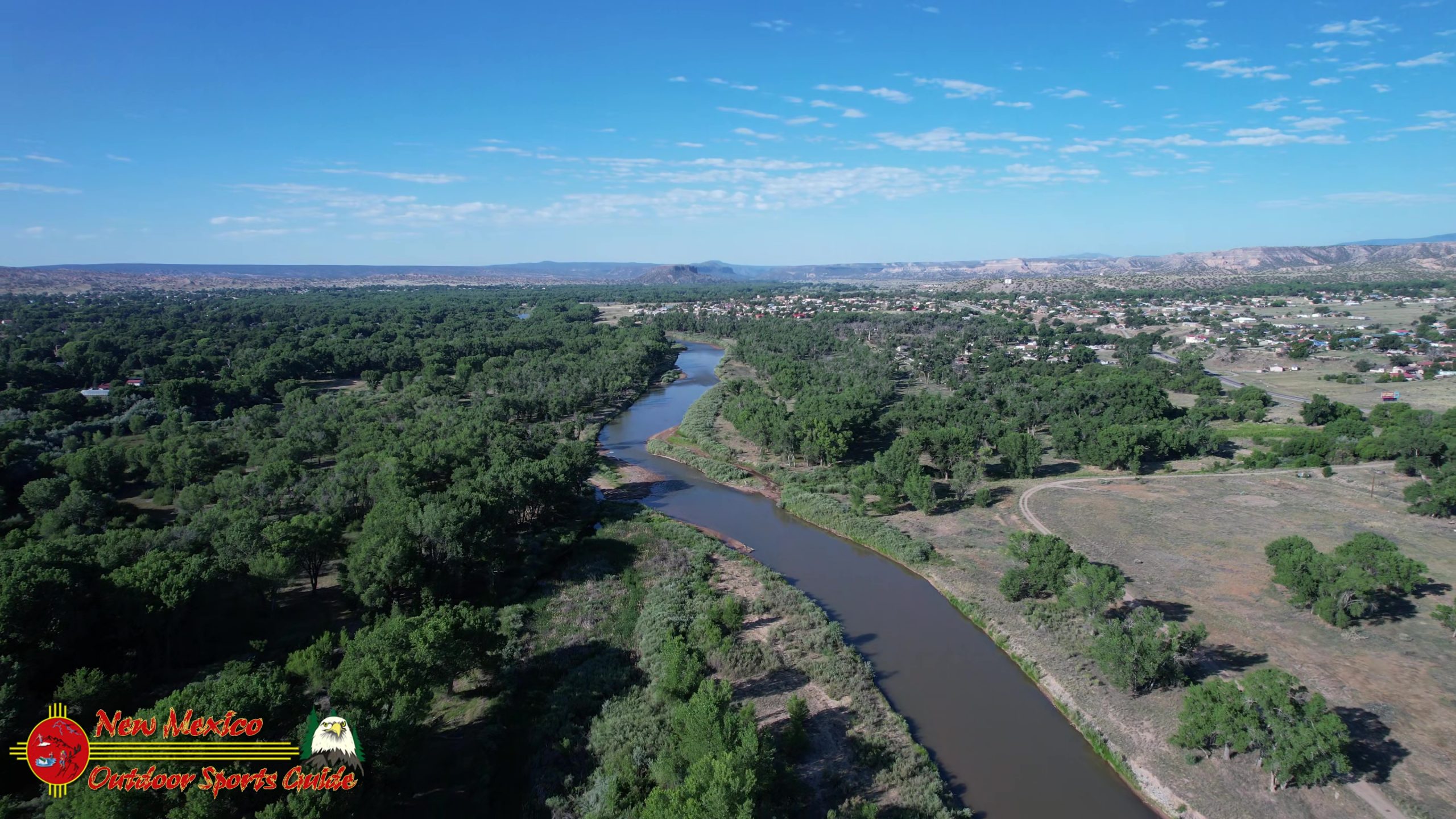
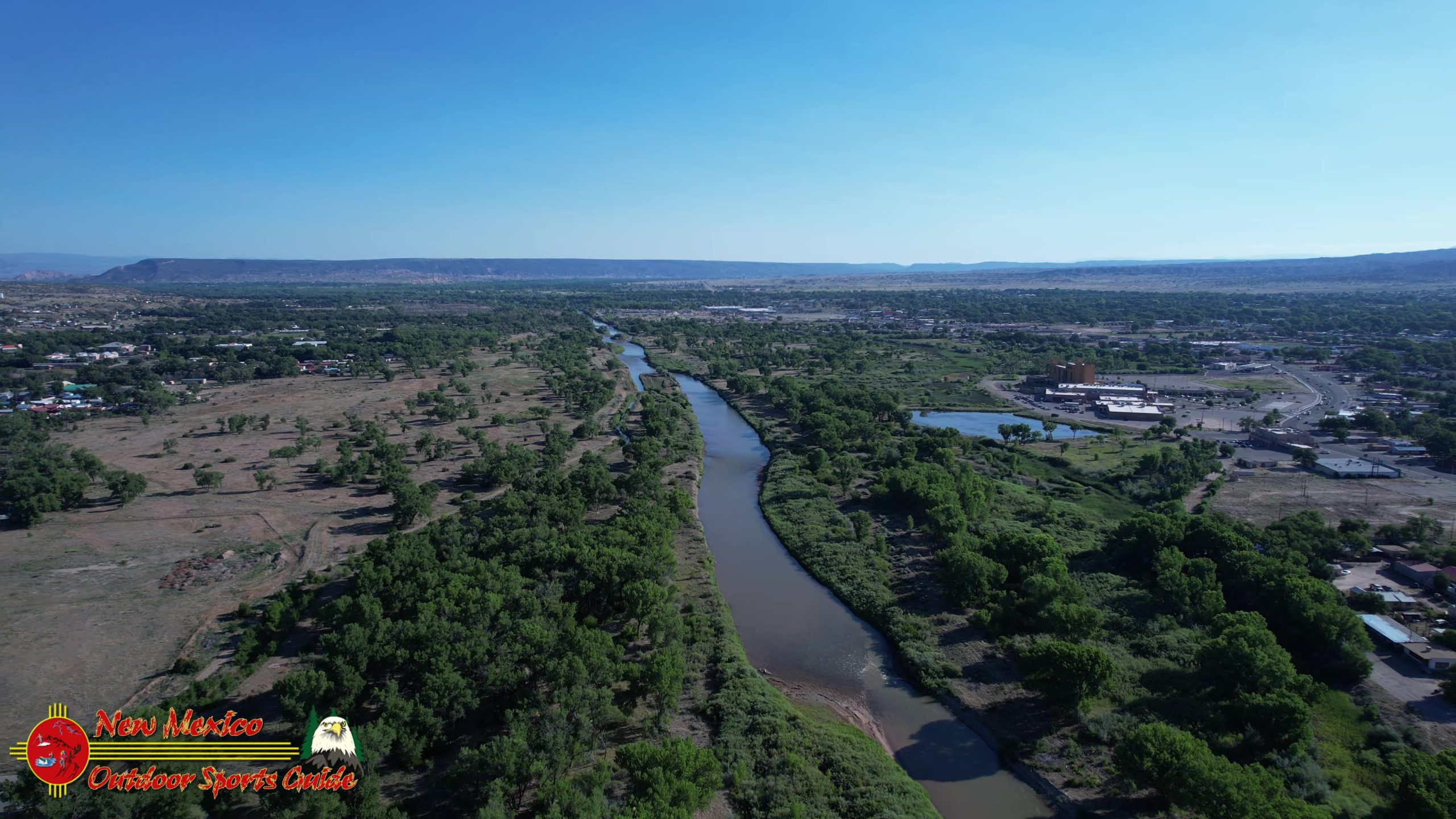
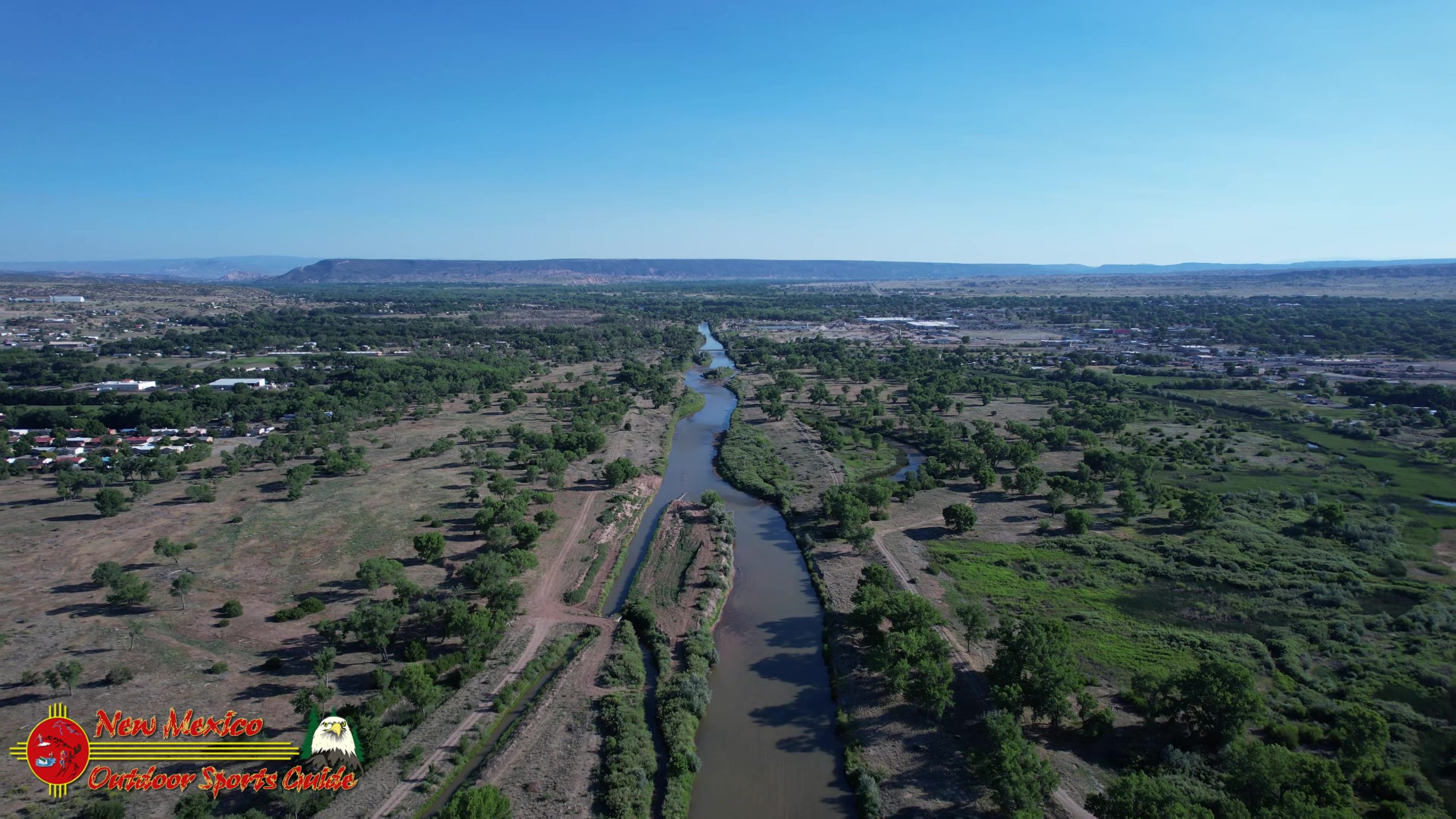
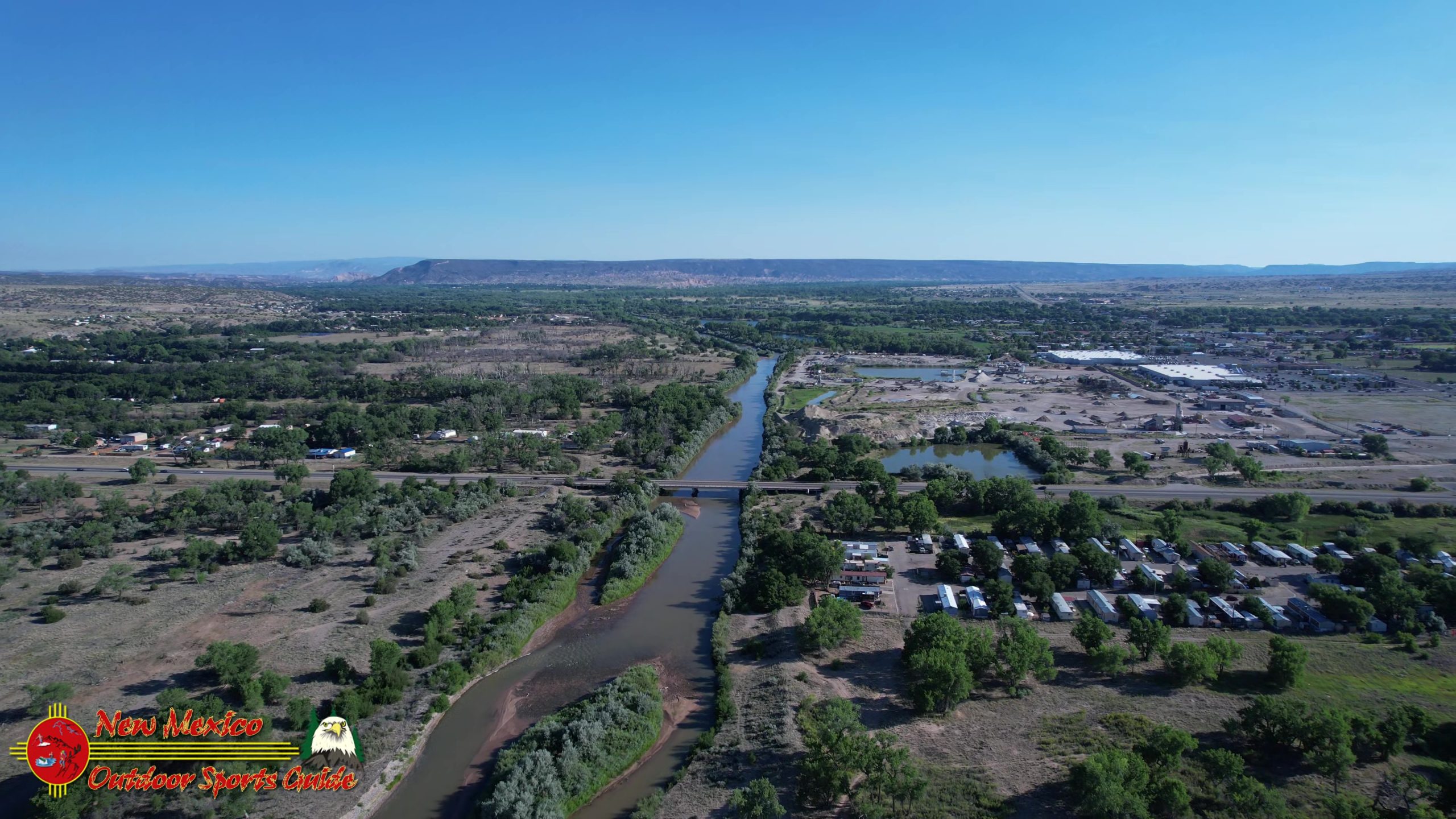
A mile or so northwest of Española, there’s a quiet spot where the Chama River joins the Rio Grande River. If you stand there in early spring, you’ll feel the bite of mountain snowmelt rolling off the Chama, colder and swifter than the Rio Grande, which moves slower and wider through this part of the valley. The sound of their meeting is subtle but powerful—a low, constant roar as they blend into one current.
I’ve stood on that bank in every season with my camera. In the spring, willows are just leafing out, and the rivers run high, their surfaces broken with ripples and foam. In summer, the water warms, reflecting a blazing sky and the deep greens of cottonwoods. Autumn brings golden leaves drifting downstream, catching in eddies like flecks of sunlight. And in winter, on those still mornings when fog rises off the warmer river water, you can see bald eagles perched in the bare trees, scanning the surface for fish.
That confluence isn’t just pretty—it’s vital. For centuries, the people of Ohkay Owingeh Pueblo, just upriver, have drawn life from this meeting of waters, feeding acequias that carry water to cornfields, bean patches, and orchards. The Rio Grande River nourishes more than crops; it sustains the traditions, ceremonies, and survival of the Tewa people.
The Pueblos – Living History Along the Rio Grande River
Ohkay Owingeh, known for centuries by the Spanish name San Juan Pueblo, is the kind of place where time feels layered, not linear. The adobe homes, many with thick walls weathered by centuries, hold stories older than any ranching family, older even than the Spanish settlers. On feast days, when the plaza fills with dancers, drummers, and singers, you can feel those layers of history vibrating in the air.
I first visited Ohkay Owingeh as a teenager. My father, a rancher who worked the land as hard as any man I’ve known, told me to watch how they respected the river. “We pull from it to live,” he said, “but we never take more than we need. The river’s not just for us. It’s for everything.”
That lesson stuck. Watching the dancers move in rhythm with the drumbeats, their steps echoing the pulse of the Rio Grande River itself, I realized how deeply this river runs in the culture here. The pueblos don’t just live beside the Rio Grande—they live with it, in a balance that we ranchers, with our thirst for irrigation, sometimes forgot.
Acequias – Lifelines of the Valley
If you drive the back roads around Española, you’ll see networks of acequias—hand-dug irrigation channels, many dating back to the early Spanish settlers, who themselves learned the technique from the Moors and, more importantly, the pueblos. These waterways are as much a part of life here as the rivers themselves.
When I was young, I worked side by side with neighbors to clear our acequia each spring. It wasn’t just about getting water to the fields—it was about community. We’d gather with shovels, clearing debris, laughing, sometimes arguing about whose turn it was to get water first. The Rio Grande River fed all of us, but we had to share, and the acequia system taught us that the land doesn’t belong to one man alone.
Even today, when I take photos along the river near Española, I often find myself drawn to those little channels, reflecting the sky like silver threads, winding through fields of green in the midst of high desert brown.
The Spanish Legacy – Fields, Plazas, and Churches
Española itself traces its European roots back to 1598, when Don Juan de Oñate and his colonists settled near here, founding San Gabriel, the first Spanish capital of New Mexico. Though the original site is gone, the influence remains in the valley’s farms, in the low-slung adobe churches, and in the traditions that still shape local life.
On Sunday mornings, you can hear the bells of historic churches like Santa Cruz de la Cañada tolling across the valley. In autumn, chile ristras—bright red strings of sun-dried chile—hang from porches, adding color to the muted browns of adobe homes. And at Christmas, farolitos (little paper lanterns) light the paths around plazas, their soft glow mirrored in the dark waters of the Rio Grande River.
These traditions, layered atop the older Tewa culture, make Española a place where history isn’t locked behind museum glass—it’s lived, every day, along the riverbanks.
Life on the Ranch – The River as a Teacher
Growing up on the ranch, the Rio Grande River was more than a scenic backdrop. It dictated everything. When snowpack in the Sangre de Cristos was heavy, we knew the river would run strong come spring, filling our ditches and swelling the grass in the pastures. In dry years, we watched every drop, rationing water, praying for summer storms.
I remember trailing cattle along the river one July afternoon, the air thick with heat. My father stopped his horse, pointed to a stand of cottonwoods, and said, “That’s where the water is. The trees tell you before the land does.” Those moments, simple as they seemed then, taught me how to read the land—skills I carry now when I’m out with my camera, looking for the perfect shot of light hitting the river at dawn or a hawk wheeling above the valley.
The Climate – Four Seasons of Beauty and Challenge
Española sits at about 5,600 feet, a crossroads between mountain and desert climates. Each season has its own personality, and each brings something new to the Rio Grande River valley.
-
Spring: Snowmelt surges down from the mountains, and the riverbanks come alive with budding cottonwoods and blooming wildflowers. I love photographing the contrast of bright green against the still-snowcapped peaks in the distance.
-
Summer: Days can soar into the 90s, the air dry and buzzing with cicadas, but the Rio Grande River offers relief. Towering thunderheads roll in during monsoon season, releasing sudden downpours that send the scent of wet sagebrush into the air. I often film the storms as they sweep across the valley, lightning flashing over the mesas.
-
Autumn: The cottonwoods turn to gold, their leaves drifting like coins across the Rio Grande’s surface. It’s my favorite time to walk the banks with my camera, capturing the soft light of late afternoon as it warms the fields and water.
-
Winter: Mornings bring frost and fog along the river, the kind of cold that stings your lungs. Bald eagles glide over the valley, following the river’s slow current. There’s a stillness in winter, a quiet beauty that reminds me why I fell in love with photographing this land in the first place.
Wildlife – The River’s Constant Companions
The Rio Grande River near Española is a sanctuary for wildlife, just as it is for people. I’ve spent countless dawns crouched near its banks, camera in hand, waiting for the first light to break and the creatures to stir.
In winter, bald eagles become regular visitors, their sharp cries cutting through the cold air. Great blue herons, stoic and deliberate, stalk the shallows even when the water steams from the temperature difference. Mule deer emerge at dusk, their silhouettes dark against the fading light.
And every now and then, if I’m patient, I catch sight of a river otter slipping through the water—a quiet reminder that this river still holds secrets.
Española and Santa Fe – Two Sides of the Same River
Though Española is just a 25-mile drive from Santa Fe, the two feel like different worlds. Santa Fe, where I live now, hums with tourists, art galleries, and historic charm. But Española feels raw, real—a working town where fields still matter, where the Rio Grande River isn’t a backdrop but the center of life.
I love both, but when I want to feel connected to the heartbeat of northern New Mexico, I head north. I’ll walk the riverbanks at sunrise, the cold air smelling of cottonwood and distant wood smoke, and remember the days on the ranch when life revolved around water, weather, and the changing light on the mountains.
A River Worth Protecting
For all its beauty and resilience, the Rio Grande River faces challenges—drought, overuse, and the ever-growing demands of towns and farms along its length. Standing on its banks near Española, camera around my neck, I sometimes wonder if future generations will know it as I have—full, living, teeming with life—or as a struggling shadow of itself.
That’s why I keep photographing it. Each image, each video clip, is a way to capture its story and share it. Maybe, just maybe, if more people see what this river means—to wildlife, to cultures, to the very survival of the Southwest—they’ll understand why we must protect it.
Closing Reflections – The Soul of Northern New Mexico
Española may not have Santa Fe’s galleries or Taos’s ski slopes, but it has something harder to define: authenticity. It’s where the Rio Grande River truly feels like the lifeline it’s always been. It’s where pueblos, Spanish descendants, and ranchers still work the land side by side, tied together by the same water.
Every time I walk the banks of the Rio Grande near Española, I think of my father, teaching me to read the land; of the Tewa dancers, whose songs rise like prayers above the river; of the eagles, deer, and otters that call this valley home. And I think of the generations yet to come, who will need this river as much as we always have.
For those who love the American Southwest, for those who want to feel its soul, come see this stretch of the Rio Grande River. Stand where the Chama joins it. Watch the cottonwoods turn gold. Listen to the quiet hum of water moving steadily south. This is New Mexico, in its truest form.
0 Comments