
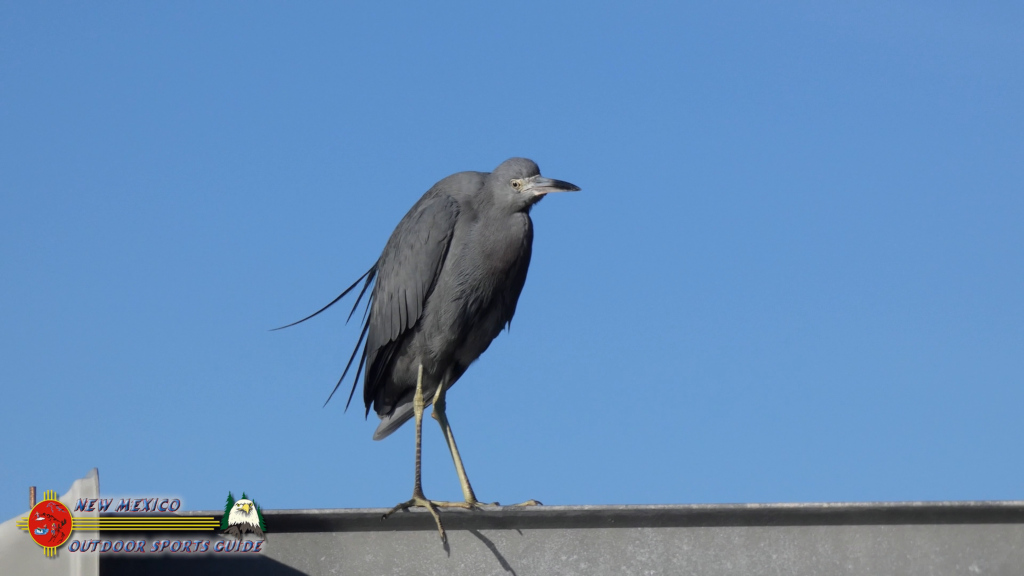
The herons are long-legged freshwater and coastal birds in the family Ardeidae, with 64 recognised species, some of which are referred to as egrets or bitterns rather than herons. Members of the genera Botaurus and Ixobrychus are referred to as bitterns, and, together with the zigzag heron, or zigzag bittern, in the monotypic genus Zebrilus, form a monophyletic group within the Ardeidae. Egrets are not a biologically distinct group from the herons, and tend to be named differently because they are mainly white or have decorative plumes in breeding plumage. Herons, by evolutionary adaptation, have long beaks.
Herons are medium- to large-sized birds with long legs and necks. They exhibit very little sexual dimorphism in size. The smallest species is usually considered the dwarf bittern, which measures 9.8–11.8 inches in length, although all the species in the genus Ixobrychus are small and many broadly overlap in size. The largest species of heron is the goliath heron, which stands up to 60 inches tall. The necks are able to kink in an S-shape, due to the modified shape of the cervical vertebrae, of which they have 20–21. The neck is able to retract and extend, and is retracted during flight, unlike most other long-necked birds. The neck is longer in the day herons than the night herons and bitterns. The legs are long and strong and in almost every species are unfeathered from the lower part of the tibia (the exception is the zigzag heron). In flight, the legs and feet are held backward. The feet of herons have long, thin toes, with three forward-pointing ones and one pointing backward.
Herons and bitterns are carnivorous. The members of this family are mostly associated with wetlands and water, and feed on a variety of live aquatic prey. Their diet includes a wide variety of aquatic animals, including fish, reptiles, amphibians, crustaceans, molluscs, and aquatic insects. Individual species may be generalists or specialize in certain prey types, such as the yellow-crowned night heron, which specializes in crustaceans, particularly crabs. Many species also opportunistically take larger prey, including birds and bird eggs, rodents, and more rarely carrion. Even more rarely, herons eating acorns, peas, and grains have been reported, but most vegetable matter consumed is accidental.



0 Comments