
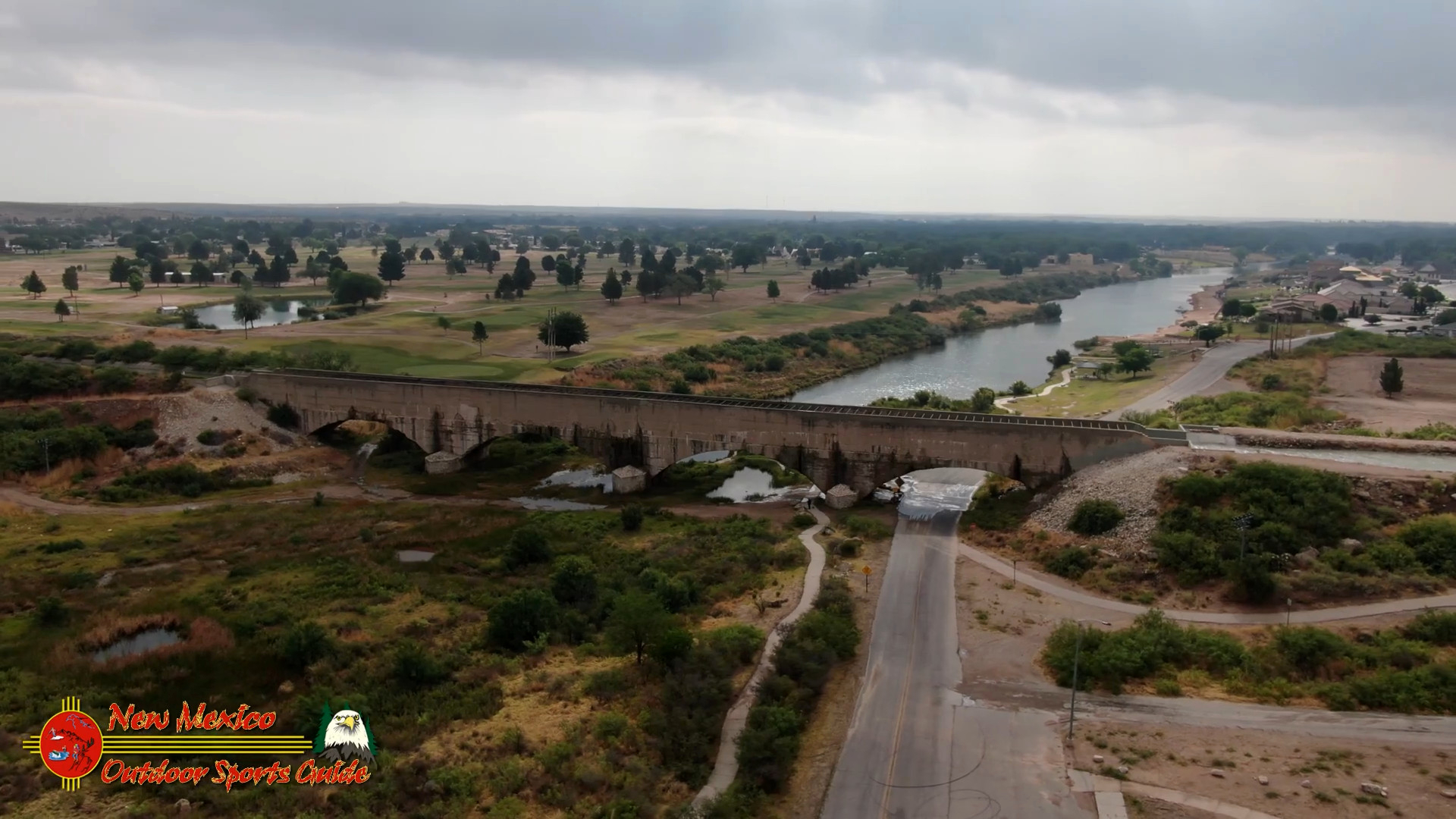
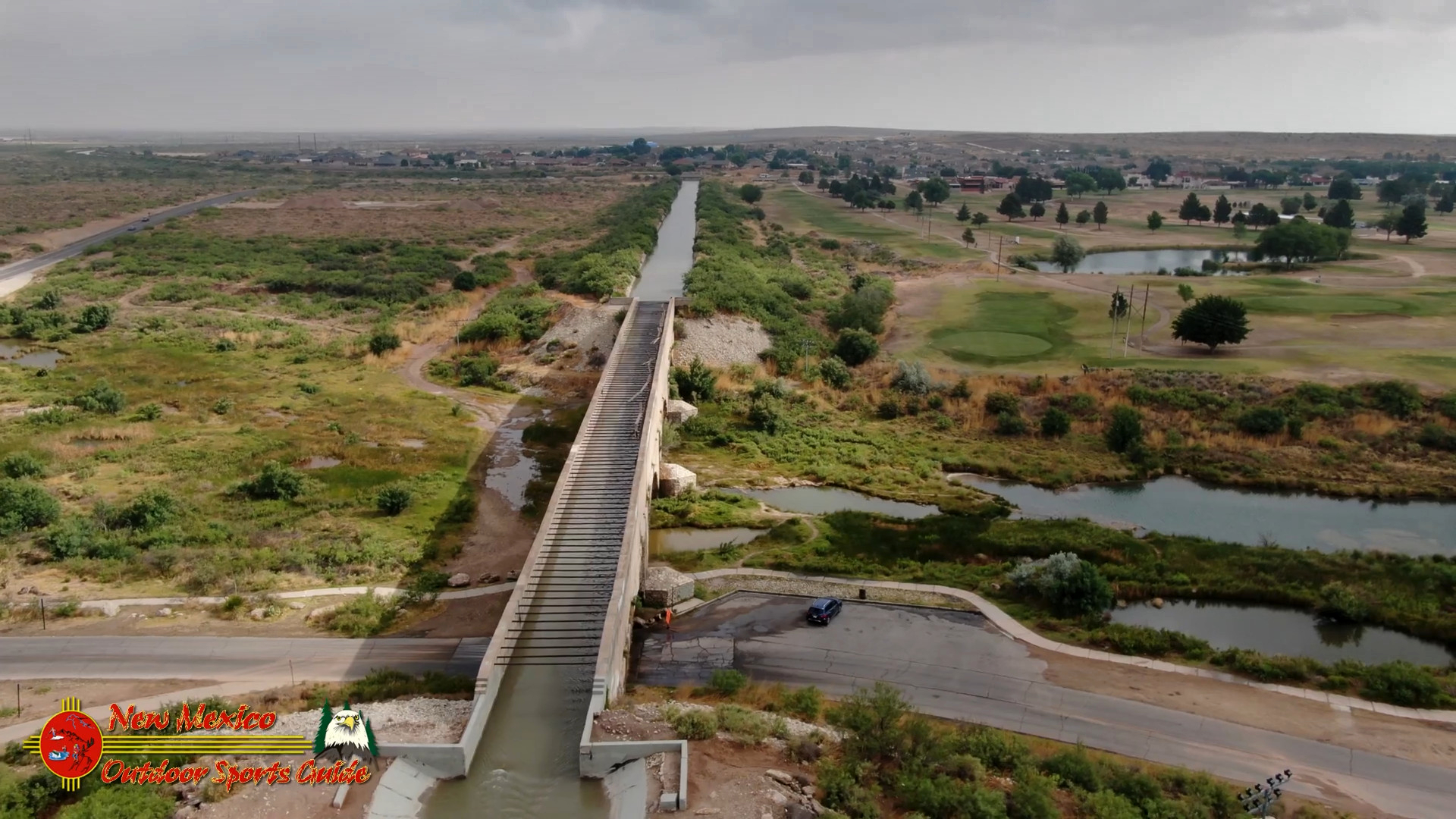
Pecos River Flume - Carlsbad, NM
The Pecos River Flume is an aqueduct carrying irrigation water over the Pecos River. Construction took place from 1889 to 1890 and was part of the Pecos River Reclamation Project. It was originally constructed of wood and spanned 145 feet. It carried water at a depth of 8 feet. In 1902, a flood destroyed the flume and it was subsequently rebuilt using concrete. In 1902, it was identified as the largest concrete aqueduct in the world.
The flume and its surrounding area have been reclaimed by the city of Carlsbad and transformed into a tourist attraction, with park improvements along the river and spotlights to give a spectacular nightly view.
The Pecos River, in New Mexico and Texas, is yet another river at risk of drying up soon. It runs for around 926 miles and runs from the Sangre de Cristo Mountains near Santa Fe, New Mexico into the eastern part of the state of Texas before emptying into the Rio Grande just below the Hwy 90 bridge west of Del Rio.
The Pecos River (Spanish: Río Pecos) originates in north-central New Mexico near Santa Fe and flows into Texas, emptying into the Rio Grande. Its headwaters are on the eastern slope of the Sangre de Cristo mountain range in Mora County north of Pecos, NM, at an elevation of over 12,000 feet. The river flows for 926 miles before reaching the Rio Grande near Del Rio.
The name "Pecos" derives from the Keresan (Native American language) term for the Pecos Pueblo, [p'æyok'ona]. The river was also historically referred to as the Río Natagés for the Mescalero people.
The river played a large role in the exploration of Texas by the Spanish.
On June 6, 1990, 20.5 miles of the Pecos River from its headwaters to the townsite of Tererro received National Wild and Scenic River designation.

0 Comments