
The morning light filtered through the Honey Locust outside Casa Santa Fe, casting familiar shadows across our kitchen table where Paulette and I shared our coffee. At eighty-something, I've learned that the best adventures often begin with the simplest conversations. The day before, I'd asked her casually, "Want to go to Conjilon Lakes tomorrow? I'd like to get some photos and video, maybe scout the trout fishing prospects for a future trip."
Her response was immediate and enthusiastic: "Sure! What time should I be ready?"
"Let's leave around nine or ten," I suggested, already envisioning the drive through northern New Mexico's spectacular high country. "It's a little over two hours, and we can have a picnic lunch by the water."
Fifty years. That's how long it had been since I'd last visited the Conjilon Lakes, tucked high in the San Juan Mountains of northern New Mexico. Back then, I was a young man with different priorities, different eyes. Now, as an octogenarian with a deep passion for documenting the wilderness and wildlife of the American Southwest through photography and video, I was eager to see these pristine alpine waters through the lens of experience and appreciation that comes with age.
The Journey North
By 9:30 the next morning, Paulette announced she was ready. I loaded our trusty Subaru Outback with my favorite picnic fare—beans, smoked sausage, and fresh fruit—along with my beloved Lumix FZ2500 camera and video equipment. The familiar weight of the camera bag reminded me of countless adventures across Arizona, Utah, Colorado, and New Mexico, capturing the raw beauty of the American Southwest for the New Mexico Outdoor Sports Guide blog and our YouTube channel.
As we pulled out of Santa Fe, heading north toward Española and beyond, I couldn't help but reflect on the journey that had brought us here. From my boyhood on the beef and dairy ranches in the Kansas Flint Hills to our years at Casa Oso, our log cabin perched at 9,500 feet above Angel Fire, overlooking the Moreno Valley with Wheeler Peak standing sentinel to the west and Eagle Nest Lake sparkling below—every mile of this drive held memories.
The familiar rhythm of the Subaru's engine and the gradually changing landscape transported me back to those early days when Paulette and I first discovered New Mexico's high country. We'd spent seventeen memorable years at Angel Fire, with winters of three to four feet of snow and summers filled with hiking, fly fishing, and endless exploration of the Sangre de Cristo Mountains.
Into the San Juan Wilderness
The drive to Conjilon Lakes winds through some of New Mexico's most spectacular terrain. As we left the familiar mesas and arroyos around Santa Fe behind, the landscape began its dramatic transformation. The road climbed steadily through pinyon and juniper country, then into ponderosa pine and Aspen forests that reminded me of our years at altitude.
The San Juan Mountains, part of the vast San Juan National Forest, stretch across northern New Mexico and southern Colorado like a geological symphony written in stone and snow. These peaks, some reaching over 13,000 feet, hold the headwaters of the Chama River system—one of New Mexico's most important waterways for both wildlife and trout fishing enthusiasts like myself.
As we gained elevation, I found myself thinking about all the bass tournaments I'd fished throughout Texas and Louisiana during my Skeeter Bass Boats days, proudly sponsored and chasing largemouth bass across warm southern waters. But there's something about trout fishing in high mountain lakes that touches a different part of the soul. Maybe it's the crystalline clarity of the water, the way rainbow and cutthroat trout rise to dry flies in the thin mountain air, or simply the cathedral-like silence that surrounds these alpine sanctuaries.
Arrival at Upper Conjilon Lake
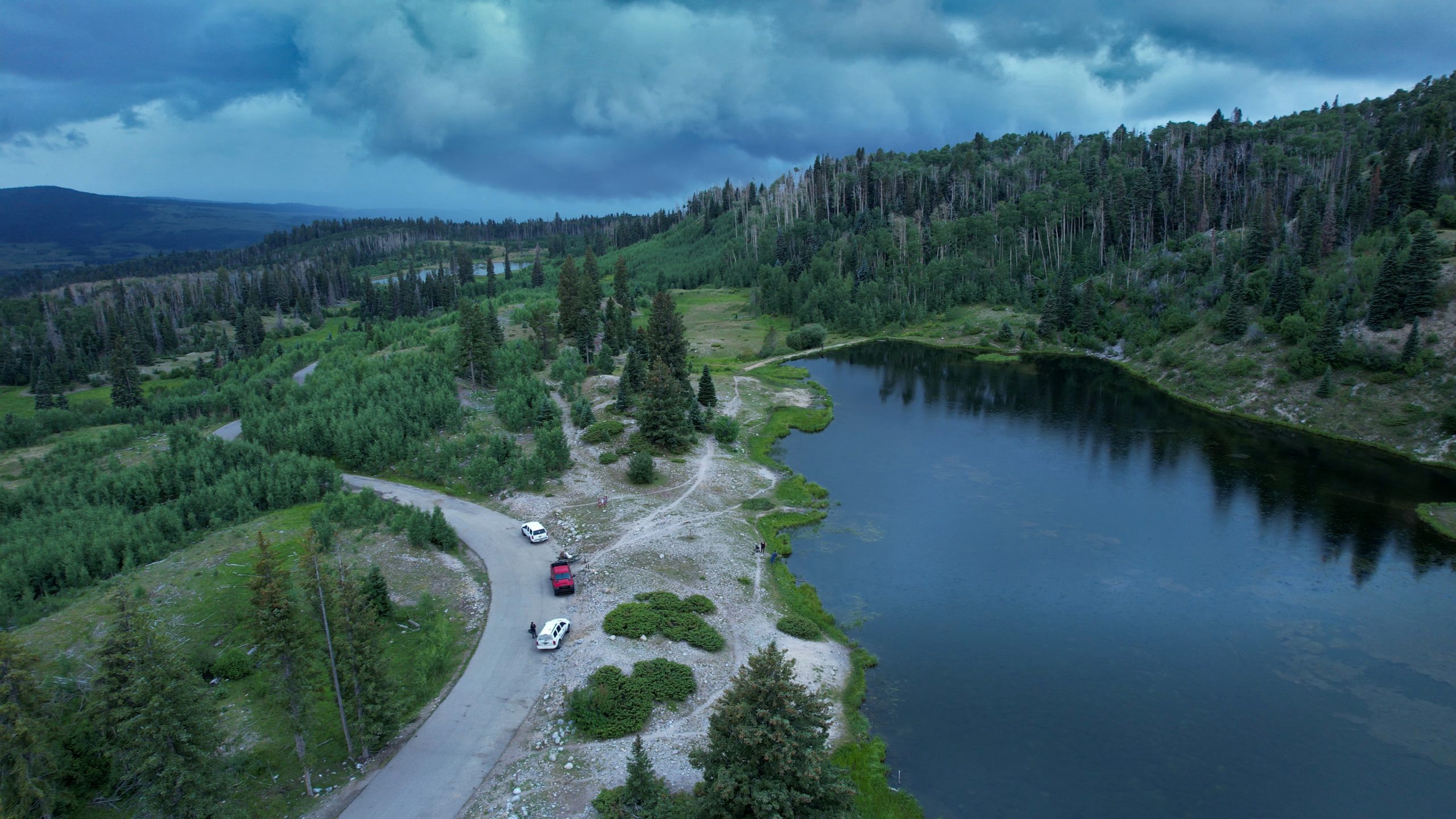
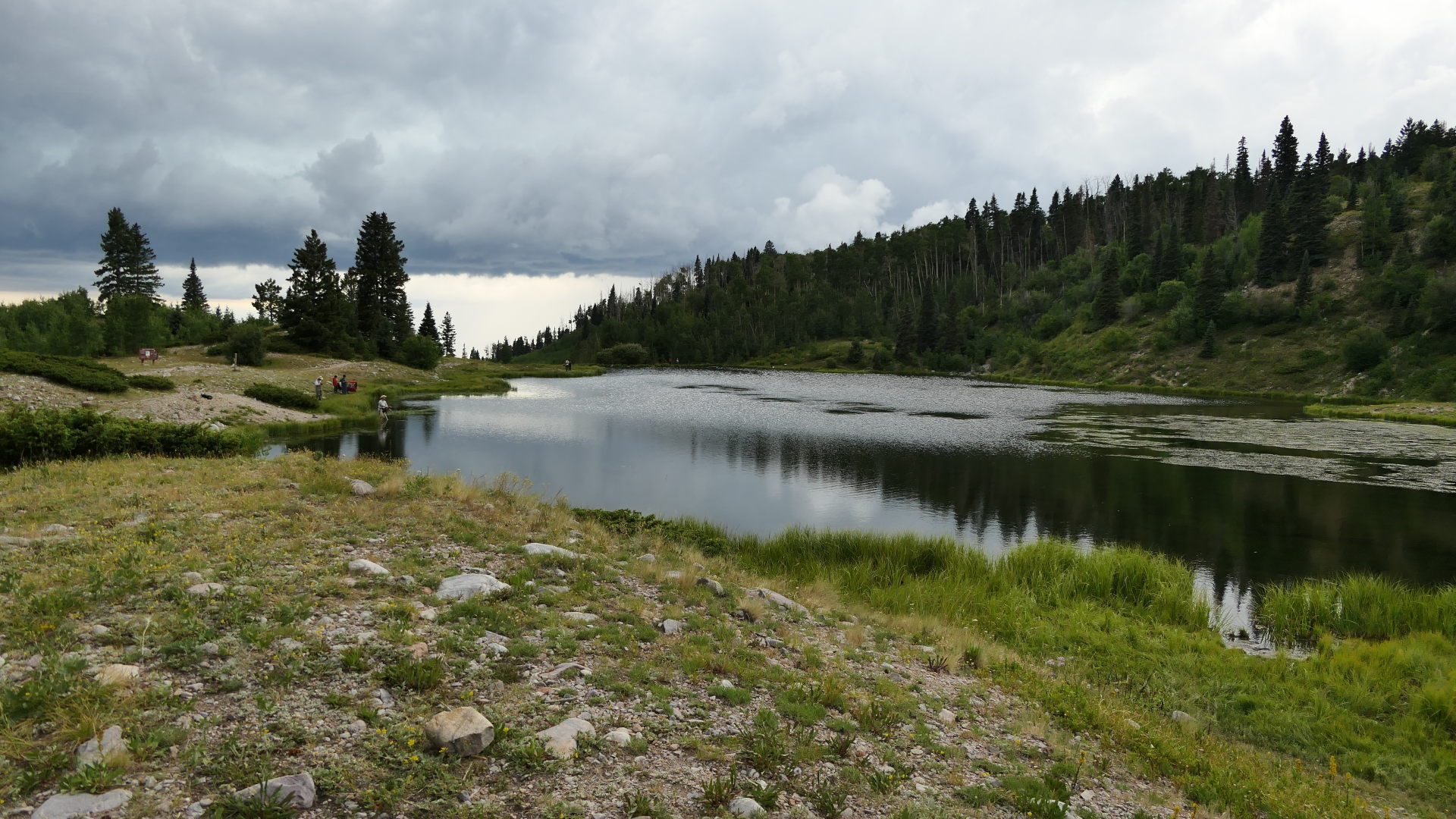
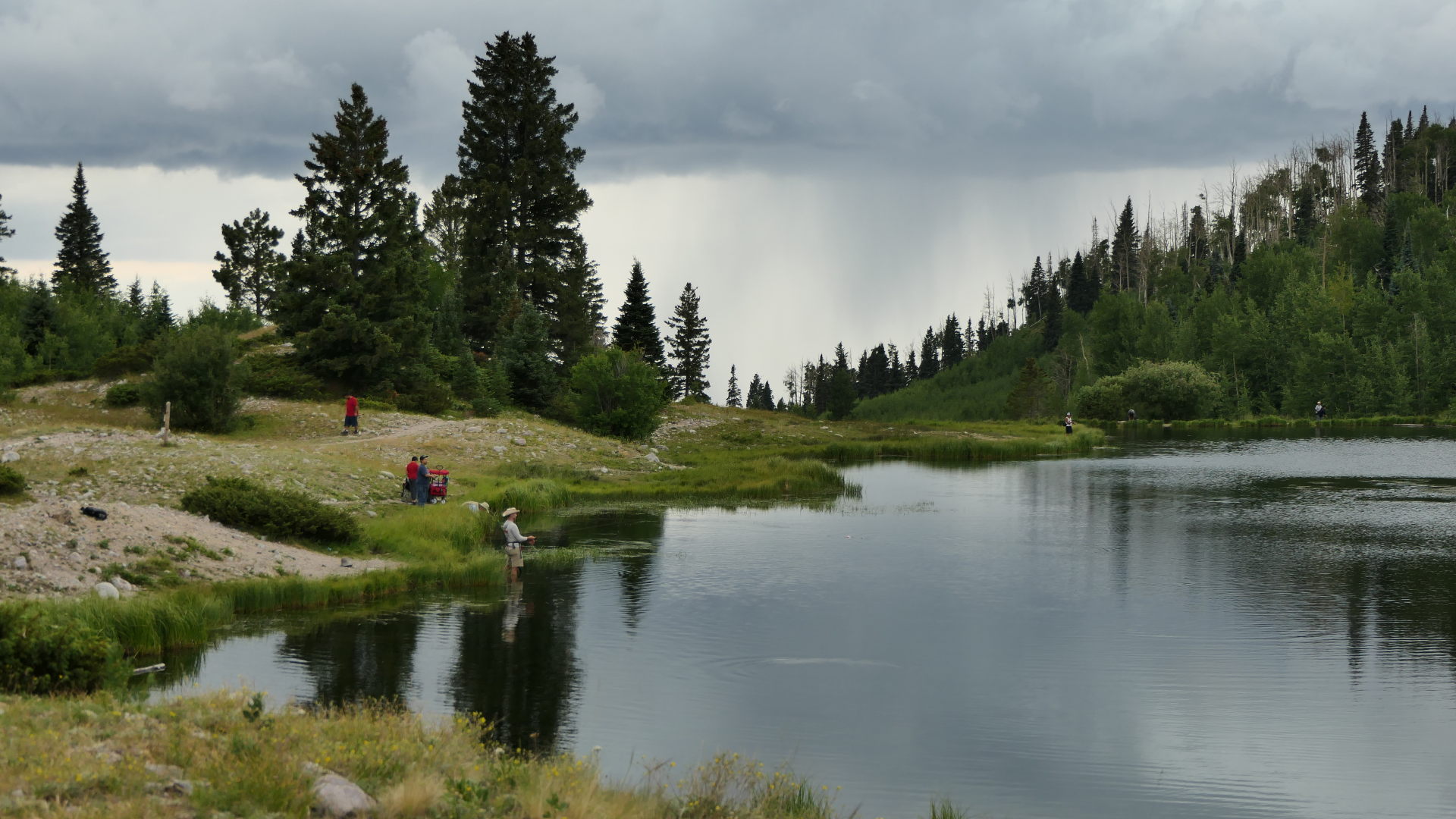
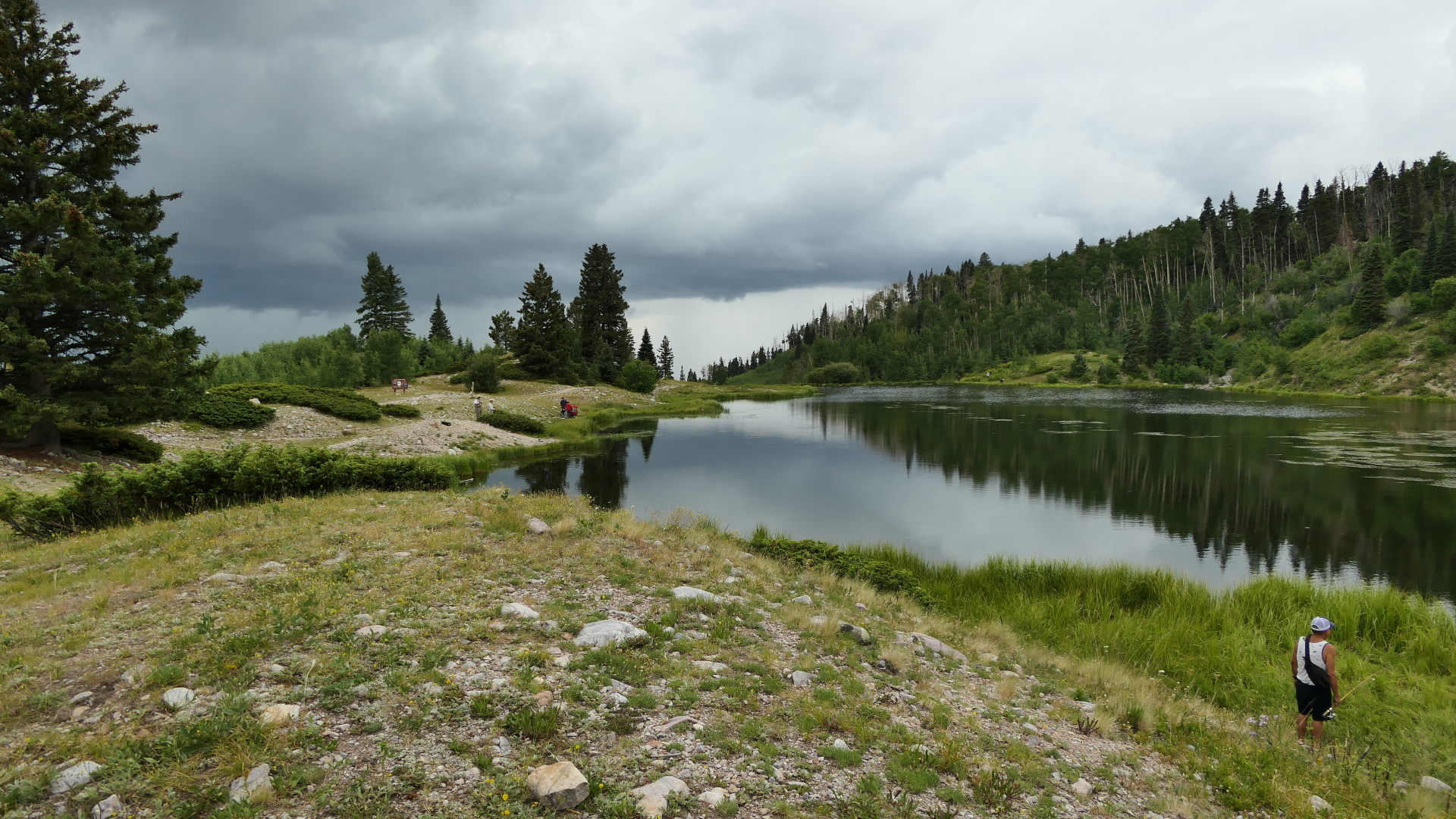
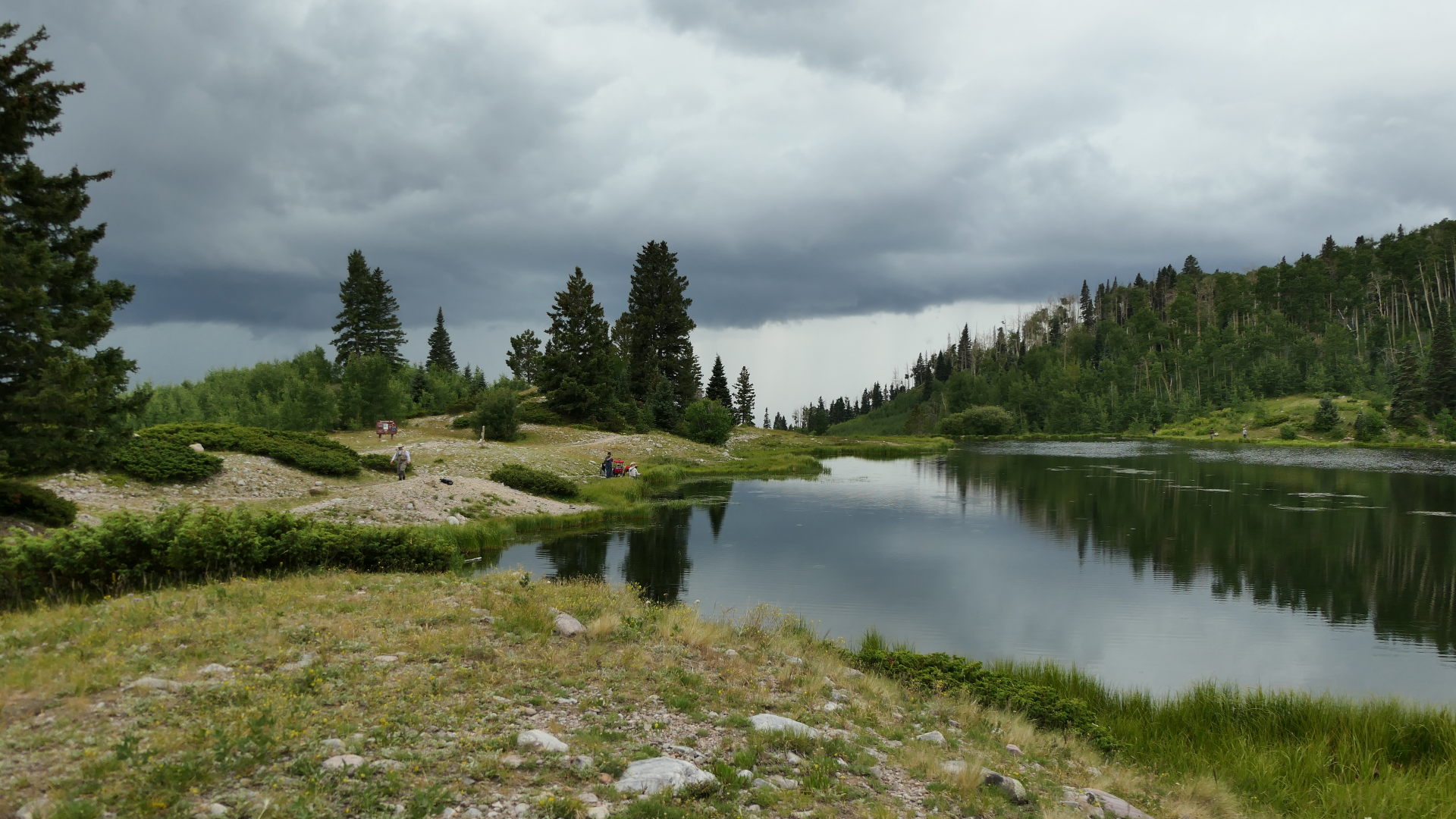
As we neared the lakes, I noticed clouds beginning to build over the peaks behind Upper Conjilon Lake—exactly where I'd planned our picnic and photo shoot. The rumble of distant thunder rolled across the high country, a sound that never fails to stir something primitive and powerful in my chest. Growing up on the Kansas plains, I'd learned to read weather like a second language, and these afternoon mountain storms had become old friends during our Angel Fire years.
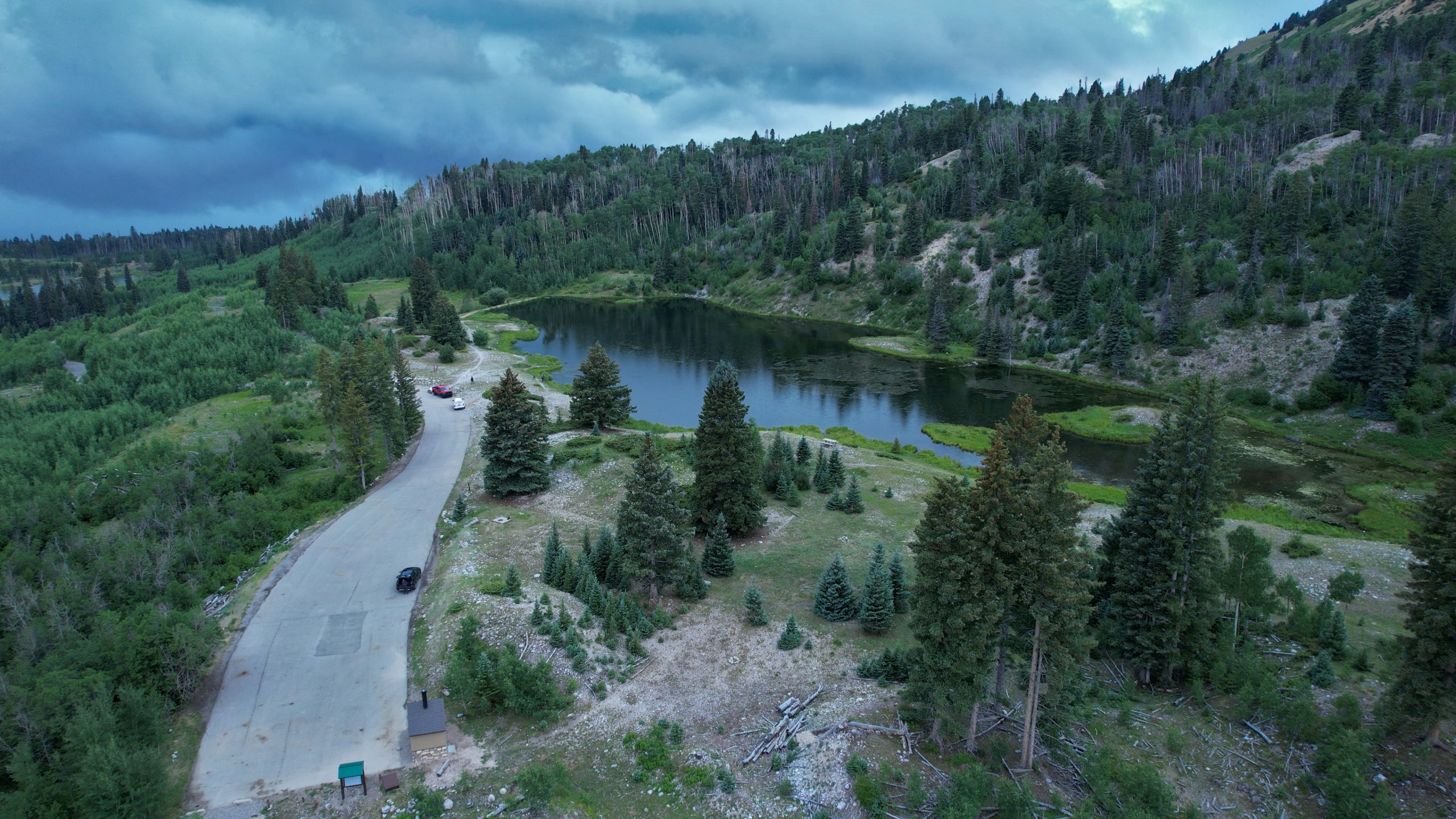
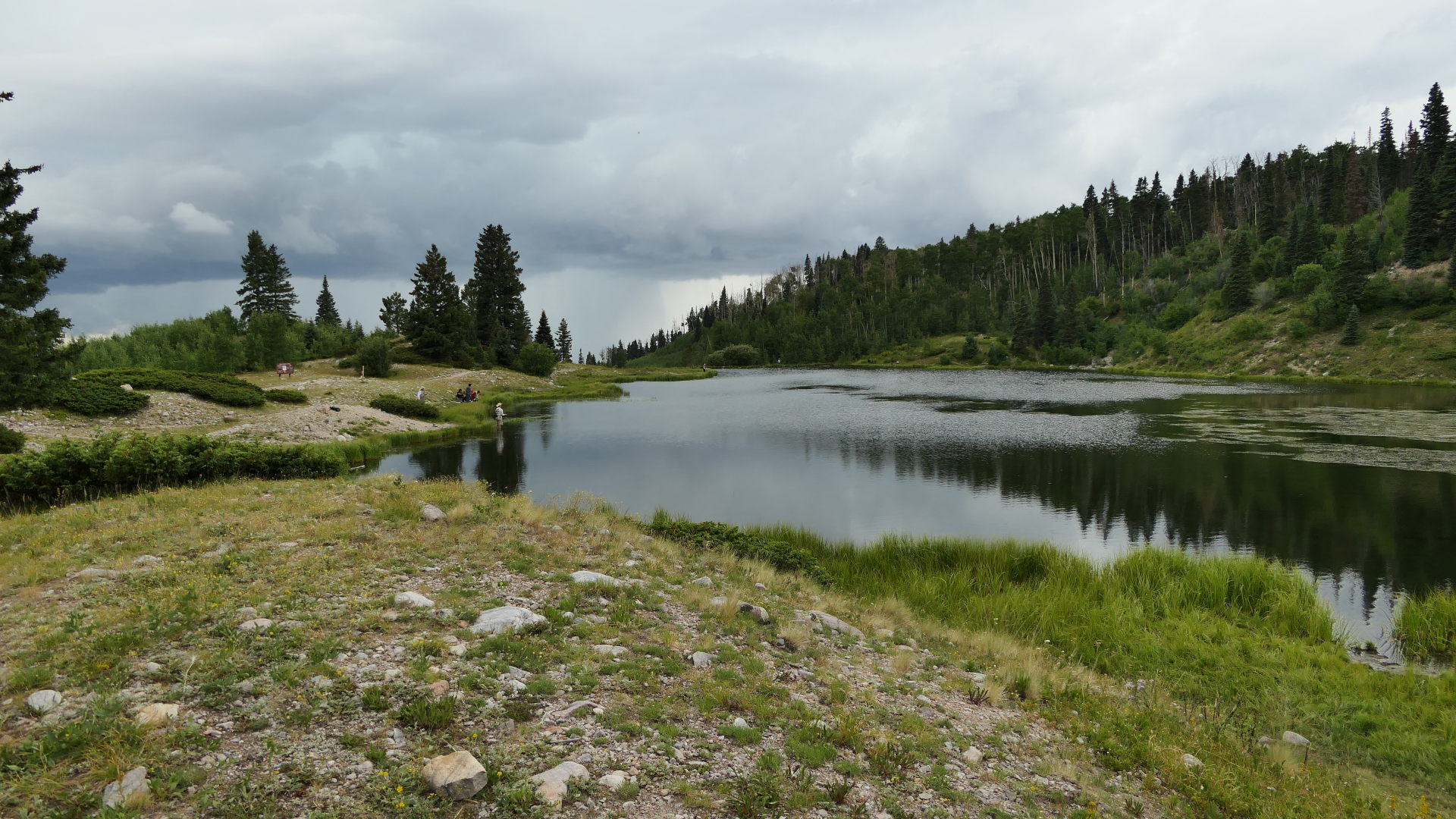
We found a lone picnic table near the upper end of the lake, perfectly positioned for both lunch and photography. While Paulette unpacked our simple feast, I set up the Lumix FZ2500, adjusting settings for the changing light conditions. The approaching storm had created that magical quality of light that photographers dream about—dramatic clouds building overhead while shafts of sunlight still illuminated the water's surface.
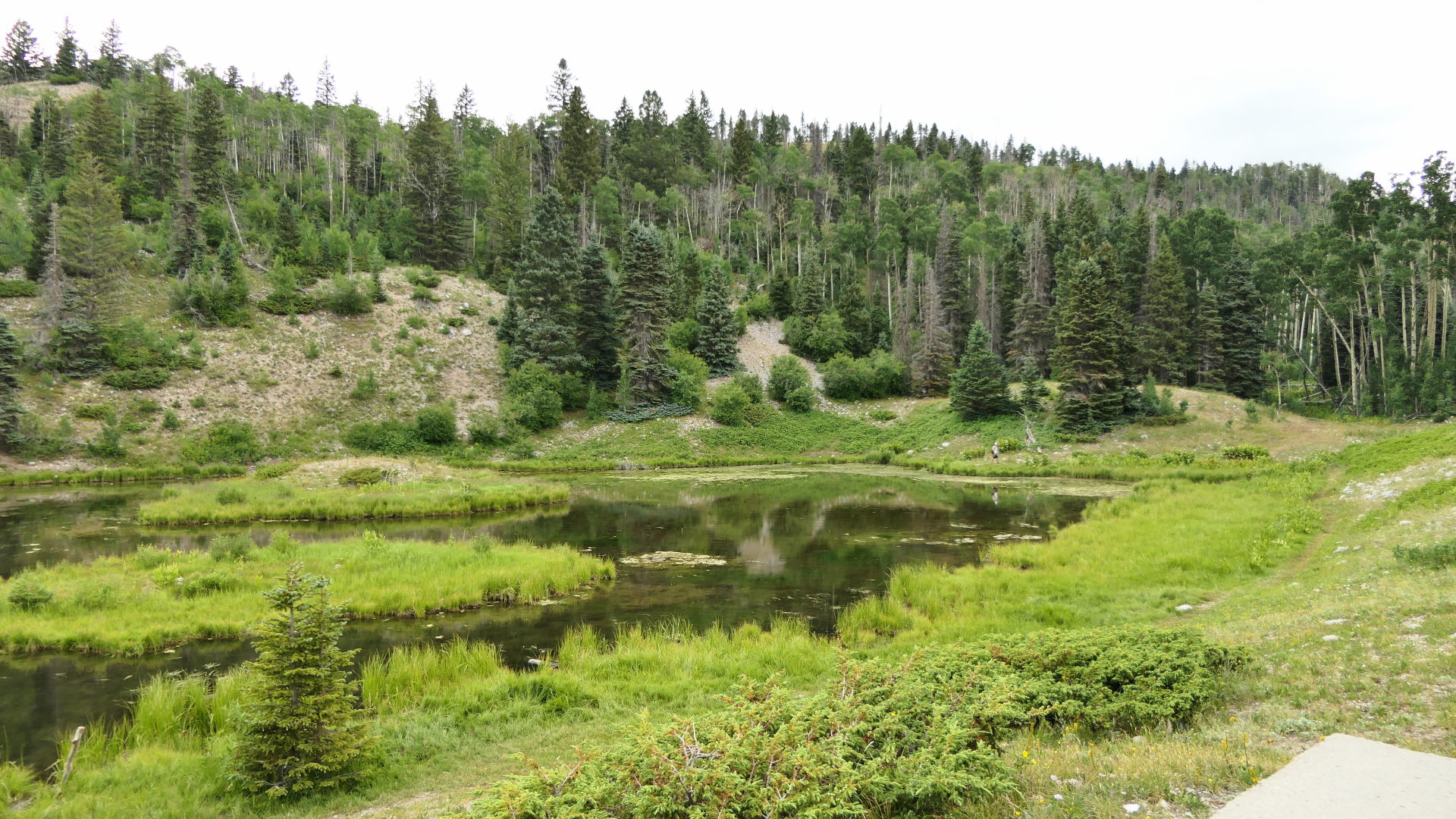
Upper Conjilon Lake sits like a jewel in a crown of mountain peaks, fed by snowmelt and mountain springs that keep the water cold year-round—perfect habitat for the rainbow and cutthroat trout that call these waters home. The lake's clarity was remarkable, allowing us to see into the depths where trout moved like shadows against the rocky bottom.
Trout Fishing Paradise
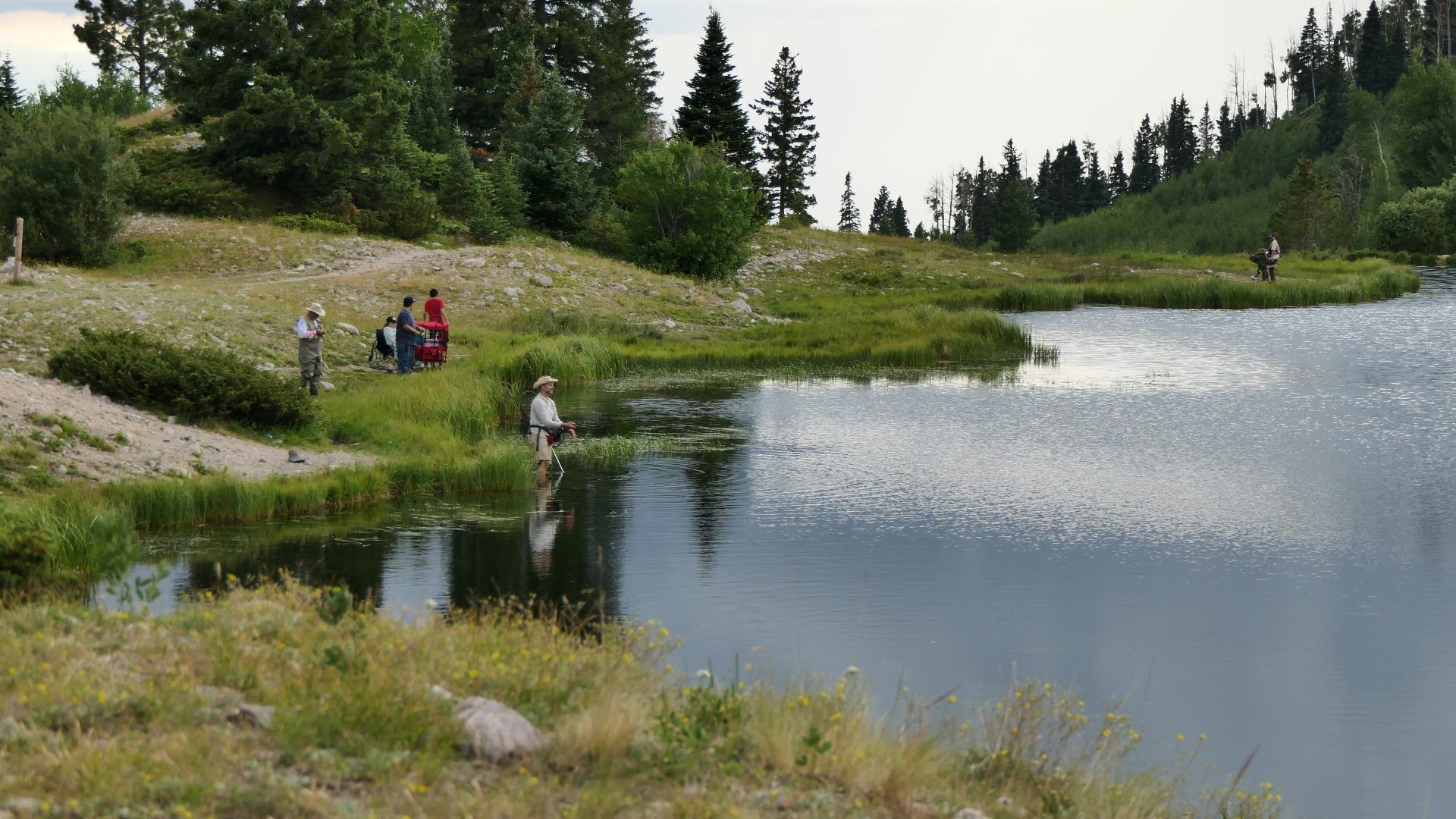
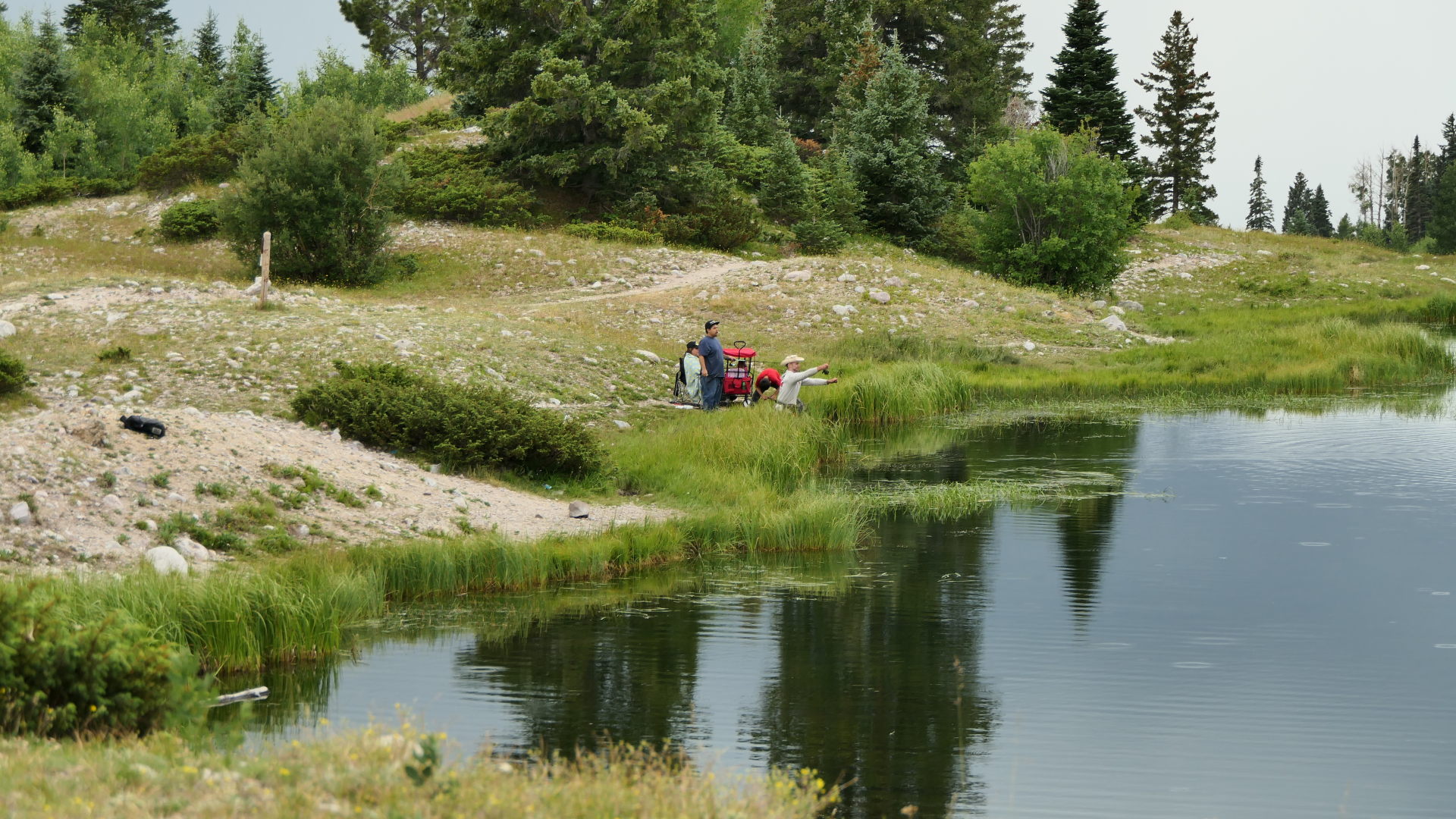
As we enjoyed our lunch of beans and smoked sausage, we had front-row seats to a trout fishing clinic. Half a dozen groups of anglers were scattered around the lake's shoreline, and the fish were absolutely on fire. The approaching storm had triggered what every trout fishing enthusiast knows—that magical period when atmospheric pressure changes make fish incredibly active.
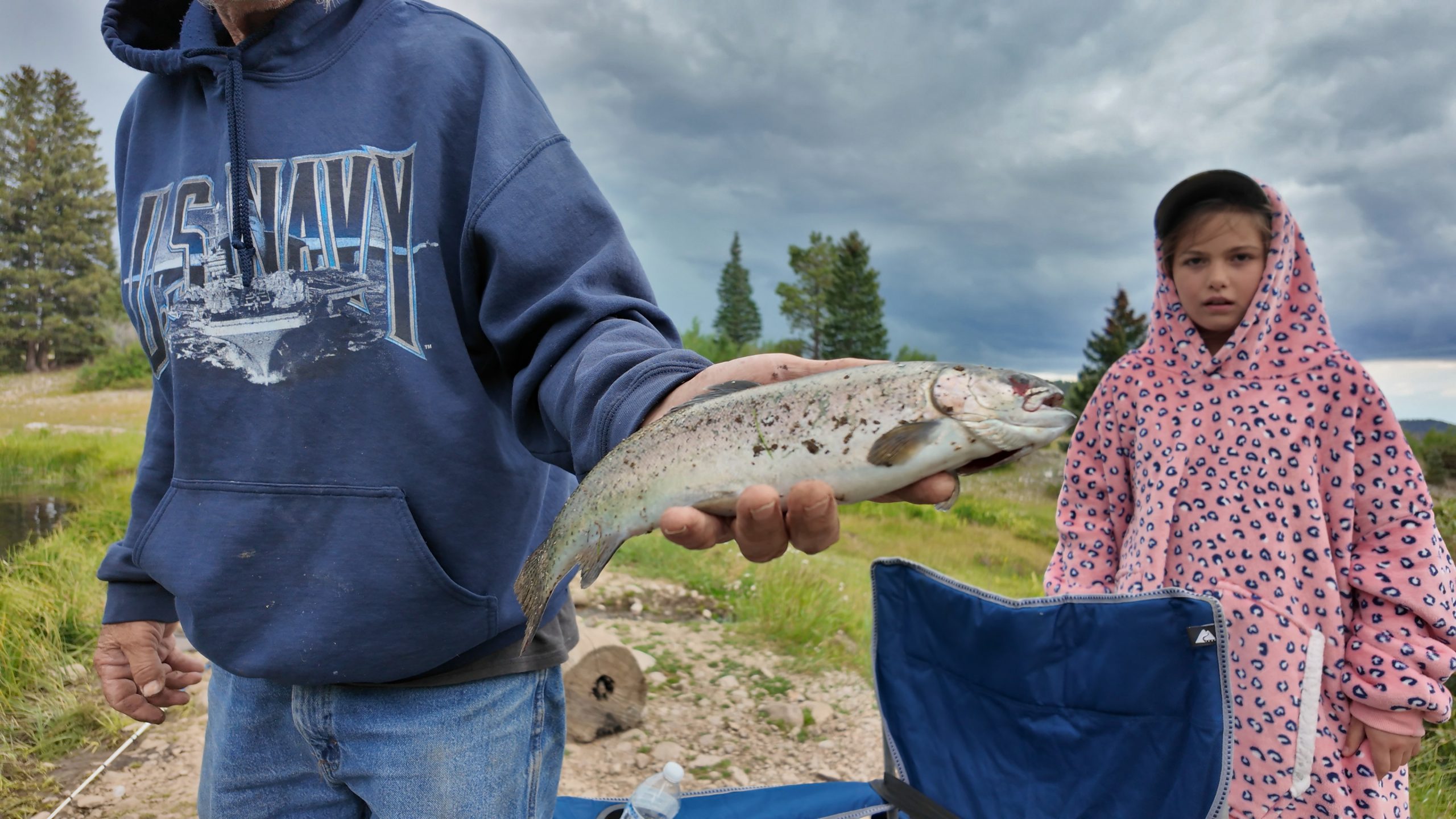
In just thirty minutes, we watched four or five beautiful trout landed and just as many lost in the excitement of the moment. Trout were rising everywhere, their concentric circles spreading across the lake's surface like nature's own artwork. I could see why Conjilon Lakes has earned such a reputation among New Mexico's trout fishing community.
The beauty of high-altitude trout fishing lies not just in the fish themselves, but in the entire experience. Here at over 9,000 feet, surrounded by peaks that scrape the sky, with the Chama River system beginning its long journey toward the Rio Grande, every cast becomes a meditation, every rise a small miracle.
I made mental notes for our future fishing trip, observing the successful fly patterns, noting the underwater structure where fish seemed to concentrate, and cataloging the best access points around the lake. My years of bass fishing had taught me to read water, but trout fishing requires a different kind of patience and finesse—something that appeals to me more and more as the years pass.
Storm and Spectacle
The timing couldn't have been more perfect. We finished our picnic just as the first fat raindrops began to fall, and I managed to capture some incredible photos and video footage of the lake, the surrounding peaks, and those actively feeding trout. We took a leisurely walk around Upper Conjilon Lake, breathing in the thin mountain air that reminded me so much of our years at Casa Oso.
As the rain began in earnest, we loaded our gear back into the trusty Subaru and started our descent. What followed was one of those moments that makes you grateful to be alive in such spectacular country. For the first thirty minutes of our drive home, the rain poured down in sheets, cascading off the mountainsides and across the road in dramatic waterfalls. The sight was absolutely spectacular—nature putting on a show that no human artist could duplicate.
I absolutely love a mountain rainstorm! There's something about the way water transforms the landscape, bringing out colors and textures that hide in dry conditions, creating temporary waterfalls and filling every arroyo with the music of moving water. We took our time navigating the mountain roads, keeping a wary eye out for flash flooding—a real concern in this country where arroyos can go from bone dry to raging torrents in minutes.
The Art of Georgia O'Keeffe Country
As we descended from the high country, the storm blew over and gave way to broken clouds and spectacular late-afternoon light. This timing blessed us with some of the most beautiful vistas I've seen in years of documenting the Southwest. We were approaching one of my favorite stretches of New Mexico—the country that inspired Georgia O'Keeffe to create some of America's most iconic paintings.
Ghost Ranch appeared ahead of us like a vision from one of O'Keeffe's canvases. The famous red and orange canyon walls, painted by millions of years of wind and water, glowed in the post-storm light with an intensity that made me pull over for photos. This is the landscape that captured the heart of one of America's greatest artists, and it's easy to understand why. The way light plays across these ancient rock formations creates a constantly changing gallery of natural art.
From our vantage point on the highway, we could see across the Chama River valley to Abiquiu Reservoir, its blue waters contrasting dramatically with the red rocks and green cottonwoods along the riverbanks. The Chama River, which begins its journey in the high country we'd just left, winds through this painted landscape carrying snowmelt from the San Juan Mountains toward its eventual meeting with the Rio Grande.
Abiquiu, New Mexico, holds a special place in the hearts of anyone who loves the Southwest. This small village, with its adobe buildings and ancient history, sits at the crossroads of cultures—Native American, Hispanic, and Anglo—that have shaped this region for centuries. It was here that Georgia O'Keeffe chose to spend her later years, drawn by the same dramatic landscapes and ever-changing light that continue to inspire artists, photographers, and writers today.
Reflecting on Five Decades
As we continued south toward Santa Fe, I found myself reflecting on the changes I've witnessed over fifty years of exploring the American Southwest. The Conjilon Lakes remain as pristine and beautiful as I remembered, protected within the San Juan National Forest system. The trout fishing appears to be as good as ever, perhaps even better thanks to improved management practices and habitat protection.
But it's not just the landscape that has evolved—I have too. Fifty years ago, I might have focused solely on catching fish, on the excitement of the strike and the fight. Today, I find equal joy, maybe more, in watching other anglers succeed, in capturing the beauty of rising trout through my camera lens, and in sharing a simple picnic with my beloved Paulette beside an alpine lake.
My journey from the Kansas Flint Hills to these New Mexico mountains has been filled with adventures—from my aviation career flying a twin-engine Beechcraft Baron across the country, to founding Centaur Installations and building laboratory equipment installations, to my years publishing Texas Sportsguide and fishing bass tournaments throughout Texas and Louisiana. Each chapter has prepared me for this one: documenting the wilderness and wildlife of the Southwest in my eighties.
The Taste of Simple Pleasures
Our stop in Española for Smash Burgers—one of Paulette's favorites—reminded me how the simplest pleasures often provide the greatest satisfaction. After a day in the high country, breathing thin air and absorbing the grandeur of the San Juan Mountains, there's something perfect about sitting in a small-town burger joint, rehashing the day's adventures over comfort food.
The conversation flowed easily between us, as it has for over forty years of marriage. We talked about the trout we'd watched being caught, the spectacular storm, and the incredible light show over Ghost Ranch. These shared experiences, accumulated over decades of adventure together, form the real treasure of a life well-lived.
The Photographer's Eye
Throughout the day, I'd been conscious of seeing the landscape through both my eyes and my camera's lens. After years of documenting the Southwest for the New Mexico Outdoor Sports Guide blog and creating hundreds of YouTube videos, I've learned that the best photography happens when you stop trying to capture everything and instead focus on the moments that speak to your soul.
The trout rising in Conjilon Lake, the cascade of rainwater across mountain roads, the painted cliffs of Ghost Ranch glowing in post-storm light—these are the images that tell the story of why I've devoted my later years to this work. Each photograph and video becomes a love letter to this landscape, a way of sharing the beauty I've been privileged to witness with others who might never make the journey themselves.
Home to Casa Santa Fe
We arrived back at Casa Santa Fe just before dark, tired but exhilarated. The familiar adobe walls and portal welcomed us home, and I realized once again how perfectly New Mexico suits us in this stage of our lives. Close to scenic hiking trails and the Sky Railway scenic railroad, Santa Fe provides the perfect base for our adventures while offering the cultural richness and mild climate that make daily life a pleasure.
As I unloaded the camera equipment and reviewed the day's photos on my computer, I felt that familiar satisfaction that comes from a day well spent in country that continues to inspire and amaze me. The images captured the beauty of Conjilon Lakes, but they also preserved something more precious—the memory of a perfect day shared with my beloved Paulette in the high country we both love.
Planning the Return
Already, I'm planning our return to Conjilon Lakes for serious trout fishing. The brief scouting mission revealed everything I hoped to find—healthy fish populations, beautiful water, and the kind of high-country setting that makes every cast an adventure. Whether we target the rainbow trout with dry flies during evening rises or work the deeper water for cutthroats with nymphs and streamers, I know the experience will be magical.
The San Juan Mountains and the Chama River system offer some of New Mexico's finest trout fishing, and Conjilon Lakes represents the pinnacle of that opportunity. At my age, I've learned to appreciate not just the fish themselves, but the entire experience—the drive through O'Keeffe country, the picnic beside pristine waters, the storm clouds building over ancient peaks, and the shared joy of discovery with the woman who has been my companion through all of life's adventures.
Fifty years may have passed since my last visit to Conjilon Lakes, but some places exist outside of time, holding their beauty and mystery constant while we change around them. In our rush to document and explore new territory, it's worth remembering that sometimes the greatest adventures happen when we return to places that first captured our hearts, seeing them with new eyes and deeper appreciation.
As I prepare for bed in our Santa Fe home, with plans already forming for winter months at Lake Mohave in Arizona, I'm grateful for days like this one—perfect reminders of why we chose to spend our later years in the American Southwest, surrounded by beauty that never fails to inspire and challenge us to see the world with wonder, no matter how many years we've been privileged to witness its glory.

0 Comments