
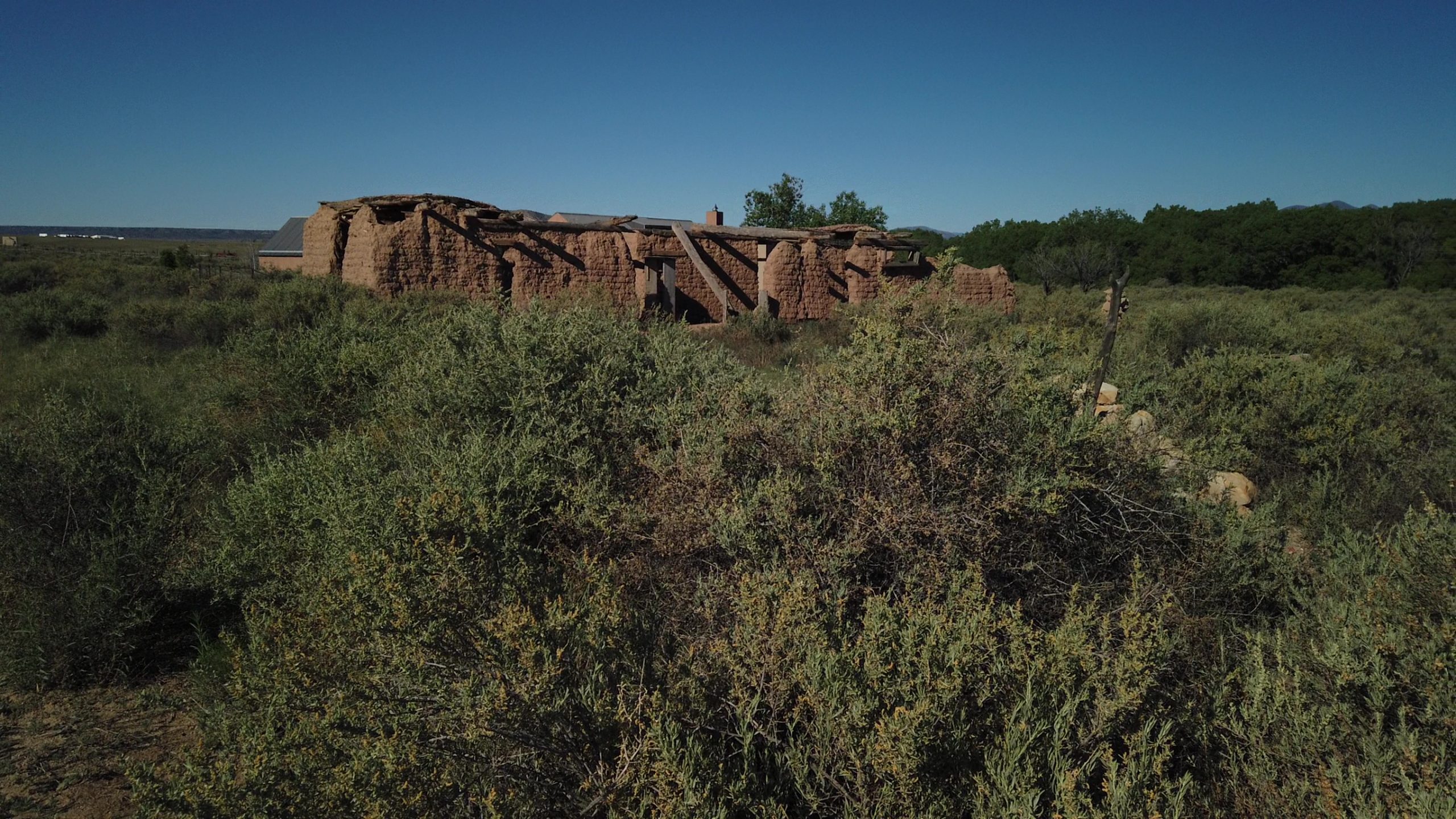
Nestled in the high desert, about 25 miles southeast of Santa Fe, there's a little village that many have driven past on their way to somewhere else, never knowing they missed one of New Mexico’s best-kept secrets. Galisteo, New Mexico, isn’t just a town—it’s a story still being told. One of red earth, ancient footsteps, dusty trails, Hollywood whispers, and adobe dreams under an endless blue sky.
The Ancient Land Beneath Our Boots
Long before it became Galisteo, New Mexico, before there was a name spoken in Spanish or English, the Galisteo Basin was home to thriving Indigenous communities. Archaeologists have uncovered ruins of ancient pueblos—evidence of a civilization that flourished here centuries before Europeans set foot in the New World. These ancestral Puebloans built multi-story adobe complexes, tended crops along Galisteo Creek, and traded with distant communities through vast networks stretching to Mesoamerica.
The Galisteo Basin was sacred ground, alive with ceremony and spirit. Pottery shards, petroglyphs, and ruins of once-bustling villages dot the mesa tops. At its height, the area was home to thousands of people. Settlements like San Cristobal, Pueblo Blanco, and San Marcos—now hauntingly beautiful ruins—were vibrant centers of culture, agriculture, and community.
But history, as we know, is rarely gentle. In the 1600s, Spanish colonists arrived, bringing horses, missions, and conflict. By the late 17th century, as Spanish efforts to Christianize the Puebloans intensified, tensions boiled into open revolt—the great Pueblo Revolt of 1680. Indigenous resistance was fierce and brave, but colonial power eventually prevailed, leading to the depopulation of many Galisteo Basin pueblos. The people moved north to larger pueblos or were relocated under Spanish rule.
The Galisteo Basin’s silence grew louder.
Galisteo Creek and the Pulse of the Land
Running like a silver thread through the valley, Galisteo Creek still cuts its course across the basin, weaving its way through arroyos and cottonwood-lined banks. Most of the year it’s a trickle, but during monsoon season, it can rise in a flash, reminding everyone that nature, not man, rules here.
Galisteo Creek has always been the lifeblood of this region. It fed fields of corn and beans long before fences and roads carved the land. Even today, it remains a marker of seasonal rhythms—a subtle pulse beneath the sagebrush and piñon.
Rising in the foothills of the Ortiz Mountains, the creek flows east and north, threading its way across the basin before joining the Rio Grande’s mighty network. From the Ortiz’s rugged golden flanks to the sweeping arms of the Sandia Mountains to the south, the geography here is layered and alive. The land itself seems to breathe.
Enter Galisteo, New Mexico
The modern village of Galisteo, New Mexico—population about 250 on a busy day—sits squarely in the middle of all this history. It’s not a place with gas stations or grocery stores. You won’t find a Starbucks or a strip mall. What you will find is a collection of well-loved adobe homes, many built centuries ago, standing shoulder-to-shoulder along narrow dirt lanes. You’ll find open skies, shimmering in turquoise and gold. And if you're lucky, you’ll feel the hush of the past walking with you.
Galisteo was formally established in the early 1800s by Spanish settlers who returned to the region after earlier Pueblo villages were abandoned. They used the bones of the old—stones and mud from ancient ruins—to build the new. In many of the village’s homes, you’re standing on prehistoric history.
Even now, the village church—Nuestra Señora de los Remedios—remains the town’s heart. Built in 1884, it rises humbly at the town’s center, with its weathered white stucco and wooden bell tower keeping quiet watch over generations.
Burl Ives and the Quiet Glow of Fame
For a tiny village, Galisteo, New Mexico has had its share of remarkable residents. Among the most famous was Burl Ives, the American folk singer, actor, and storyteller best known for that warm, fatherly voice in Rudolph the Red-Nosed Reindeer and his Oscar-winning role in The Big Country. Ives discovered Galisteo in the 1970s and fell in love with its peace and privacy.
He bought a home here and spent years enjoying the solitude that Galisteo offers. Locals still remember his quiet kindness—shopping at the Santa Fe farmers' market, driving an old truck through the village, and sitting on his porch as the sun dipped behind the hills. It’s said he valued Galisteo as a sanctuary, a place where nobody asked for autographs and fame didn’t matter. In Galisteo, everyone is just another soul under the same vast sky.
Other artists and actors followed. The region's cinematic light, timeless architecture, and stillness have drawn creatives for decades. Hollywood has even come knocking—the area has been a filming location for movies like Crazy Heart, Thor, and The Missing. Directors love the way Galisteo looks like nowhere and everywhere—an old world waiting for stories.
Life in Present-Day Galisteo, New Mexico
Today, Galisteo, New Mexico is a living contradiction—in the best way. It’s remote but connected. Quiet, yet filled with the whispers of artists and thinkers. A town of only a few roads, but countless stories.
There’s no formal town center, no mayor, and no businesses to speak of. But there’s a sense of unity that transcends paperwork and politics. The community hosts occasional art studio tours where locals open their homes and galleries to the public. Visitors drift from adobe to adobe, sipping coffee and marveling at photography, pottery, and landscapes caught in oil and canvas.
Life here moves slow, by choice. Residents wake to the rustle of cottonwood leaves, the distant call of coyotes, and skies streaked in violet. The air smells of sun-warmed dust and sage. Afternoon clouds often rise like ghosts over the Sandias, bringing sudden bursts of rain that turn the desert golden.
There are no streetlights in Galisteo. At night, the stars reign supreme.
The Galisteo Basin Preserve: Sacred Land Reimagined
For those drawn to nature and the open land surrounding Galisteo, New Mexico, the Galisteo Basin Preserve is a gift. With over 28 miles of hiking, biking, and horseback trails, it offers views that stretch from the Ortiz Mountains to the Sangre de Cristos and beyond.
The preserve is more than just scenery. It’s a vision—preserved open space that honors the land’s past while protecting its future. Hikers often stumble upon pottery shards or ruins tucked into hillsides, reminders of those who walked here long before.
It’s not uncommon to spot mule deer, red-tailed hawks, or a solitary jackrabbit darting through the brush. The occasional rattlesnake reminds you that you are, truly, in the wild.
And as you stand on a ridgeline at sunset, looking over the Galisteo Basin, it’s easy to imagine the footsteps of those who stood here 700 years ago, watching the same sun dip behind the same hills.
Galisteo in the Heart
More than any one feature, what makes Galisteo, New Mexico special is its spirit. It’s not flashy. It doesn’t boast. It doesn’t need to. Galisteo is a place that holds space—for history, for solitude, for creativity, and for stillness.
It is a village where you can hear your own thoughts. Where neighbors still wave. Where the stars shine without apology. Where stories are held in the adobe walls, and the land itself is sacred text.
For some, it’s just a dot on the map. For others, it’s a dream.
Planning Your Visit to Galisteo, New Mexico
If you’re thinking about exploring Galisteo, New Mexico, here are a few things to know:
Getting There
-
From Santa Fe, head southeast on US-285 and then take NM-41 south at Lamy.
-
Galisteo is about a 30-minute scenic drive from the Santa Fe Plaza.
Things to Do
-
Photography: The light here is legendary.
-
Hiking: Try the trails at Galisteo Basin Preserve.
-
Art Tours: Check local listings for studio events.
-
Star Gazing: Bring binoculars and a blanket.
-
History Buffs: Visit nearby pueblo ruins (some on private land—please respect signs).
When to Visit
-
Fall is magical—golden cottonwoods and crisp air.
-
Spring brings wildflowers and milder days.
-
Winter dusts the hills with snow and quiet.
-
Summer can be hot, but monsoon storms bring drama to the sky.
Final Thoughts: Galisteo as a State of Mind
In a world driven by speed and screens, Galisteo, New Mexico reminds us of what we’ve almost forgotten—that slowing down is sacred. That silence can be healing. That there are still places where stories matter more than selfies, and where the land watches over its people as it always has.
Whether you’re an artist searching for light, a traveler chasing meaning, or simply a soul in need of stillness, Galisteo will welcome you—not with fanfare, but with open skies, warm adobe, and the quiet companionship of history.
Come visit. But be warned: once Galisteo gets under your skin, it may never leave your heart.

0 Comments