
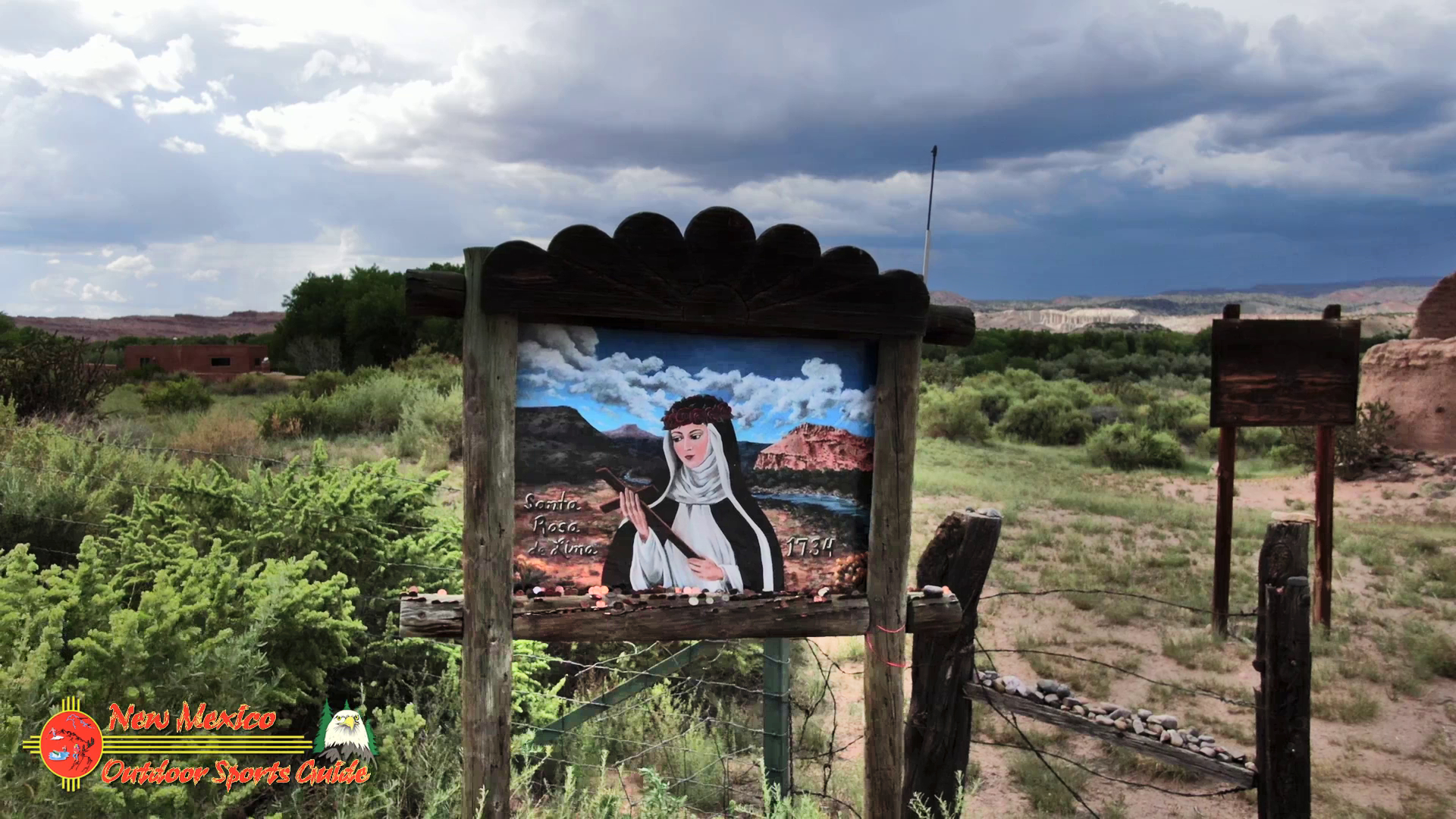
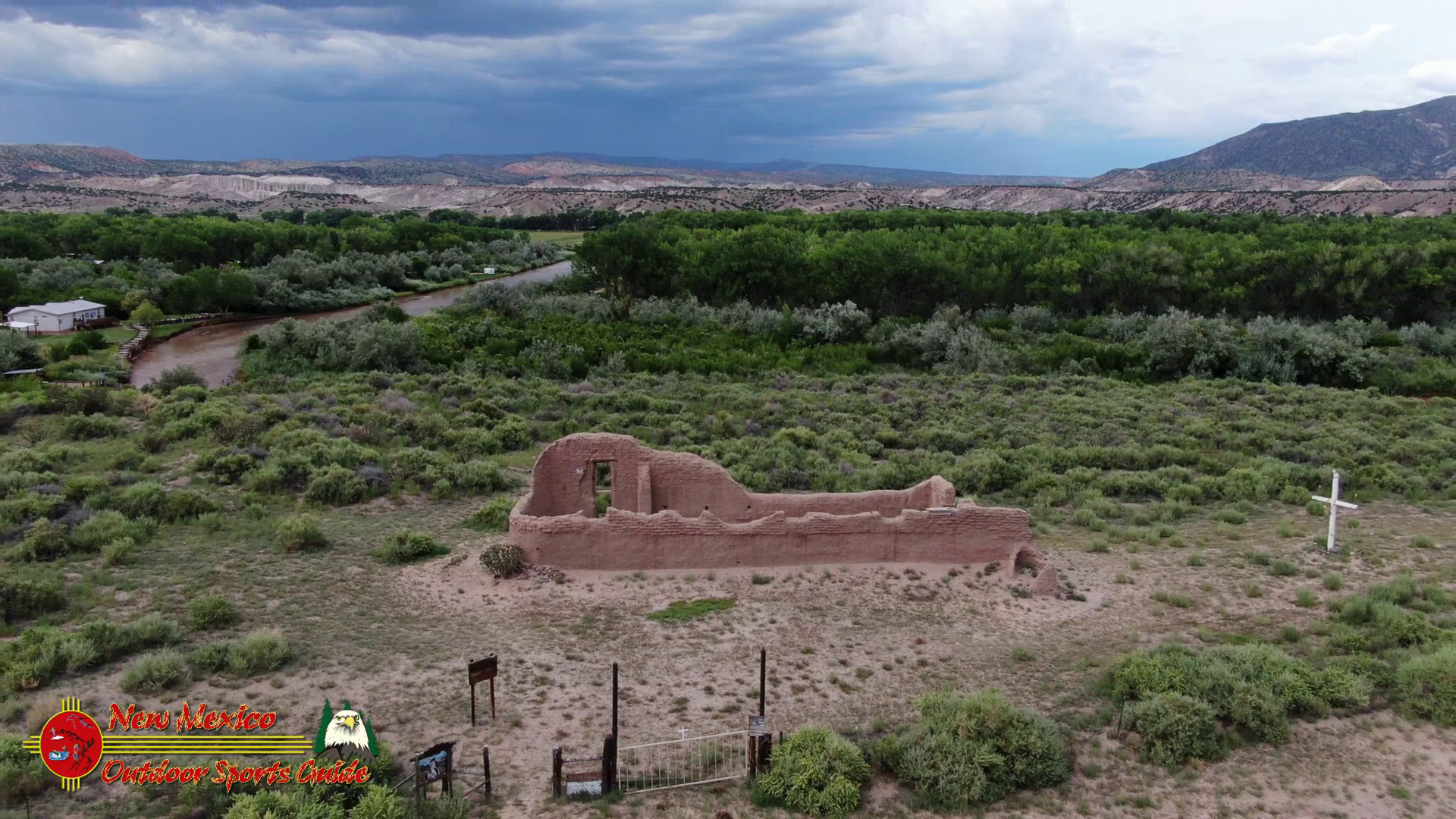
Santa Rosa de Lima was an early 18th-century Spanish settlement in the Rio Chama valley, near the present-day town of Abiquiu, New Mexico.
Ever since the 1730s, settlers on the meandering Río de Chama 40 to 50 miles northwest of Santa Fe had tried to put down roots in the good bottomlands. Time and again they had been wrenched out by raiding Utes, Navajos, or Comanches. It was almost seasonal. One place, named for St. Rose of Lima, supported a scattered twenty families in 1744, but they could not hold out. Fleeing their homes and a chapel in 1748, the Santa Rosa people tried again in 1750. Under orders from Governor Tomás Vélez Cachupín they returned reluctantly and laid out a 370-foot-square defensive plaza with the chapel in the center. It stood very close to the Chama's south bank.
Today, the site of Santa Rosa de Lima is a ghost town, with substantial adobe ruins of the church, and mounds where the settlers' adobe houses stood.
Isabel de Flores y del Oliva, called Rose by her mother because of her red cheeks and confirmed with that name, was the first person in the Americas to be canonized as a Saint. Born at Lima, Peru, in 1586, she worked long and hard to help support her family, growing flowers and doing embroidery and other needlework.
St. Rose bore her many and great adversities with heroic patience and consoled the sick and suffering among the poor, Indians, and slaves. Consequently, she is regarded as the originator of social service in Peru. She died in 1617 at thirty-one years of age and was canonized in 1671 by Pope Clement X
The ruins of this old church stand as a monument to the faith of earlier settlers in the area. It is gradually melting away from the rains and climate, but it's still a lovely site, and worth stopping and walking around. Some people still come back here a place flowers and pictures and prayer requests.

0 Comments