
The monsoon clouds hung low over the high desert south of Santa Fe that July morning, casting dramatic shadows across the sage-dotted landscape that stretched endlessly toward the Sangre de Cristo Mountains. It was the kind of morning that beckoned a photographer to grab his drone and head out into the wilderness, chasing that perfect interplay of light and shadow that makes the American Southwest so captivating on film.
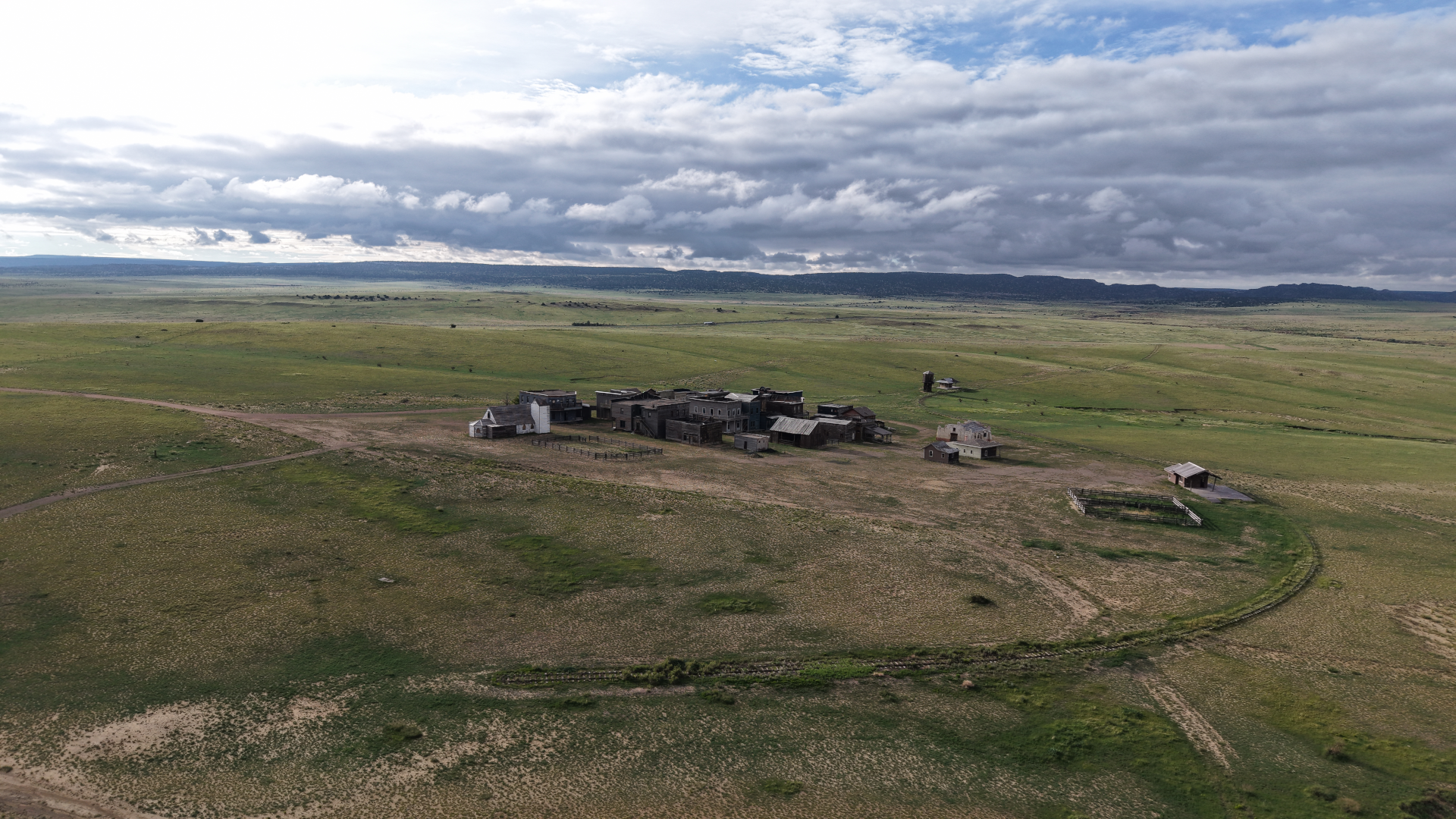
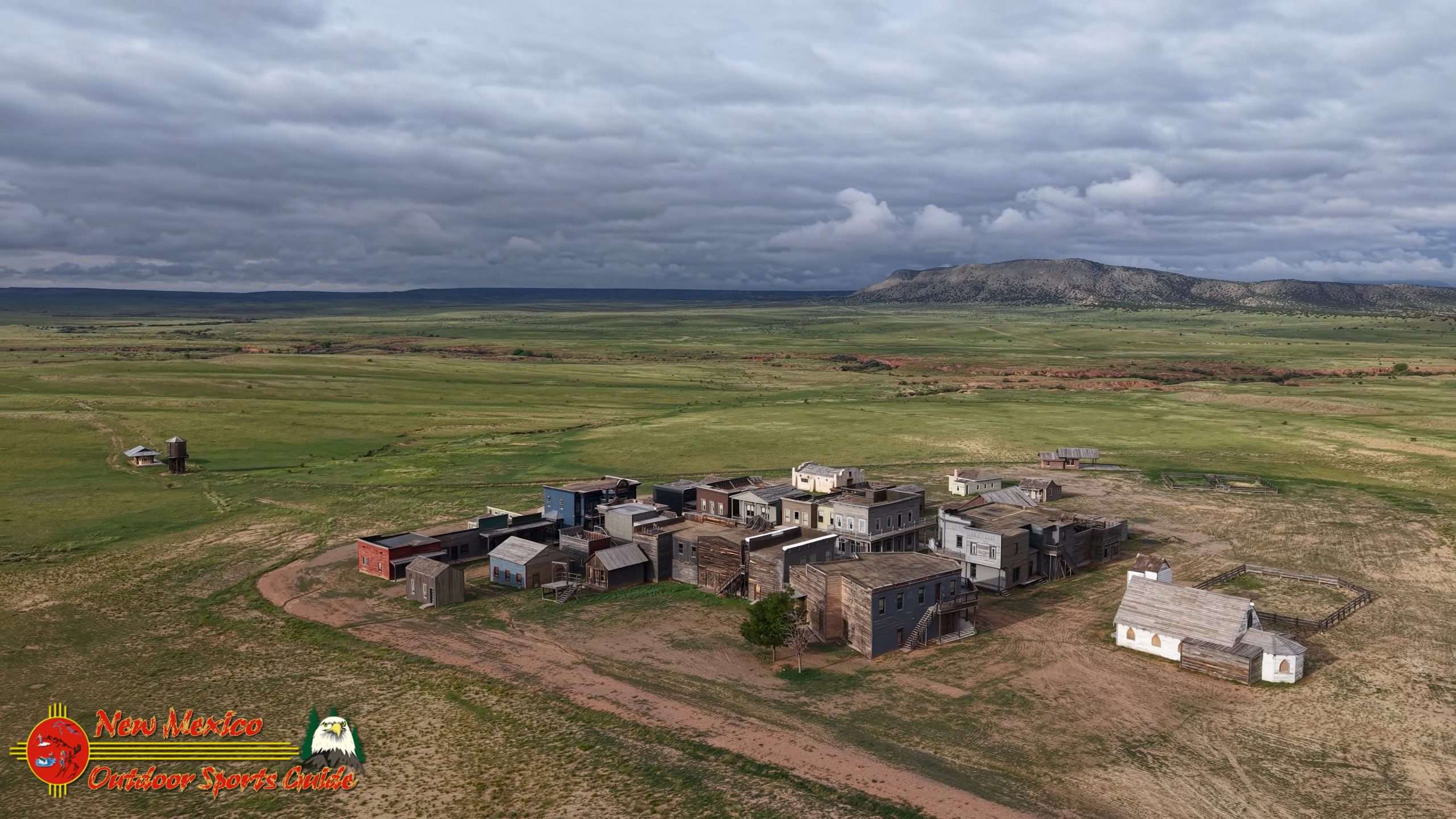
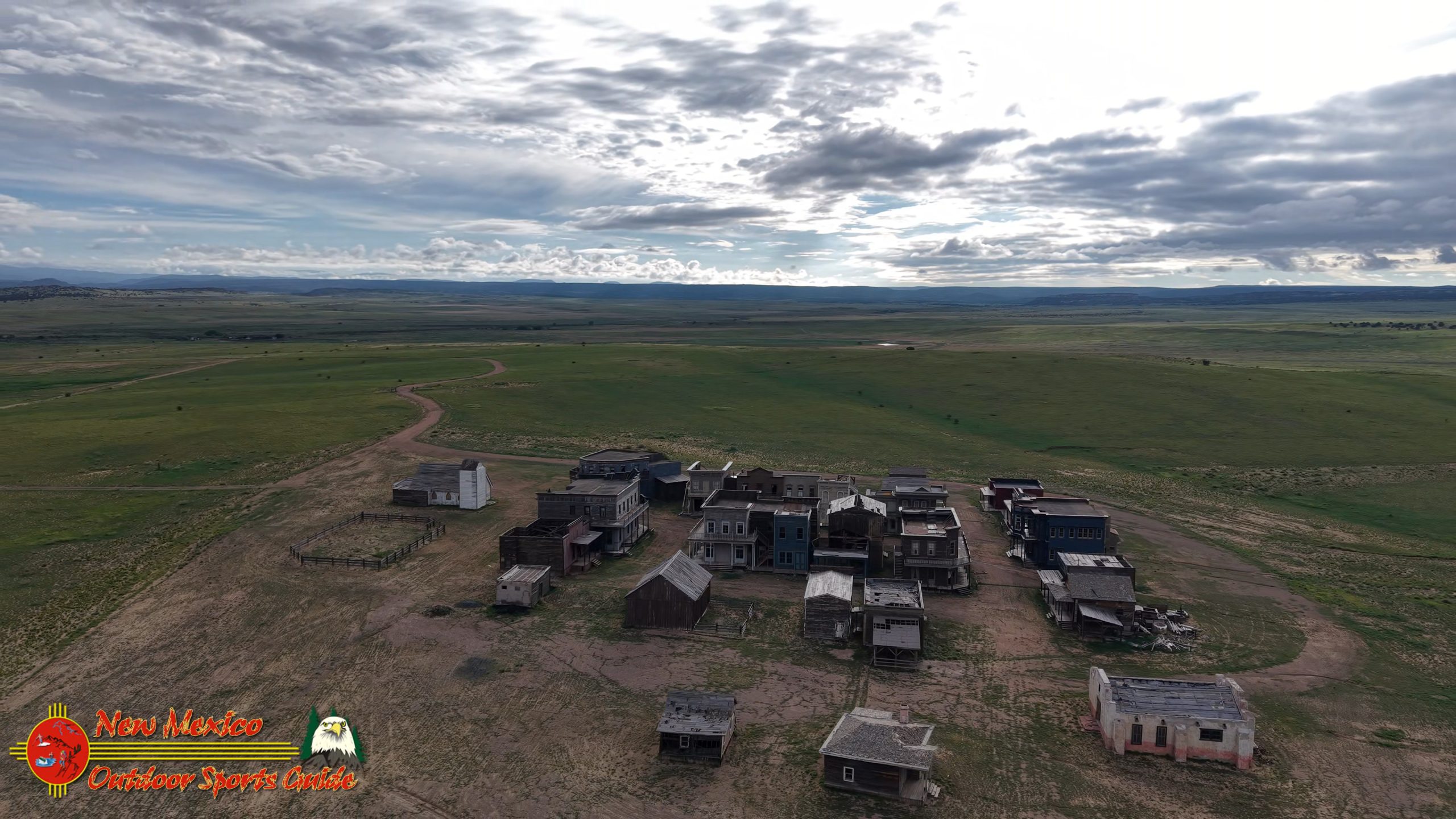
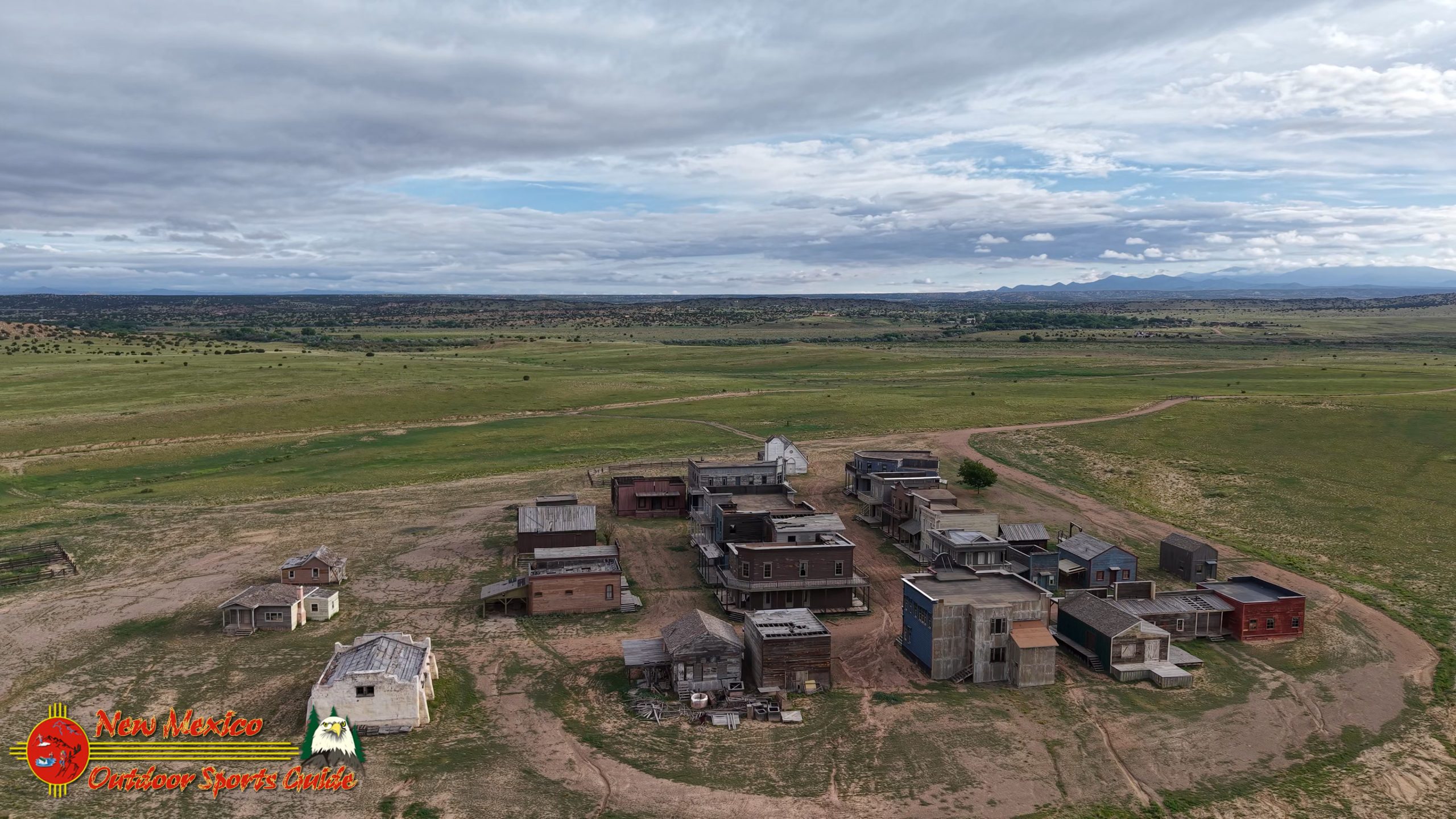
I'd been flying for about thirty minutes, capturing the subtle beauty of the desert after the previous night's rain, when something caught my eye through the drone's camera feed. There, nestled in a small valley between two gentle ridges, was what appeared to be a cluster of buildings. My first thought was that I'd stumbled upon one of those authentic ghost towns that dot the Southwest—remnants of mining booms and railroad expansions that once brought life to these remote corners of New Mexico.
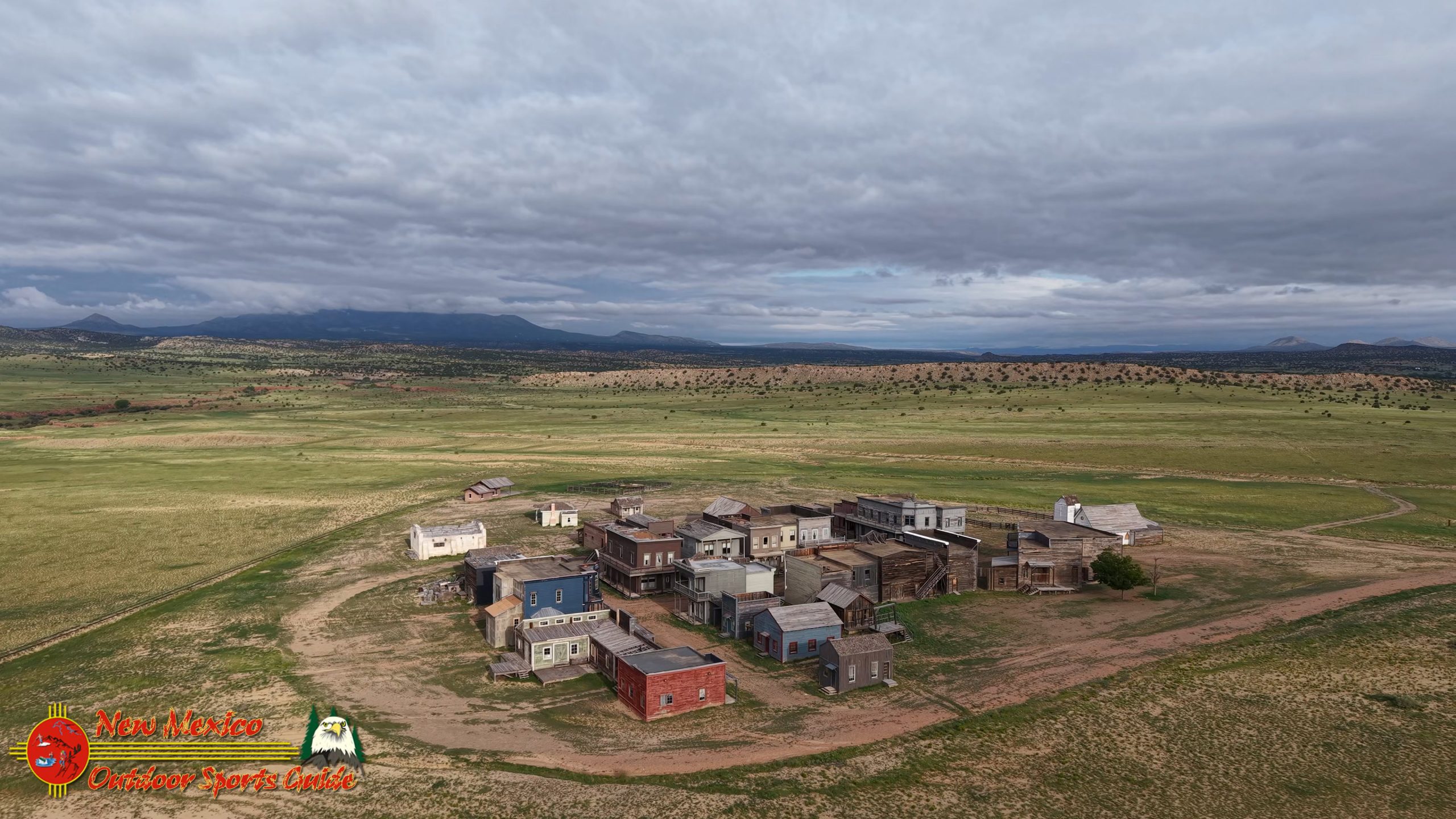
But as I guided the drone closer, something seemed off. The buildings looked too perfect, too well-maintained for a genuine ghost town. The wooden structures weren't weathered gray and sagging like you'd expect from a century of high desert sun and winter snows. Instead, they stood straight and proud, their paint still clinging to the boards, their rooflines sharp against the cloudy sky.
That's when it hit me—this wasn't a ghost town at all. This was a movie set.
The Discovery
Banking the drone around for a better angle, I could hardly contain my excitement. As someone who's spent decades behind cameras of one sort or another—first as a pilot navigating by instruments, later developing websites in the early days of the internet, and now documenting the Southwest's wilderness through photography and video—I recognized immediately what I was looking at. This was cinematic gold.
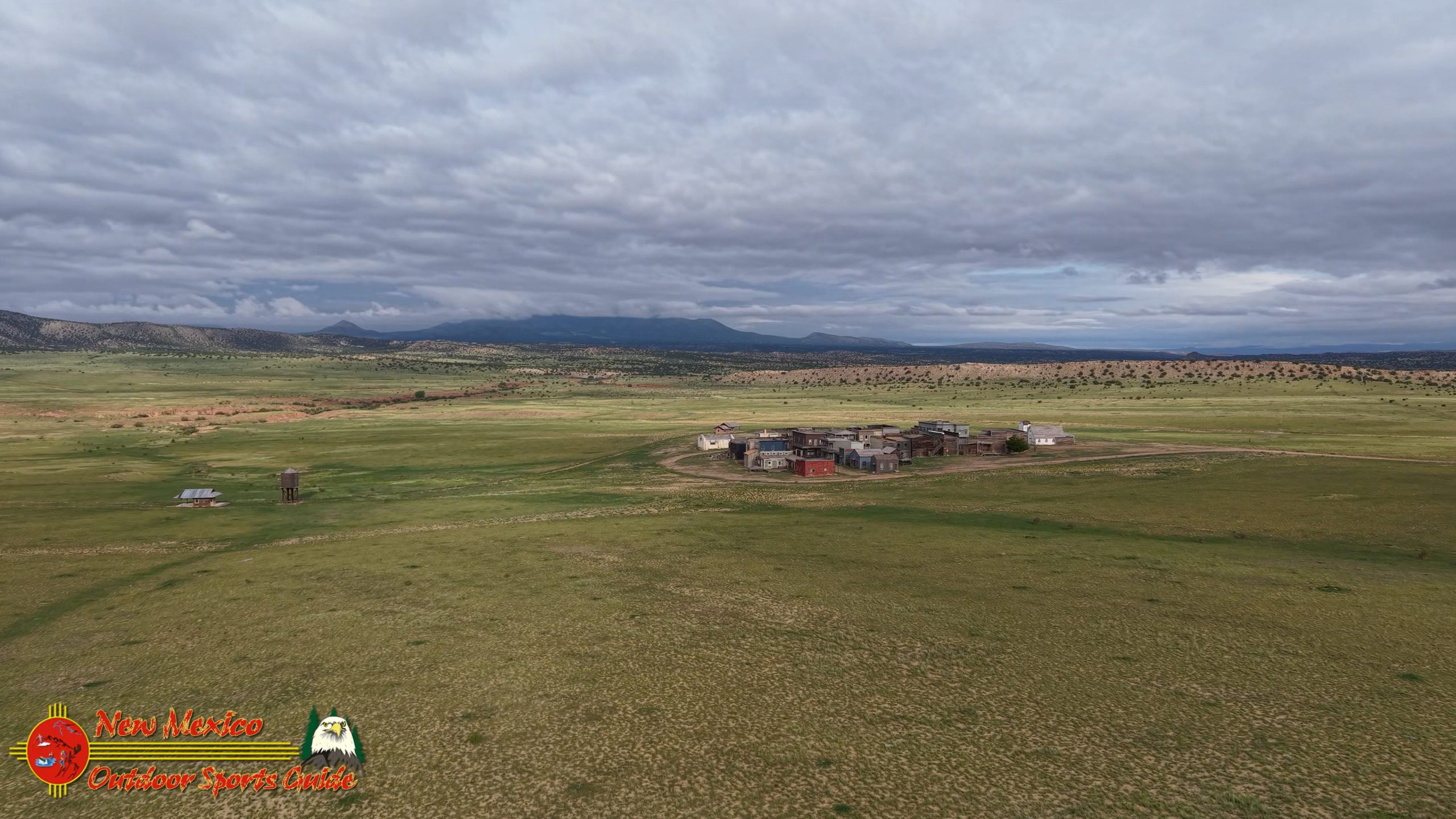
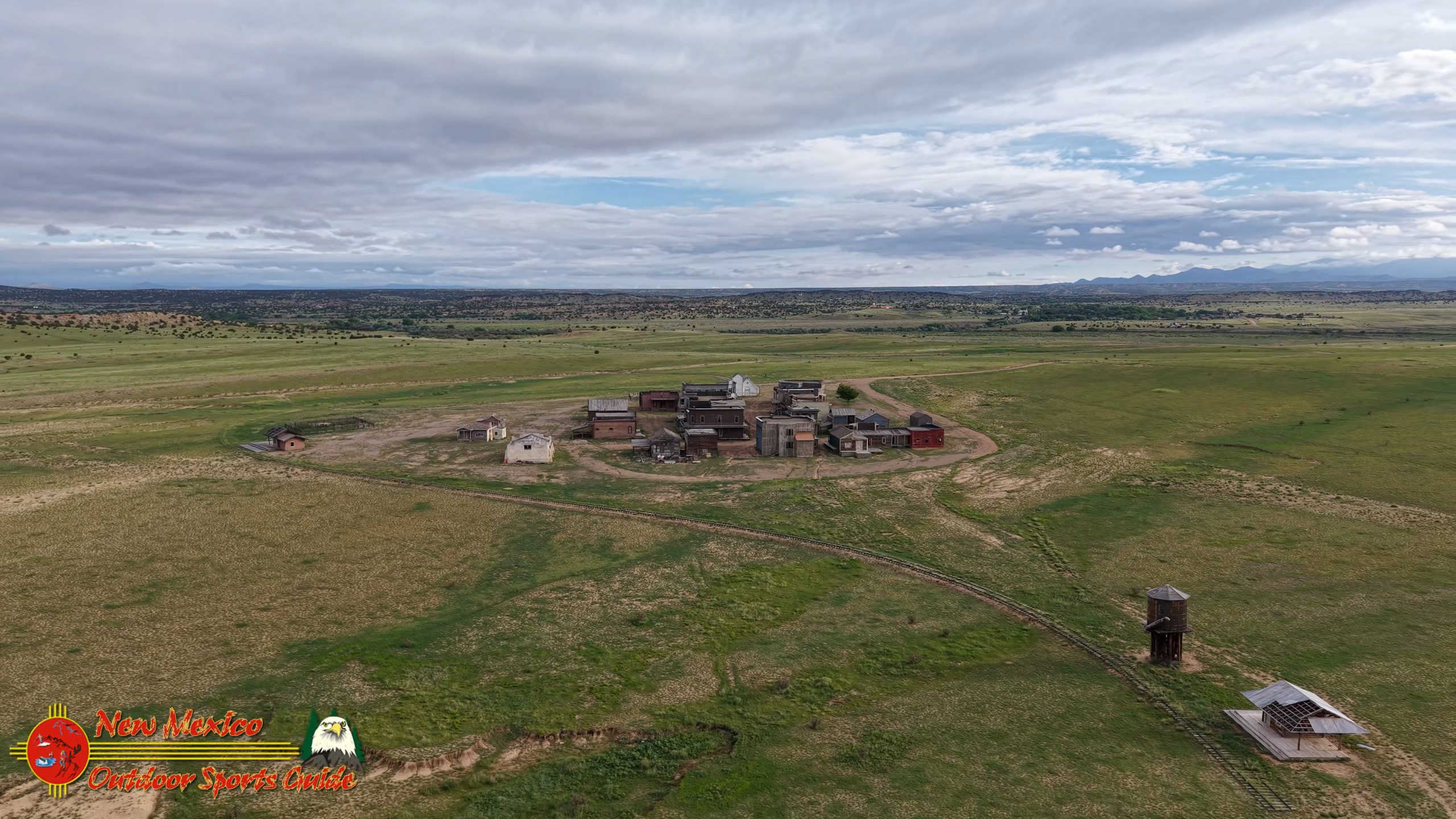
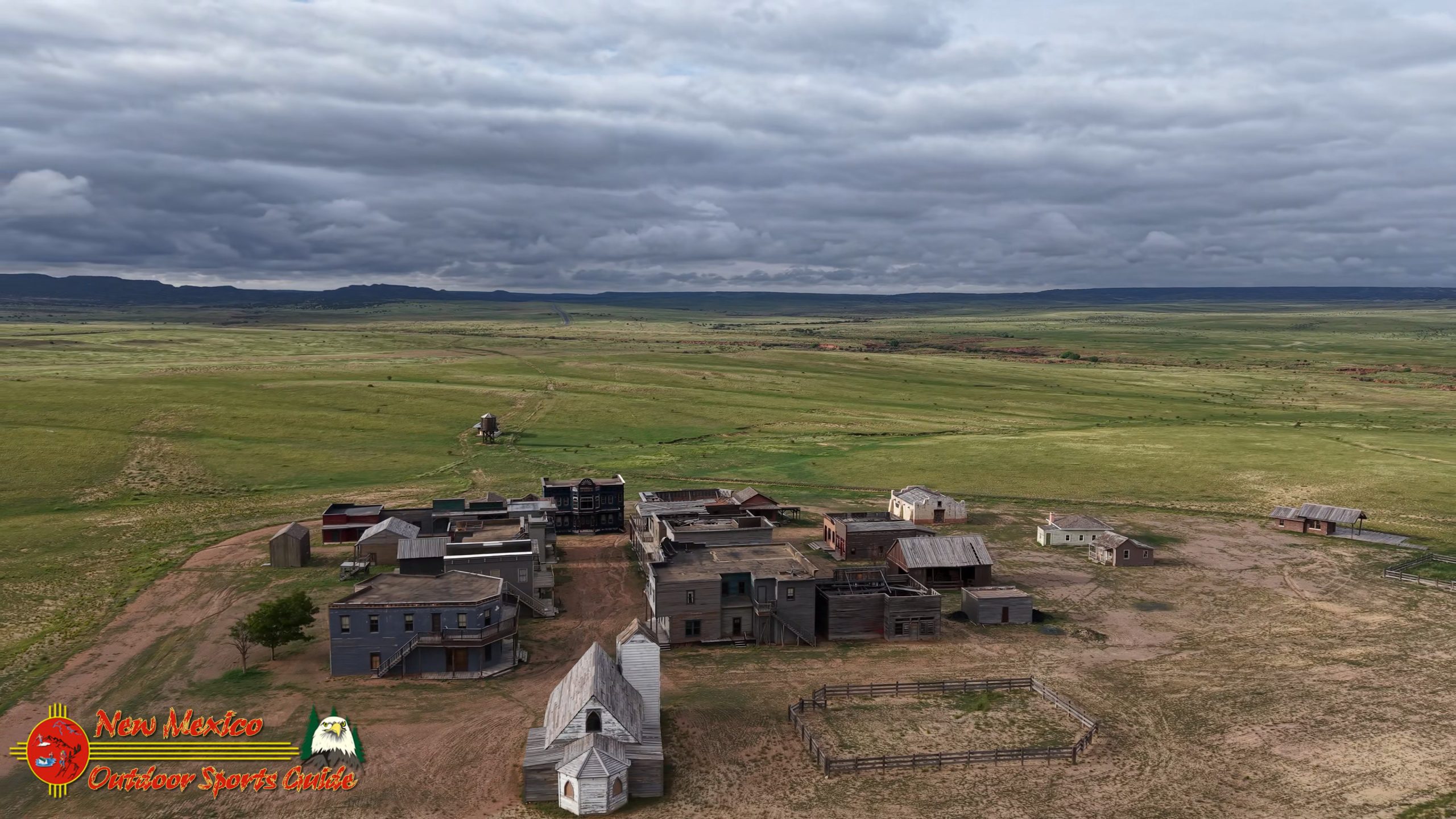
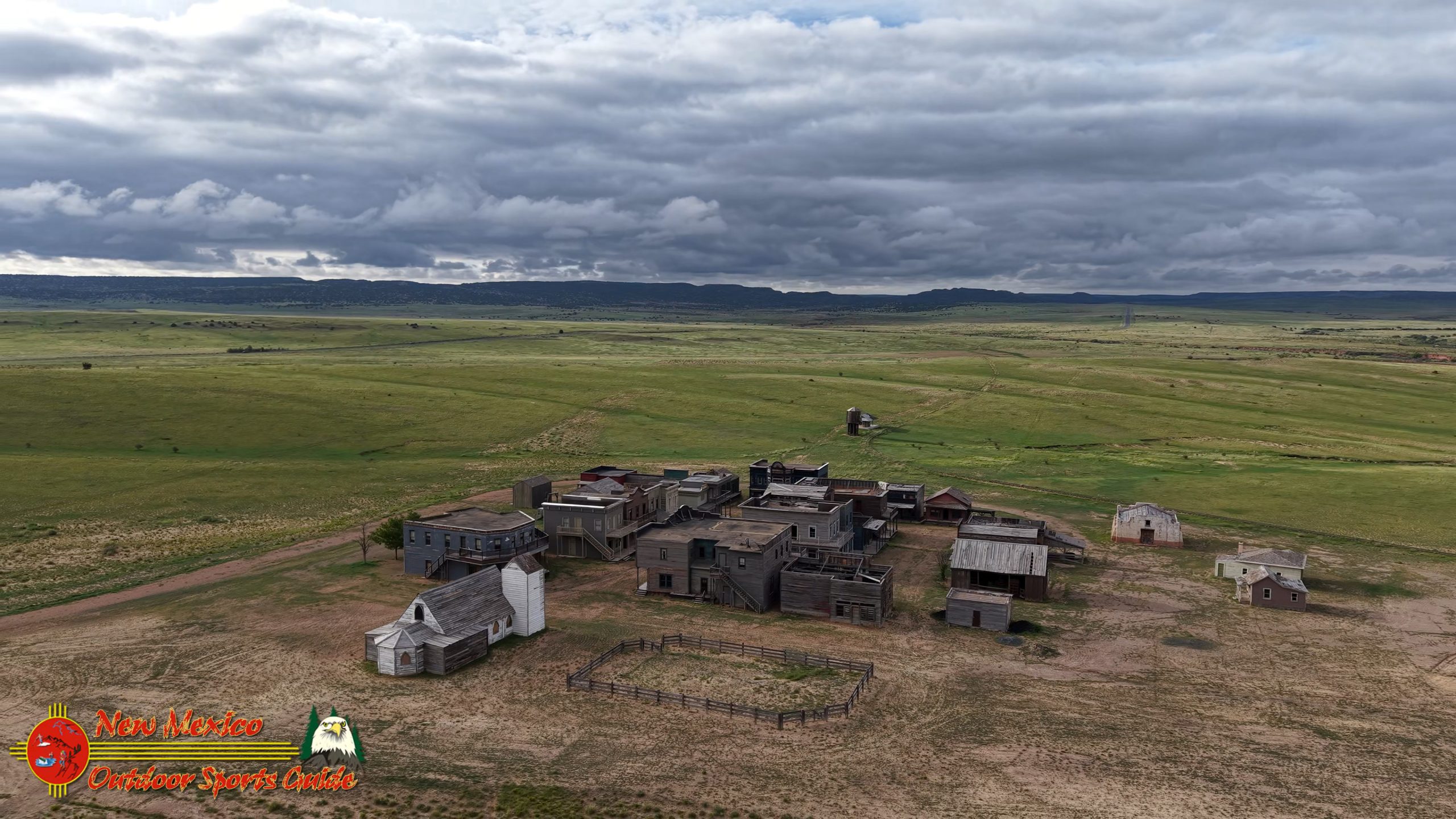
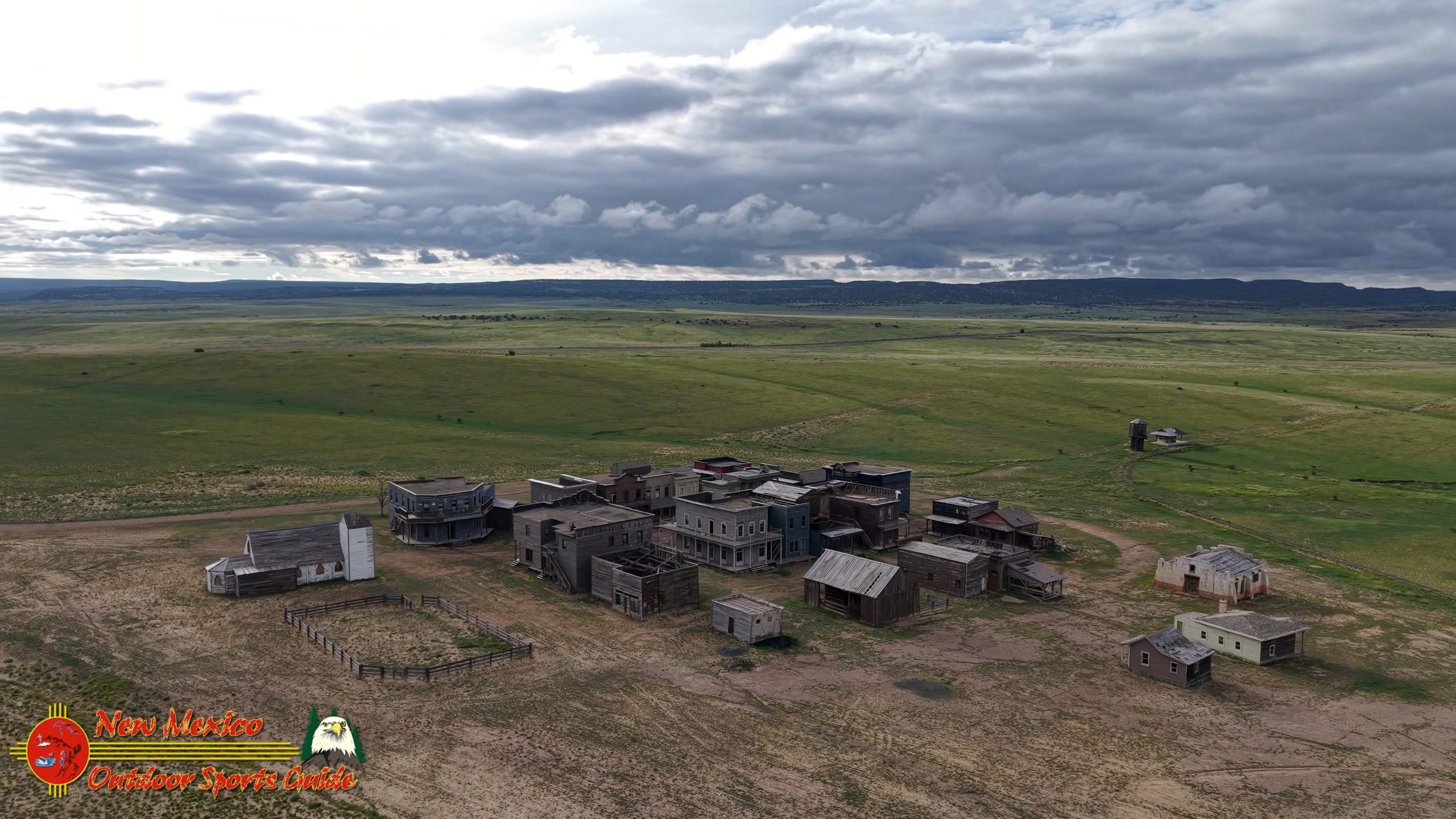
The layout was perfect Western movie town material: a main street lined with false-front buildings that could house a saloon, general store, and sheriff's office. At one end stood a railroad depot, complete with a water tank and siding that looked like they'd been transported straight from the 1880s. Every detail was meticulously crafted to transport viewers back to the era of cattle drives and frontier justice.
I made several passes with the drone, each revealing new details that spoke to the incredible attention to authenticity that had gone into this construction. The wooden sidewalks, the hitching posts, even the carefully placed barrels and wagons—everything was designed to create that perfect illusion of a living, breathing frontier town. Yet here it sat, completely empty, waiting in silent readiness for the next director to call "Action!"
The Sleeping Giant
There's something almost eerie about an empty movie set, especially one as elaborately constructed as this Western town. It's like discovering a stage where the curtain has fallen but the scenery remains, frozen in time between performances. The buildings stand as silent testimony to stories untold, adventures yet to be filmed, and characters waiting to be born.
Flying the drone through what would be the main street during filming, I found myself imagining the transformation that would occur when this place came alive. In my mind's eye, I could see the dust kicked up by horses' hooves, hear the creak of leather saddles and the jingle of spurs on wooden sidewalks. I could envision the controlled chaos of a film crew setting up their equipment while actors in period costume rehearsed their lines, preparing to bring the Old West back to life for audiences around the world.
The railroad siding particularly caught my attention. That authentic-looking depot and water tank weren't just props—they were historical recreations built with the kind of attention to detail that only comes from serious research and craftsmanship. Standing there in the morning light, they looked ready to receive the next westbound train carrying settlers, cattle barons, or perhaps a mysterious stranger whose arrival would set the plot in motion.
The Art of Illusion
What struck me most about this discovery was the incredible artistry involved in creating such convincing illusions. As someone who's spent time in construction—running Centaur Installations for seventeen years—I could appreciate the skill required to build structures that not only looked authentic from every camera angle but could also withstand the harsh realities of high desert weather between productions.
These weren't hastily constructed facades meant to fool audiences for a single scene. These were substantial buildings, crafted with an understanding that they might serve dozens of productions over many years. Every board, every nail, every architectural detail had been chosen not just for visual authenticity but for durability and versatility.
The genius of movie set construction lies in its ability to serve multiple narratives. That general store could become a bank in one film, a newspaper office in another. The saloon might host a celebration in a family-friendly Western or a dramatic showdown in a grittier tale. The railroad depot could welcome hopeful settlers or serve as the departure point for a villain's escape. Each building was designed to be whatever the story required.
Memories of Movie Magic
Standing there in the high desert, watching my drone circle this perfect piece of Americana, my mind wandered through decades of Western films that had captured my imagination. From the sweeping landscapes of John Ford's Monument Valley epics to the intimate character studies of modern Westerns, the genre has always been about more than just cowboys and gunfights. It's about the American spirit, the tension between civilization and wilderness, the eternal struggle between good and evil played out against backdrops that seem to stretch to infinity.
I thought about all the Western films that had likely used sets just like this one—perhaps even this very set. How many legendary actors had walked these wooden sidewalks? How many iconic scenes had unfolded in that saloon? How many times had the camera captured that railroad depot as either a symbol of progress coming to the frontier or the last link to civilization for those heading into the unknown?
The beauty of movie sets like this is that they become repositories of collective imagination. Even when empty and silent, they pulse with the energy of all the stories they've helped tell and all the dreams they've helped realize. They're stages where mythology is created, where the American West of our imagination takes physical form.
The Landscape as Character
What makes New Mexico such a perfect location for Western filmmaking isn't just the availability of authentic-looking architecture—it's the landscape itself. The high desert provides a canvas that seems painted by the same hand that created Monument Valley, but with its own unique character. The way morning light strikes these mountains, the dramatic afternoon thunderstorms that build over the mesas, the endless skies that dwarf human endeavors—all of this contributes to the magic.
As I guided my drone back for one final aerial shot of the movie set, I was struck by how perfectly it fit into its surroundings. This wasn't just a collection of buildings plopped down in the desert; it was a carefully choreographed marriage of human construction and natural beauty. The set designers had understood that in a Western, the landscape is as much a character as any human actor. They'd positioned their frontier town to take advantage of mountain vistas and desert vistas that would provide breathtaking backdrops for whatever stories were meant to unfold here.
The Waiting Game
Perhaps what moved me most about this discovery was the sense of patient anticipation that hung over the empty set. This wasn't a relic of the past, gathering dust in some forgotten corner of the desert. This was a living piece of cinematic infrastructure, maintained and ready for the next production that would bring it roaring back to life.
I could imagine the pre-production scouts who had originally selected this location, driving these remote roads with their maps and location reports, searching for that perfect combination of authenticity and accessibility. I could see the construction crews who had built these structures, working under the brilliant New Mexico sun to create something that would fool cameras and transport audiences. I could envision the location managers who now maintain these buildings, ensuring they're ready at a moment's notice for the next Western that needs a frontier town.
In the movie business, these sets represent significant investments—not just in construction costs, but in the dreams and ambitions of filmmakers who understand that authentic locations can make or break a story. A cheaply built set shows on screen, but a meticulously crafted one like this becomes invisible, allowing audiences to lose themselves completely in the narrative.
The Intersection of Dreams and Reality
As I packed up my drone gear that morning, I reflected on the strange intersection of dreams and reality that movie sets represent. Here was a place that looked more authentically Western than many actual historical sites, yet it had never housed real pioneers or witnessed actual gunfights. It was more "real" than reality, crafted by artists and craftspeople who understood that sometimes truth lies not in historical accuracy but in emotional authenticity.
This movie set was a testament to the power of collective imagination. Somewhere in Hollywood or Santa Fe, writers had dreamed up stories that needed this kind of setting. Producers had seen the vision and committed resources to make it real. Directors had walked this ground and imagined how their cameras would capture the drama. Set designers had researched historical details and translated them into three-dimensional reality. Construction crews had turned blueprints into buildings that could house both dreams and drama.
The Future of Movie Magic
Driving home across the high desert, I found myself thinking about all the stories yet to be told in that patient frontier town. What new Westerns would call it home? What established stars and unknown hopefuls would walk those wooden sidewalks? What dramatic moments would unfold against the backdrop of that authentic railroad depot?
The Western genre continues to evolve, finding new ways to explore timeless themes through fresh perspectives. Modern filmmakers bring different sensibilities to these classic settings, but they still need authentic locations that can transport audiences to another time and place. Sets like the one I'd discovered remain vital to that process, ready to serve whatever vision the next filmmaker brings to the high desert.
In our digital age, when so much movie magic happens in post-production, there's something wonderfully analog about discovering a physical movie set waiting patiently in the wilderness. It's a reminder that sometimes the most powerful special effects are the ones built by human hands, shaped by human imagination, and brought to life by human stories.
As the clouds began to break and shafts of sunlight illuminated the distant mountains, I knew I'd witnessed something special that morning. In a world increasingly dominated by green screens and digital environments, I'd found a place where movie magic still begins with wood and nails, paint and imagination. A place where the American West lives on, not as history, but as an eternal frontier of possibility, waiting for the next storyteller brave enough to call "Action!" and bring those empty streets back to life.
The magic of a Western movie set lies not just in its ability to fool the camera, but in its power to capture something essential about the American spirit—that sense of endless possibility that has always drawn us toward distant horizons. And sometimes, if you're lucky enough to be flying a drone over the high desert on a cloudy July morning, you might just stumble upon that magic waiting patiently for its next moment in the sun.
Several notable films and TV series have been filmed at Cerro Pelon Movie Ranch in Galisteo, New Mexico, including Silverado, Lonesome Dove, All the Pretty Horses, Cowboys and Aliens, Wild Wild West, 3:10 to Yuma, The Missing, and Thor. The ranch, originally built as a set for the movie Silverado, has been expanded and updated for various productions

0 Comments