
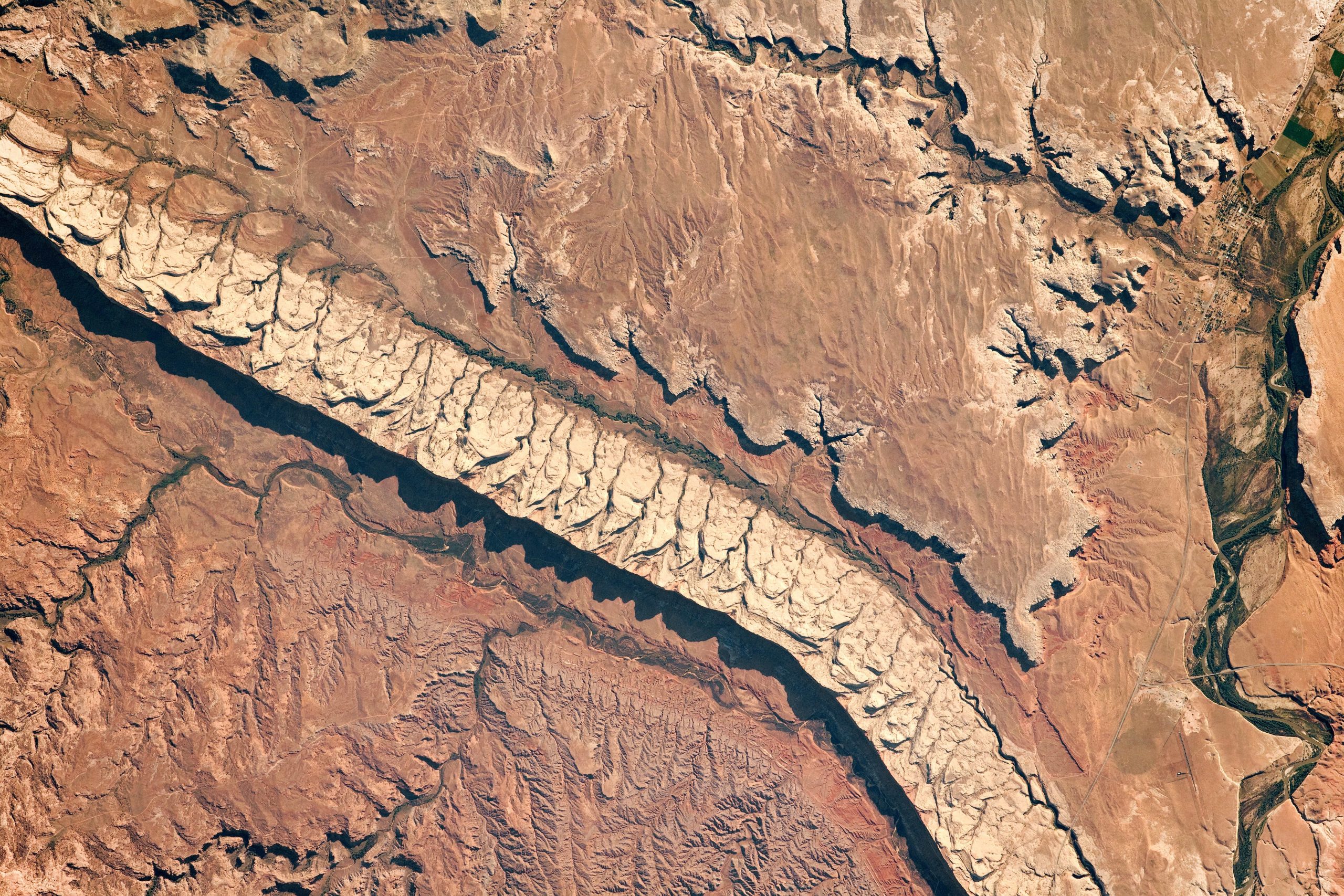
Comb Ridge is an astoundingly dramatic geological feature. The area is famous for its rock art sites, pueblo homes, rock climbing areas, San Juan river running, outstanding views for photography, camping areas, and designated routes.
Comb Ridge (Tséyíkáán in Navajo) is a large example of a geologic formation known as a monocline. This type of structure occurs when previously flat rock layers fold downward in one direction and then flatten out away from the bend. This escarpment trends in the north-south direction for almost 80 miles from Utah’s Abajo Mountains to Kayenta, Arizona. The Sun’s position at mid-morning (local time) caused the jagged edges of the ridge to cast shadows that accentuate topography and add depth to the photo.
The ancient Ancestral Puebloans lived here over 1,000 years ago, building cliff dwellings, granaries for storing seed corn and pecking galleries of exquisite petroglyphs on varnished sandstone walls.
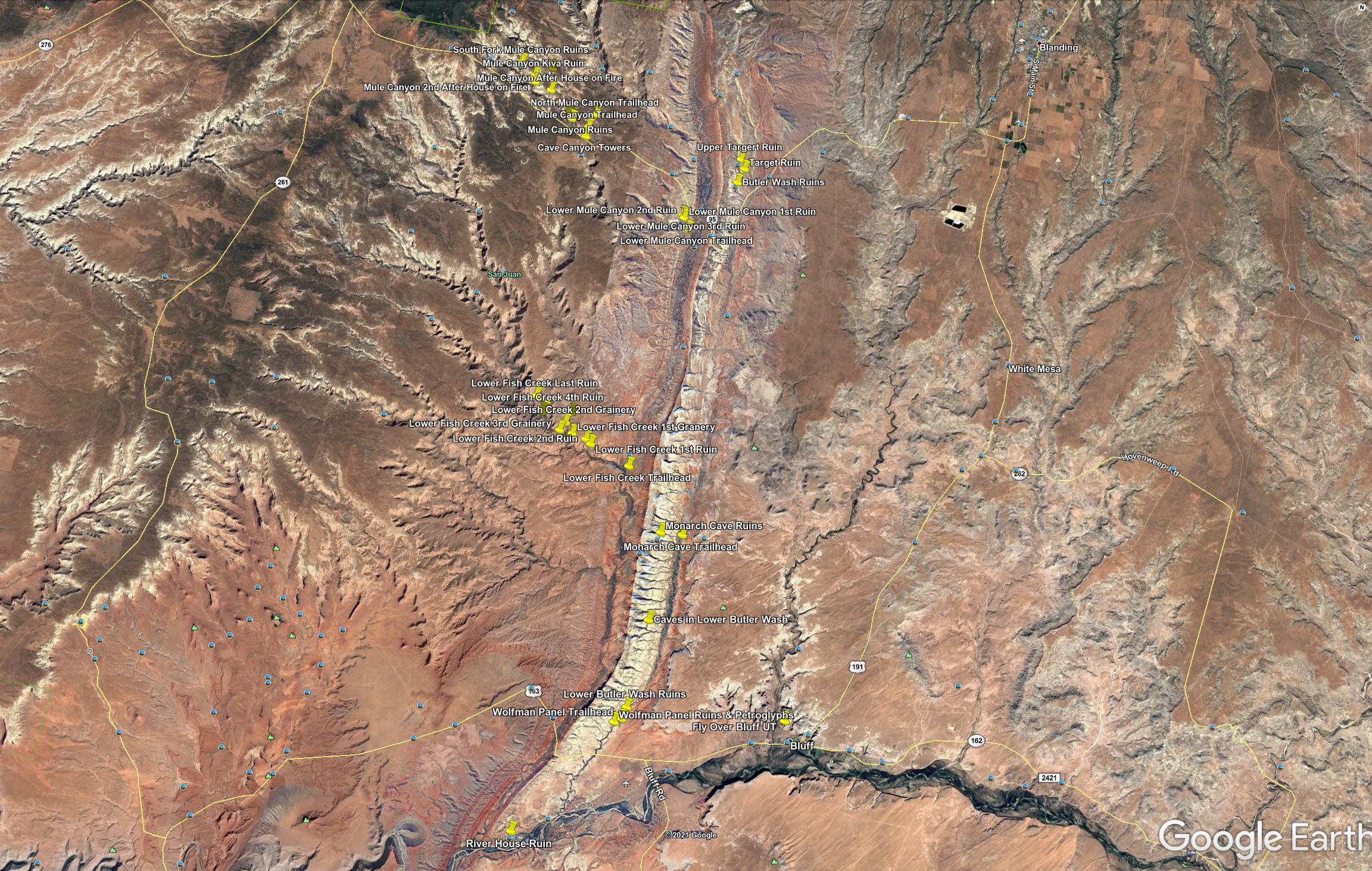
Comb Ridge is home to many cultural sites that tell of its early inhabitants, the Ancestral Puebloans who lived in its alcoves and grew corn in its narrow washes. Recent surveys have found faint traces of prehistoric roads carved through the landscape to connect places of significance to the Ancestral Puebloans. Other research has revealed archaic sites as well as historic sites of early Anglo settlers along the Comb. The 1879-80 Mormon pioneer San Juan expedition saw the Comb as formidable, and only identified a route through the feature at the San Juan River atop a nearby butte they named Salvation Knoll in honor of their sighting of the passage. Butler Wash, just east of the magnificent Comb Ridge, contains outstanding prehistoric rock art and Ancestral Puebloan cliff structures.
0 Comments