
El Camino Real de Tierra Adentro Trail
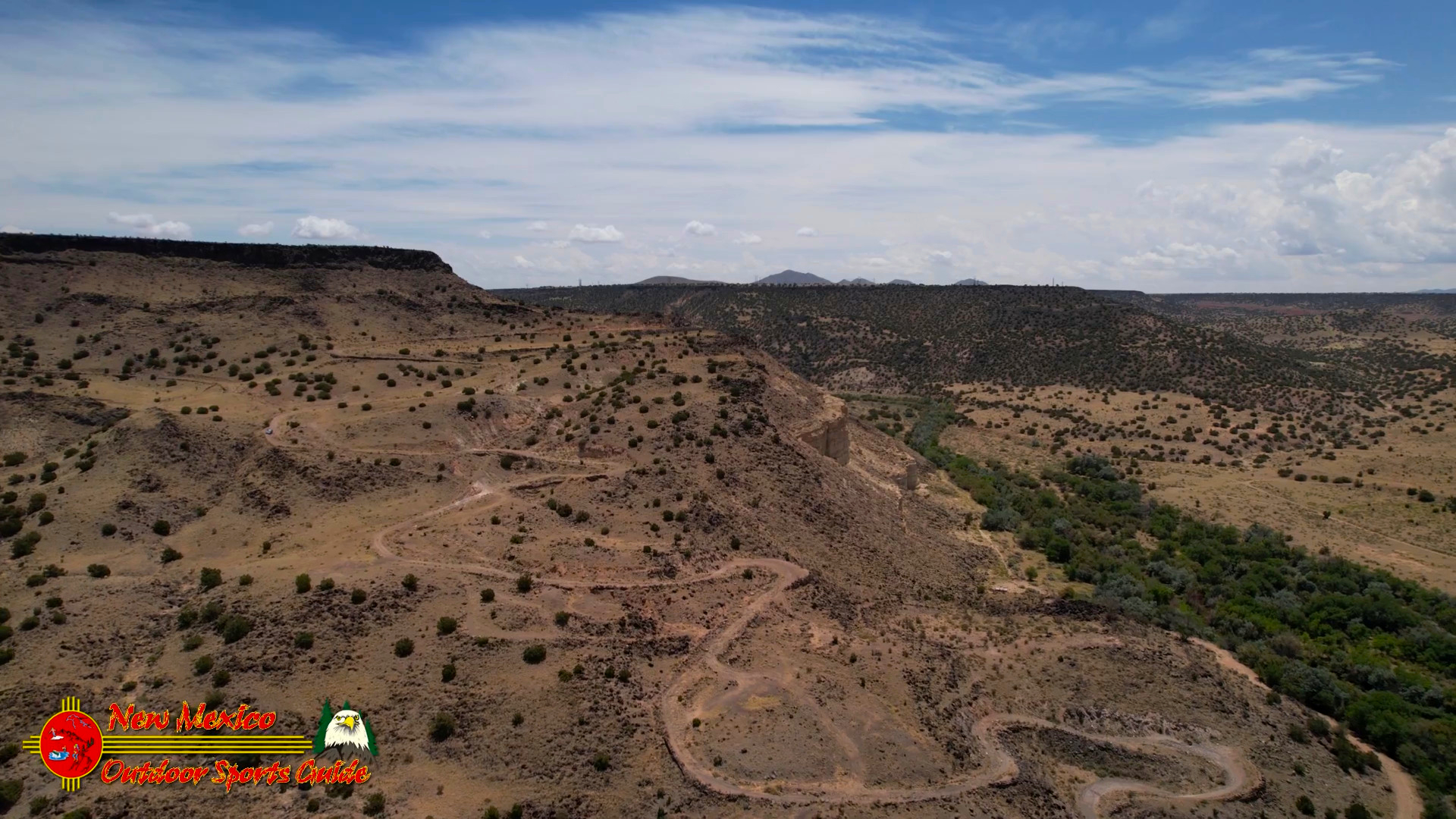
El Camino Real winds up La Bajada Hill along the Santa Fe River near it's northern end at Santa Fe, New Mexico.
El Camino Real de Tierra Adentro served a variety of purposes. Many of its users were involved in the Spanish empire’s prolonged project of converting American Indians to Christianity, yet the road hosted a diverse array of characters; people headed northward included settlers, priests, and newly appointed officials, while those headed south included retiring officials, friars, traders, enslaved Indians, convicts, and prisoners of war. The trail also served as a principal avenue of communication and commerce by which goods and information flowed back and forth. Caravans along the route typically consisted of thirty-two wagons, each of which was hauled by eight mules and carried about 4,000 pounds of freight; most caravans brought other stock as well, such as cattle, sheep, goats, burros, and chickens. Royal decrees, mail, mission supplies, and private merchandise was included among the freight.
The Camino Real de Tierra Adentro was a Spanish 1500 mile long road between Mexico City and San Juan Pueblo, New Mexico, USA, that was used from 1598 to 1882. It was the northernmost of the four major "royal roads" that linked Mexico City to its major tributaries during and after the Spanish colonial era.
In the mid-1500’s, explorer Juan de Oñate received permission from the king of Spain to conduct the first colonization expedition 1,500 miles north of Zacatecas into what is today the State of New Mexico. Oñate, along with settlers and herds of cattle, traveled through the arid Chihuahua Desert and crossed the Rio Grande River at modern-day El Paso in 1598. The journey continued north through Las Cruces, Socorro, Belen, Albuquerque, and Ohkay Owingeh (San Juan Pueblo), which Oñate declared the capital of New Spain. The final leg brought the Oñate expedition to Santa Fe in 1603. Oñate’s trail from Zacatecas to Santa Fe completed what would be known as El Camino Real, connecting the interior of New Spain to Mexico City.
Santa Fe was a thriving center of commerce at the time, especially after the Santa Fe Trail connected New Mexico to the eastern United States for the first time in 1821, and the Old Spanish Trail connected Santa Fe to the west coast at Los Angeles in 1829. This itinerary features the Santa Fe Trail here and the Old Spanish Trail here. With the three trails feeding the market from the south, west and east, Santa Fe Plaza at the center of town became a teeming hotspot for trade and social interaction. The plaza is a National Historic Landmark listed in the National Register with its buildings constructed in the Pueblo, Spanish, and Territorial styles that reflect the diverse cultural history of Santa Fe. Well worth a visit, the Palace of the Governors on the north side of the Plaza dates from 1610, and is the oldest continuously occupied government building in the United States. The Palace is a National Historic Landmark and a museum.

0 Comments