
Pueblo Indians carved shallow hand and toe holds, or Moki steps, into rock cliffs to make a near vertical climb. The Moki Dugway, also a steep climb up a hillside, was not made by Pueblo Indians, but by miners to transport uranium.
The Moki Dugway (also spelled Mokee or Moqui) is located on UT-261, just northwest of Valley of the Gods.
The term moki is derived from the Spanish word, moqui, a general term used by explorers in this region to describe Pueblo Indians they encountered as well as the vanished Ancestral Puebloan culture. Dugway is a term used to describe a roadway carved from a hillside.
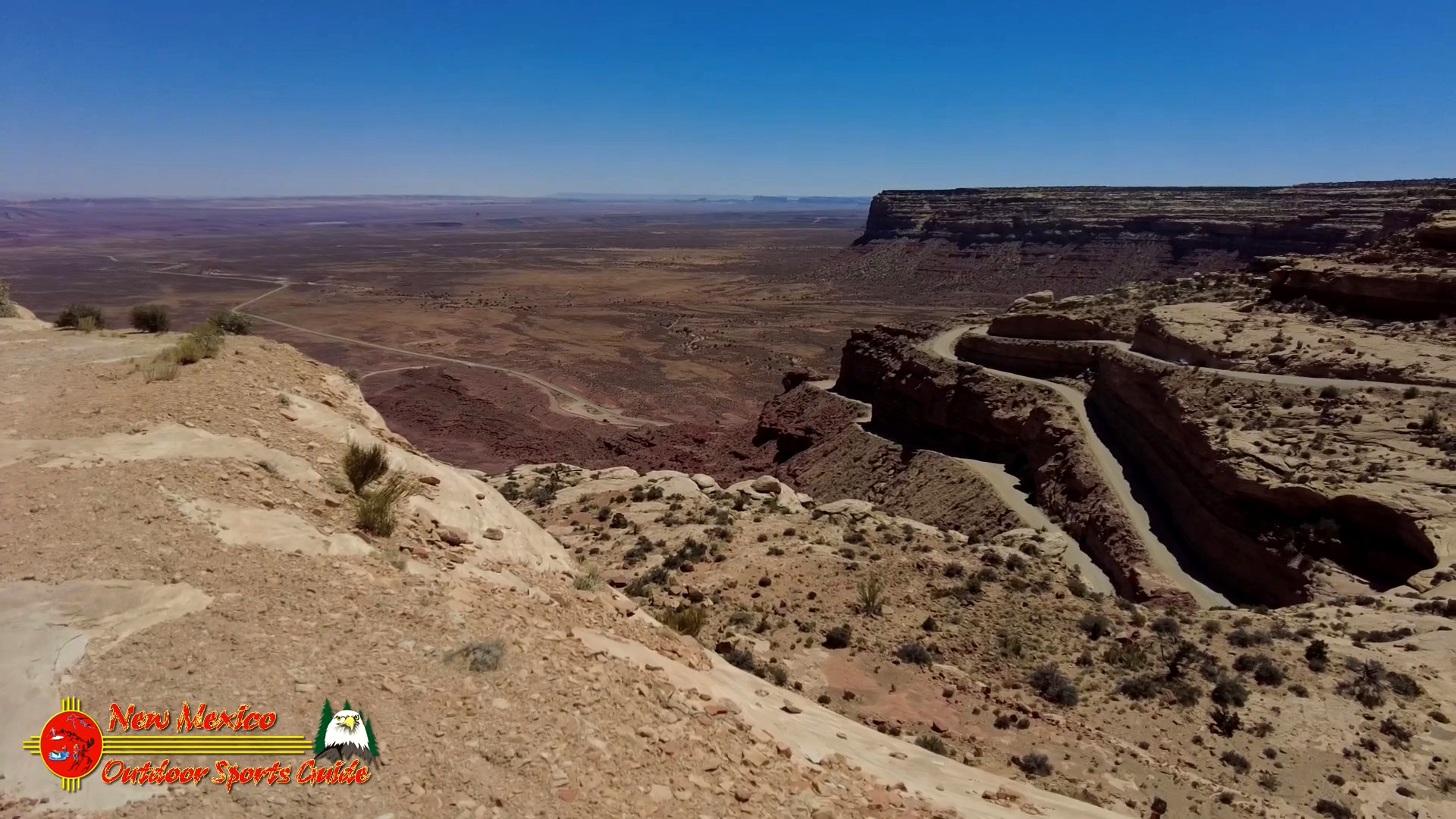
The Moki Dugway is a staggering, graded dirt switchback road carved into the face of the cliff edge of Cedar Mesa. It consists of 3 miles of steep, unpaved, but well-graded switchbacks (11% grade), which wind 1,200 feet from the valley floor near Valley of the Gods to atop Cedar Mesa. This route provides breathtaking views of some of Utah’s most beautiful sites. Scenic views of Valley of the Gods and distant Monument valley open at every turn of the dugway.
The Moki Dugway was constructed in the 1950’s to provide a way to haul ore from the Happy Jack Mine on Cedar Mesa to the mill in Halchita, Utah, near Mexican Hat.
The State of Utah recommends that only vehicles less than 28 feet and 10,000 pounds attempt to negotiate the dugway. The remainder of US-261 is paved.
A short foot trail near the top of Moki Dugway leads to a breath taking overlook of the Valley of the Gods, San Juan River Valley and far distant Monument Valley.

0 Comments