
San Jose was founded in 1803 when allotments of land were made to 45 men and two women by the Spanish government of New Mexico. The purpose of the settlement, and others in the Pecos River valley, was to defend the eastern flanks of the New Mexican settlements from Indian attacks, especially by the Apaches. Many of the early settlers were landless genizaros. Many of the comancheros and ciboleros who traded with the Comanche and hunted bison on the Great Plains came from San Jose and other Pecos Valley settlements.
The original adobe homes were built closely together around a square, which could be closed for defense in times of Indian raids. In March 1803, nine years after the founding of San Jose, Pedro Rautista Pino, acting on orders of the governor, partitioned the land to the 47 heads of households of San Jose.
After the establishment of the Santa Fe Trail in 1821, San Jose became one of the many stops along the trail in the Pecos River Valley.
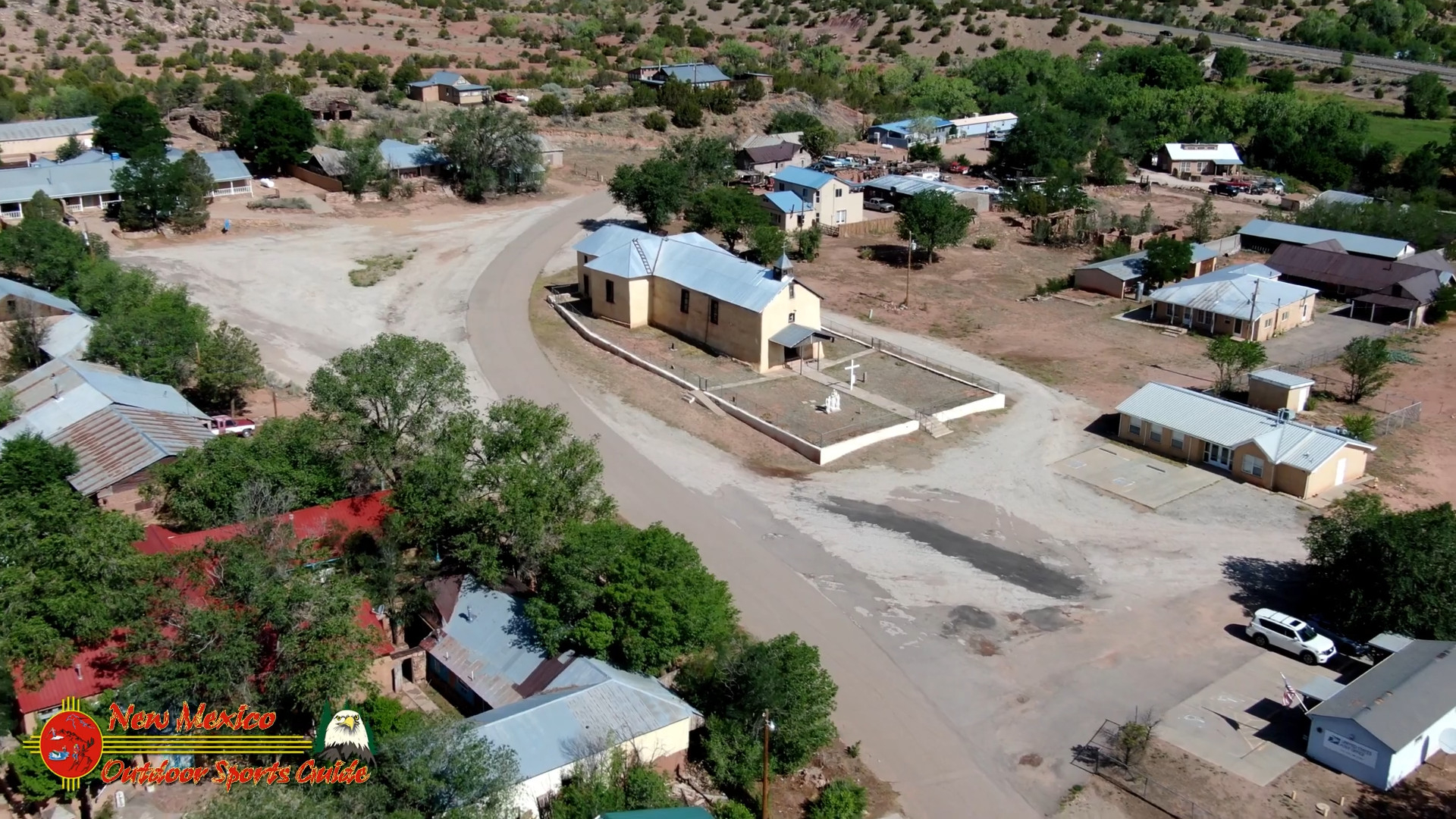
In May 1826, permission was granted, by the Bishop of Durango, to erect a church at San Jose. San Jose was under the jurisdiction of Nuestra Senora de Los Angeles church at the Pecos Pueblo until nearby San Miguel Del Vado was made a parish and provided with a priest.
In 1846, a passenger stagecoach service was established between Independence, Missouri and Santa Fe. The stagecoach route, which crossed the Pecos River ford at San Jose, had regular mail service by 1849 and daily passenger service by 1862. The stagecoach station was probably located in the southeast corner of the plaza.
As a result of the trade caravans and stagecoaches traveling along the trail, San Jose prospered and grew in population. This traffic became more important after the settlement of Las Vegas, as caravans began to bypass San Miguel and traveling a shorter route directly to San Jose.
In 1879, the construction of the Atchison, Topeka, and Santa Fe Railroad began in New Mexico. Once completed, the railroad bypassed San Jose, and traffic along the Santa Fe Trail all but ended. A steady decline in San Jose’s population followed.
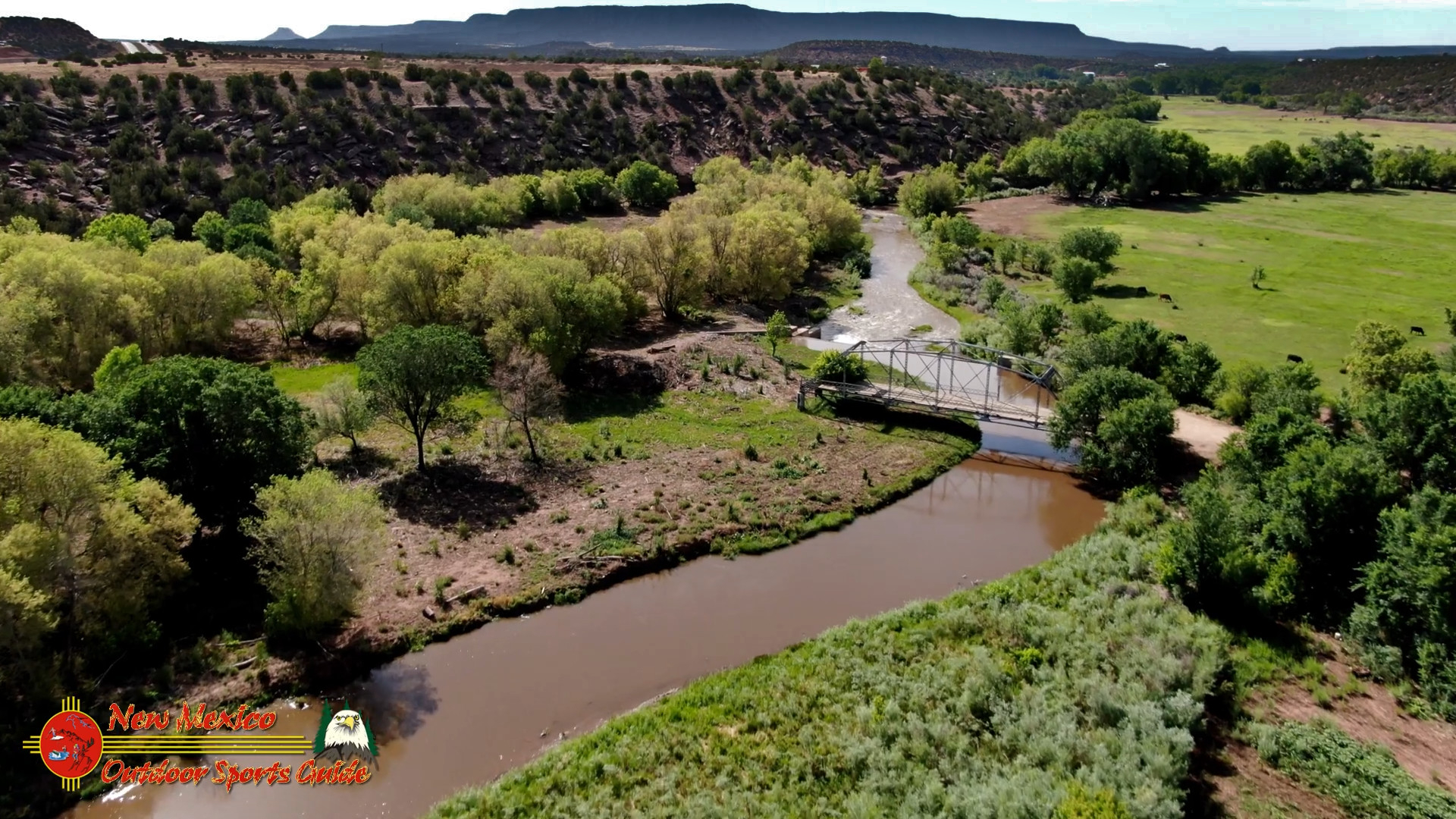
Route 66 made its way through the village in 1926, probably stimulating the economy. However, it was short-lived and rerouted in 1937. Later, when the highway was replaced by U.S. 85 and I-25, the highways bypassed the town. An old Route 66 era steel truss bridge sits abandoned at the end of County Road B41D. Near the old bridge was the original Santa Fe Trail crossing of the Pecos River.
The Pecos River (Spanish: Río Pecos) originates in north-central New Mexico near Santa Fe and flows into Texas, emptying into the Rio Grande. Its headwaters are on the eastern slope of the Sangre de Cristo mountain range in Mora County north of Pecos, NM, at an elevation of over 12,000 feet. The river flows for 926 miles before reaching the Rio Grande near Del Rio.
The name “Pecos” derives from the Keresan (Native American language) term for the Pecos Pueblo, [p’æyok’ona]. The river was also historically referred to as the Río Natagés for the Mescalero people.
The river played a large role in the exploration of Texas by the Spanish.
On June 6, 1990, 20.5 miles of the Pecos River from its headwaters to the townsite of Tererro received National Wild and Scenic River designation.

0 Comments